A stiff, aching back can make even simple tasks feel heavy. The good news: gentle yoga may help by easing muscle tension, building supportive strength, and restoring easy movement to your spine and hips.
This guide gives you:
- 10 beginner-friendly poses, each with steps, hold times and safer variations
- A simple pain "traffic light" so you always know when to ease off
- Honest research on what yoga can and cannot do
- Tables, routines and warning signs worth knowing
"Sthira sukham asanam": a pose should be steady and comfortable. (Patanjali, Yoga Sutras 2.46)
The 10 Poses at a Glance
| | Pose | Main Benefit | Hold / Reps | Level |
| 1 | Cat-Cow | Spinal mobility | 8–10 slow rounds | Beginner |
| 2 | Child's Pose | Gentle back stretch, calm | 30–60 sec | Beginner |
| 3 | Downward-Facing Dog | Hamstring and back lengthening | 3–5 breaths | Beginner–Intermediate |
| 4 | Sphinx Pose | Soft back extension | 20–45 sec | Beginner |
| 5 | Cobra Pose | Back-muscle strength | 3–5 breaths | Intermediate |
| 6 | Bridge Pose | Glute and core support | 5 breaths × 3 | Beginner |
| 7 | Supine Knee-to-Chest | Lower-back and hip release | 20–30 sec per side | Beginner |
| 8 | Supine Spinal Twist | Gentle rotation | 30 sec per side | Beginner |
| 9 | Pelvic Tilts | Core activation, mobility | 10–15 reps | Beginner |
| 10 | Legs-Up-the-Wall | Rest and decompression | 2–5 min | Beginner |
Hold times are general starting ranges, not prescriptions. Shorten or skip anything that does not feel right.
Can Yoga Help Relieve Back Pain?
Short answer: it can help many people, but it is not a cure-all.
Back pain is extremely common. One widely cited estimate says about 84% of adults experience it at some point, and roughly 23% live with chronic lower back pain. With numbers like that, it is no surprise people look to yoga for relief.
What the research says
| Study | What It Found | Takeaway |
| Cramer et al., 2013 (meta-analysis, 10 trials, 967 people) | Short-term improvements in pain and back-related disability; smaller long-term benefit; no serious adverse events | Yoga is a reasonable add-on therapy |
| Sherman et al., 2011 (313 adults, 12-week program) | Better back function than usual care at 3, 6 and 12 months; pain scores were similar between groups | Function improves even when pain changes less |
| Same trial, safety note | 12 of 156 yoga participants reported side effects (mostly more pain) vs 2 of 157 in usual care | Go gently, especially at first |
| Cochrane review (2022) | Compared with no exercise, yoga gave small, clinically unimportant gains in pain and function; evidence certainty was low to moderate | Do not expect miracles |
Realistic benefits
- Mobility: moving the spine through comfortable ranges can reduce stiffness
- Strength: the glutes, core and back extensors help share the load your spine carries
- Stress relief: slow breathing may lower muscle guarding and change how pain feels
- Body awareness: you learn which positions help and which irritate
Honest limits
- Yoga is not a replacement for medical care when something serious is going on
- Results vary widely between individuals
- Some poses can aggravate certain back problems, so pose selection matters
- Advice online conflicts. One source recommends bridge pose for back pain, another says to skip it. This is why listening to your own body beats any generic list.
"In general, yoga poses are a good start for improving posture to help relieve back pain, but it's always important to determine the root cause." (Dr. Shah, via Nike)
Which style suits you?
| Style | Pace | Good for Back Pain? |
| Gentle / Hatha | Slow | Yes, ideal for beginners |
| Restorative | Very slow, props | Yes, especially during flare-ups |
| Iyengar | Slow, precise, props | Yes, strong focus on alignment |
| Vinyasa | Flowing | Only once pain is calm and form is solid |
| Hot / Power | Fast, intense | Usually not while symptomatic |
Before You Start: The Pain Traffic Light
Use this simple rule in every pose.
| Signal | What You Feel | What To Do |
| Green | Mild stretch, easy breathing, 0–3 out of 10 discomfort | Continue |
| Yellow | Strong stretch or mild ache, 4–5 out of 10 | Back off by a third, use props |
| Red | Sharp, shooting, burning, tingling or numbness | Stop and come out slowly |
Extra ground rules:
- Warm up with 2–3 minutes of easy movement
- Move with your breath, never force the stretch
- Use a folded blanket, cushion or yoga block freely
- Practice on a non-slip mat or carpeted floor
- Avoid bouncing or jerky transitions
10 Best Yoga Poses for Back Pain
1. Cat-Cow Pose (Marjaryasana-Bitilasana)
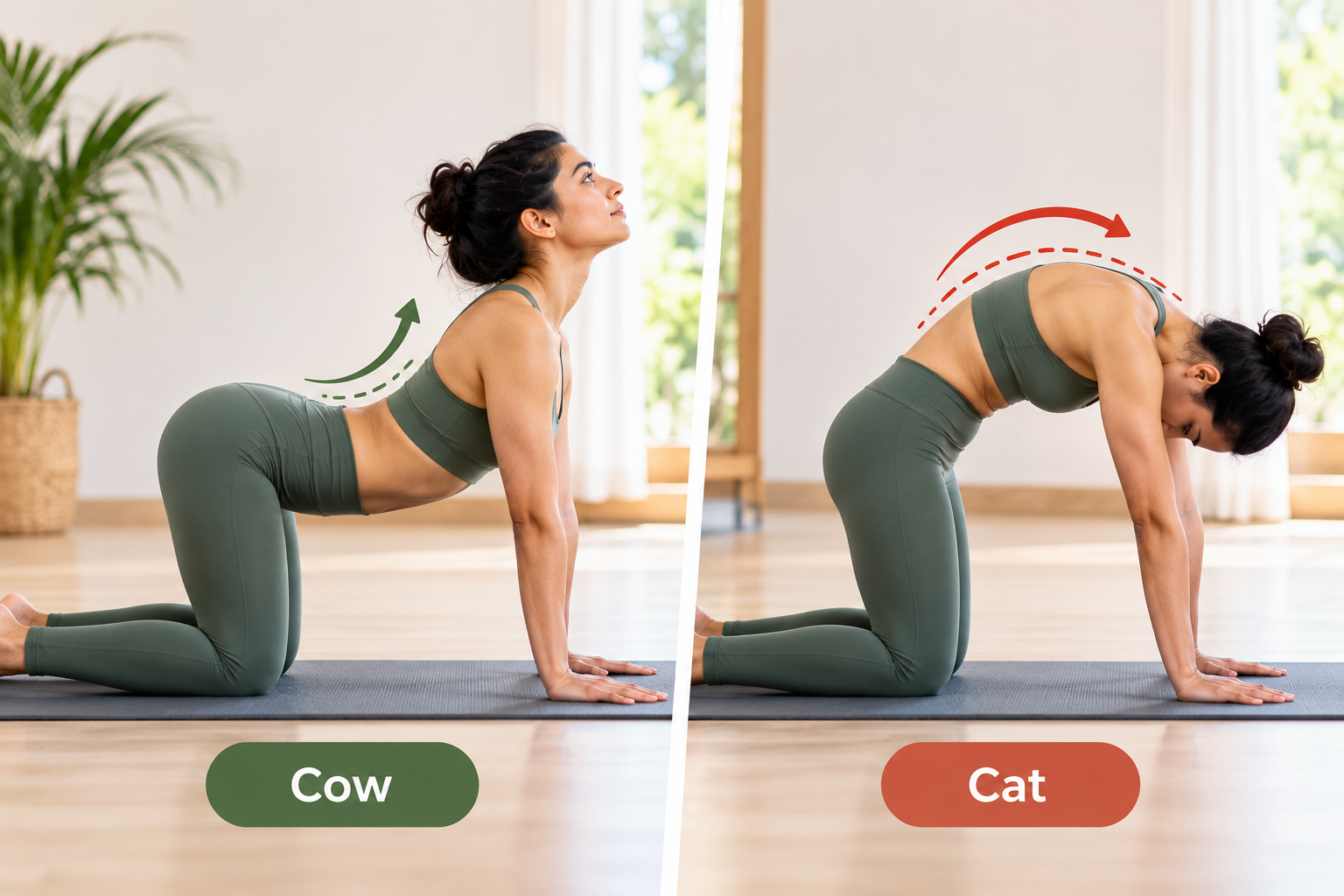
Why it helps: Gently flexes and extends the whole spine, which can ease stiffness and warm up the back.
How to do it:
- Start on hands and knees, wrists under shoulders, knees under hips
- Inhale, let your belly soften and lift your chest slightly (Cow)
- Exhale, round your back toward the ceiling and tuck your chin (Cat)
- Move slowly, one breath per movement
Hold: 8–10 slow rounds
Make it easier: Reduce the range of motion; place a blanket under your knees.
Skip or adjust if: Wrists hurt (try forearms) or you feel pinching in the low back.
2. Child's Pose (Balasana)
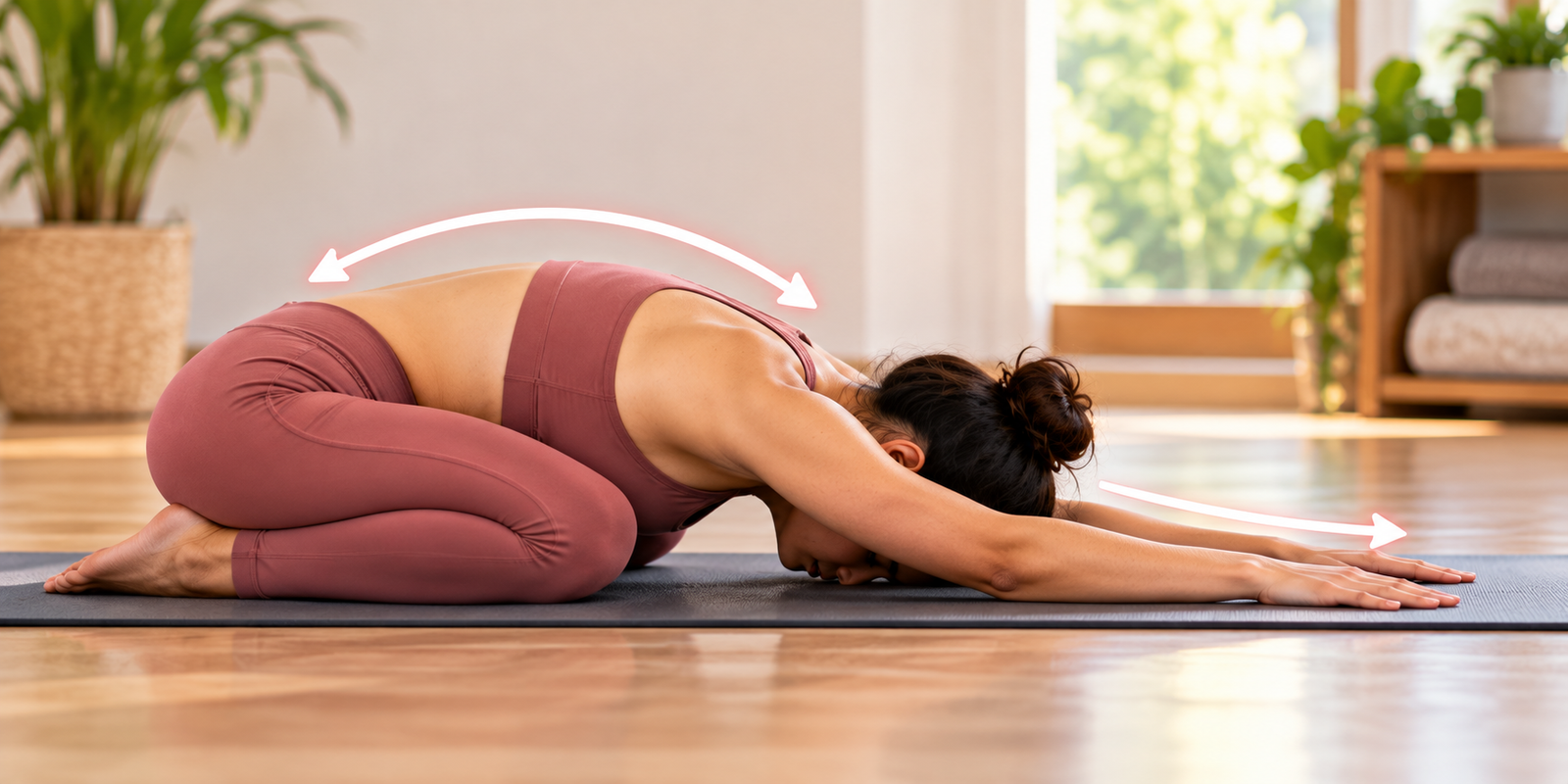
Why it helps: A calming, supported stretch along the back, hips and shoulders.
How to do it:
- From hands and knees, bring your big toes together and knees wide.
- Sit your hips back toward your heels.
- Walk your hands forward, resting your forehead on the mat or a block.
- Breathe into your lower back.
Hold: 30–60 seconds
Make it easier: Stack a pillow under your chest; sit a cushion between heels and hips.
Skip or adjust if: Knees are painful. Place a rolled towel behind them or choose a different resting pose.
3. Downward-Facing Dog (Adho Mukha Svanasana)
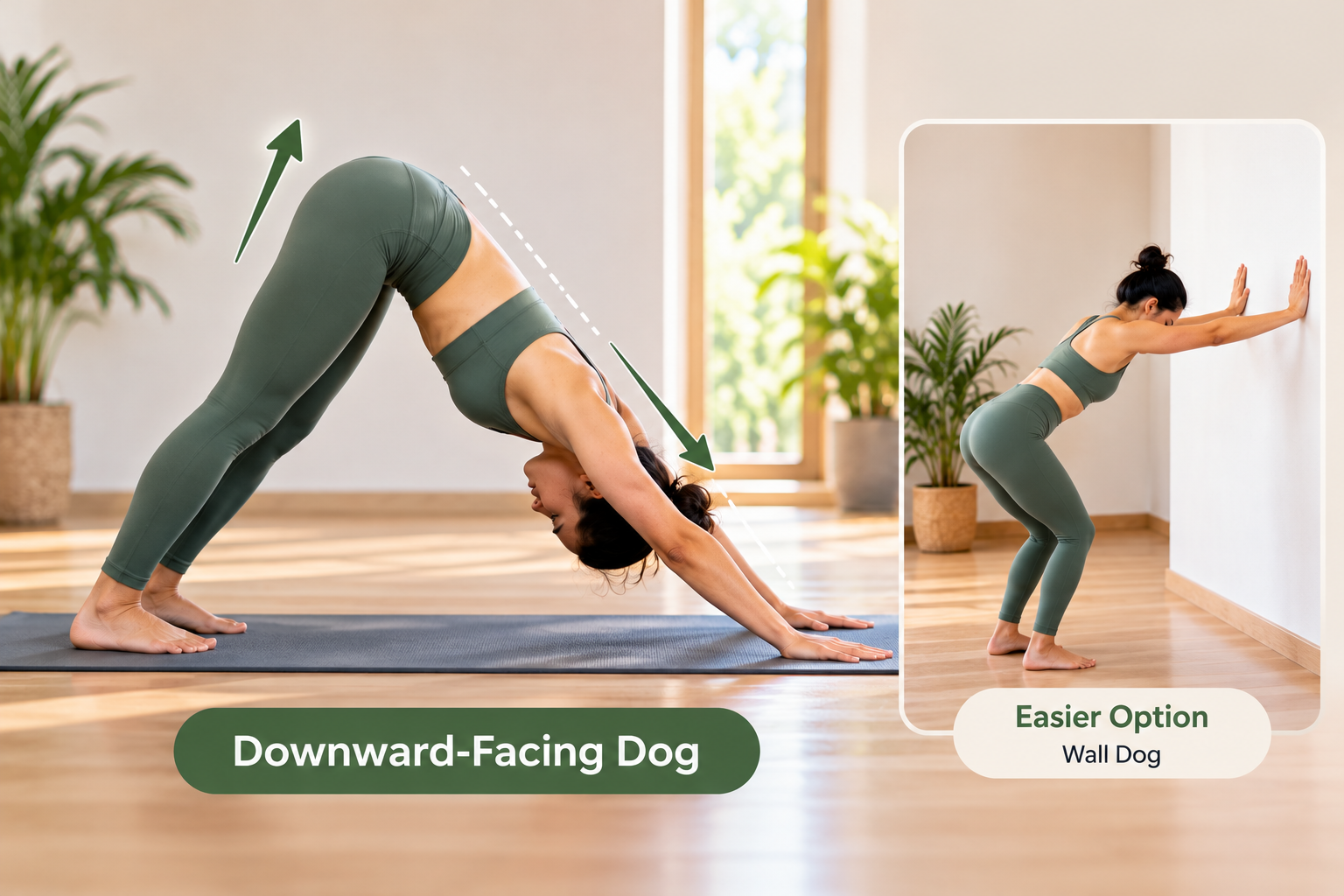
Why it helps: Lengthens hamstrings, calves and the back of the body, which can reduce pulling on the lower back.
How to do it:
- From hands and knees, tuck your toes and lift your hips up and back.
- Bend your knees generously. A long spine matters more than straight legs.
- Press the floor away and relax your head and neck.
Hold: 3–5 breaths
Make it easier: Do it with hands on a wall or a sturdy counter ("wall dog").
Skip or adjust if: You feel joint pain in wrists or shoulders, or the pose rounds your back. Choose a wall version instead.
4. Sphinx Pose (Salamba Bhujangasana)
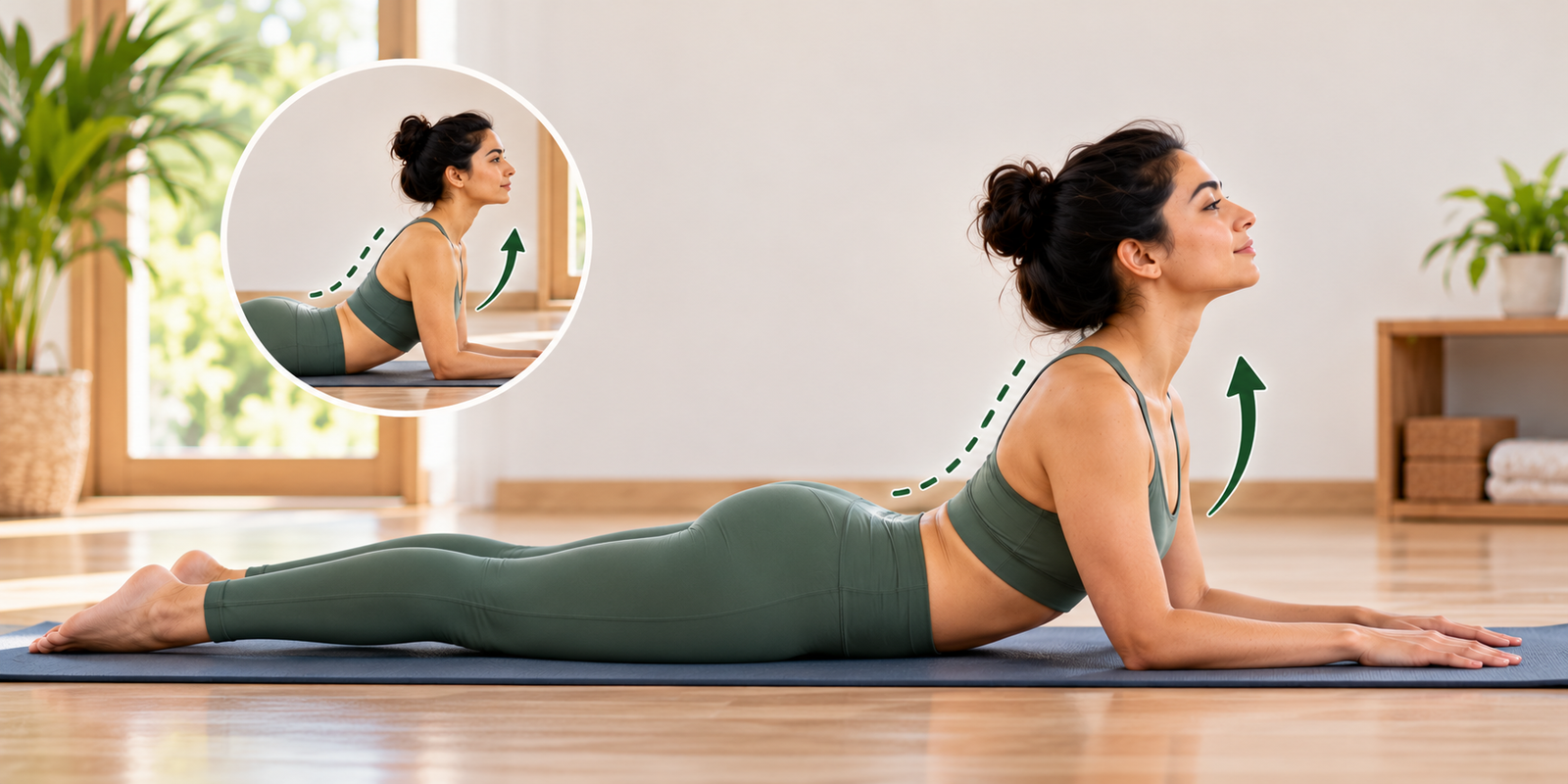
Why it helps: A mild back extension that can feel soothing for some people, if it is comfortable.
How to do it:
- Lie on your stomach with your forearms on the floor and elbows under your shoulders.
- Press lightly through your forearms and lift your chest.
- Keep your legs relaxed and your gaze forward.
- Lengthen through the crown of your head rather than crunching your neck.
Hold: 20–45 seconds
Make it easier: Slide elbows slightly forward to lower the lift.
Skip or adjust if: You feel pinching or compression in the low back. Come down and rest.
5. Cobra Pose (Bhujangasana)
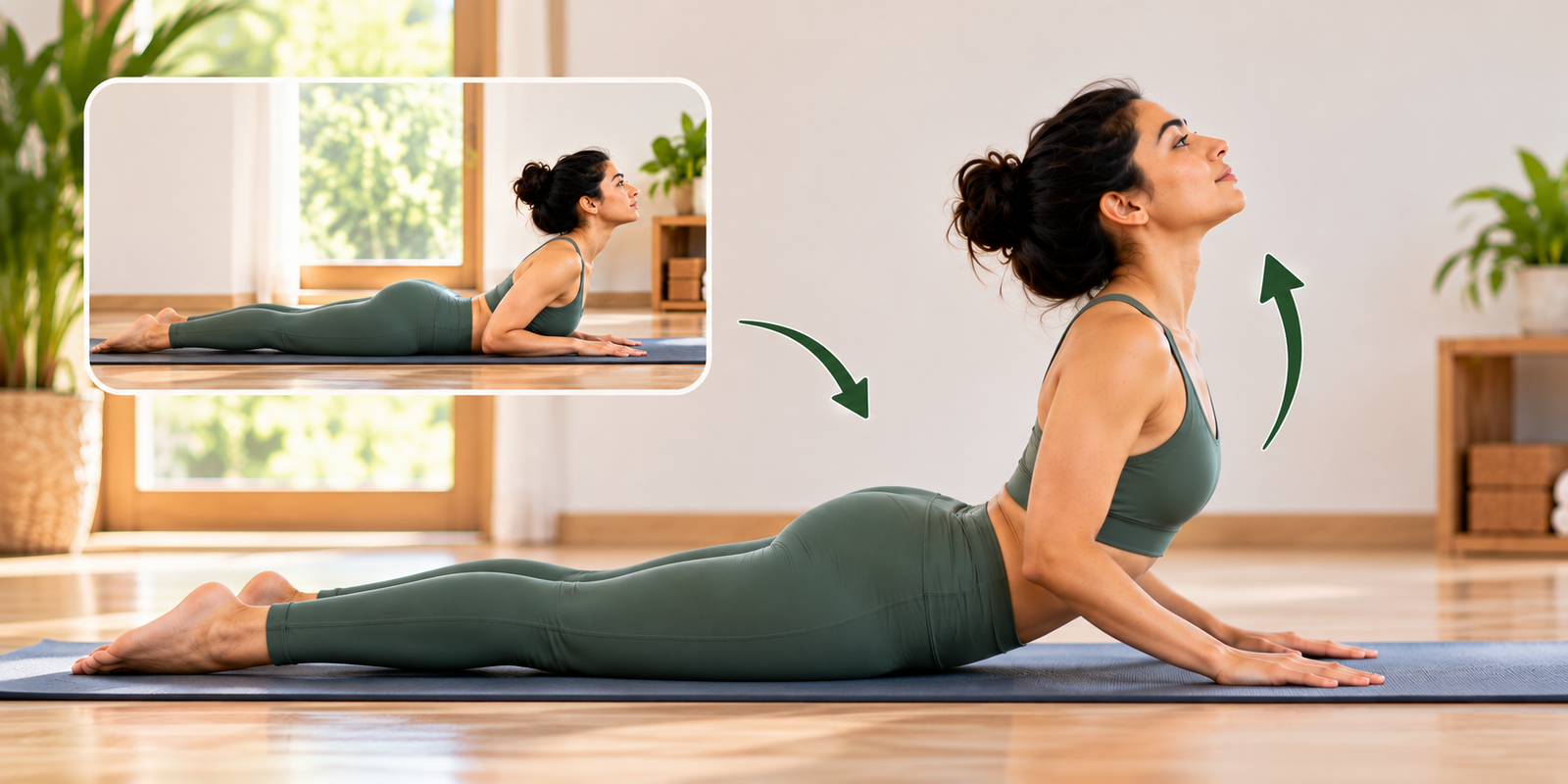
Why it helps: Strengthens the muscles along the spine and opens the chest.
How to do it:
- Lie on your stomach with your hands beneath your shoulders and elbows hugging in.
- Press the tops of your feet and pubic bone into the floor.
- Lift your chest just a few inches, using your back muscles rather than your arms.
- Keep your neck long and shoulders away from your ears.
Hold: 3–5 breaths
Make it easier: Keep your hands light and lift only slightly ("baby cobra").
Skip or adjust if: You feel crunching in the lower back. Stay low or return to Sphinx.
6. Bridge Pose (Setu Bandhasana)
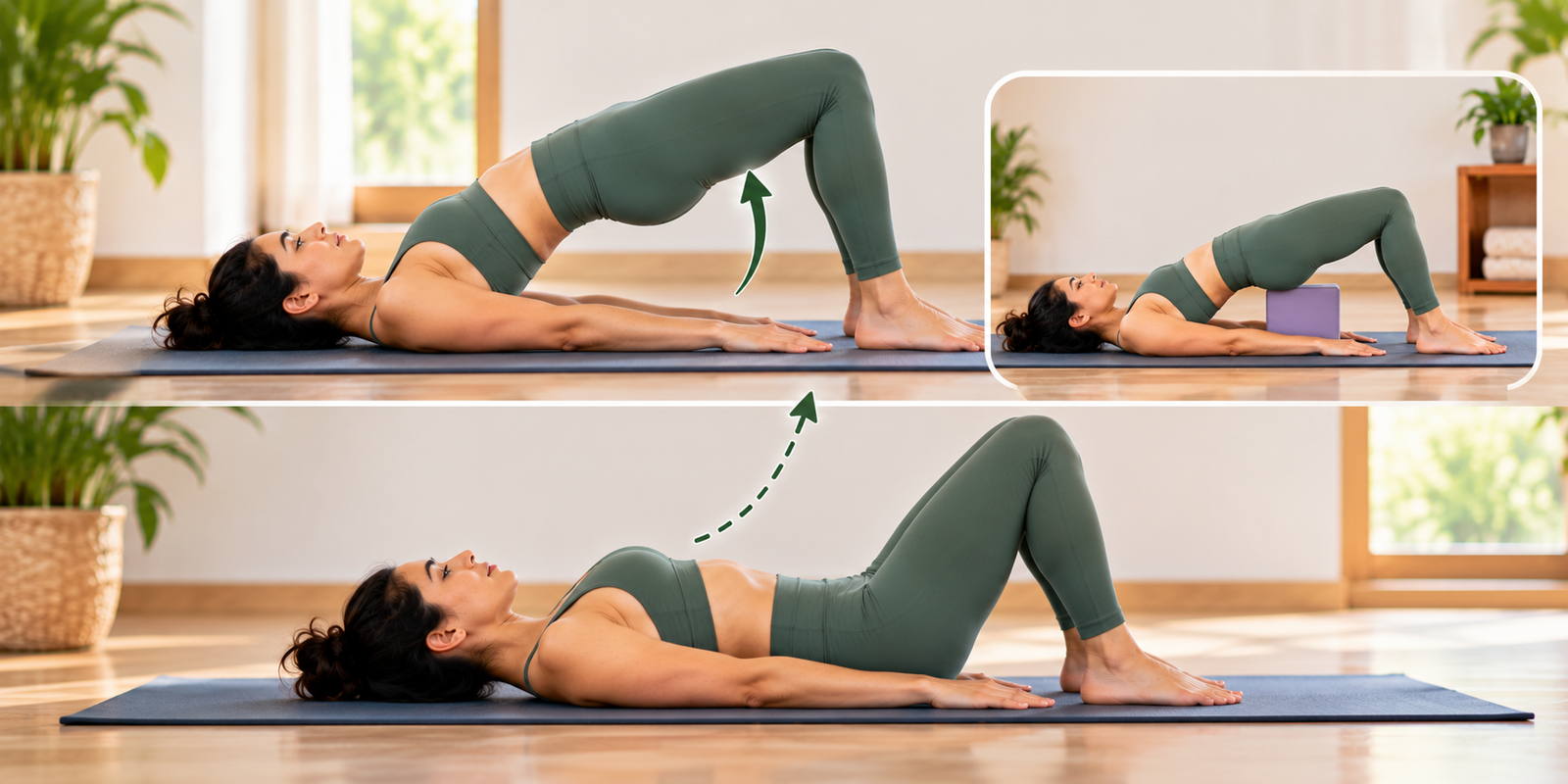
Why it helps: Strengthens glutes, hamstrings and core, the muscles that help support your lower back.
How to do it:
- Lie on your back with your knees bent and feet hip-width apart.
- Press into your feet and lift your hips as high as feels comfortable.
- Tuck your tailbone slightly so your lower back stays long.
- Lower down one vertebra at a time.
Hold: 5 breaths, repeat 3 times
Make it easier: Place a block or folded blanket under your sacrum for support.
Skip or adjust if: You feel pressure in the low back. Lift lower and squeeze the glutes.
"Bridge pose strengthens the back and legs, helping to relieve back pain and headaches." (Elma Panagaki, via Livestrong)
7. Supine Knee-to-Chest Pose (Apanasana)
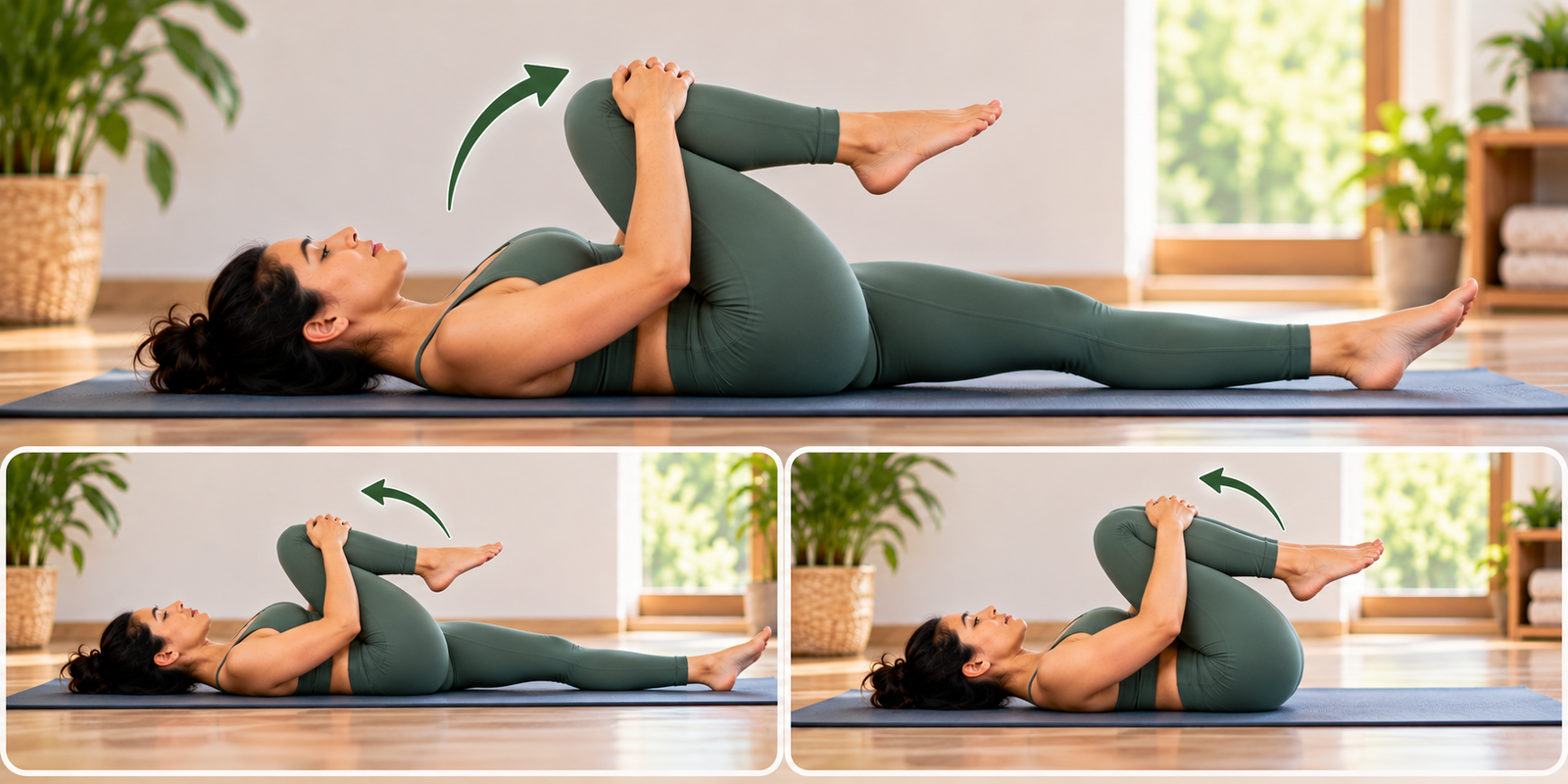
Why it helps: A simple release for the lower back and hips.
How to do it:
- Lie on your back with your legs extended.
- Hug one knee toward your chest, keeping the other leg long or your foot on the floor.
- Switch sides, then try bringing both knees toward your chest.
- Keep your head and shoulders relaxed.
Hold: 20–30 seconds per side
Make it easier: Loop a strap or towel behind the thigh.
Skip or adjust if: Hip pinching occurs. Draw the knee slightly out to the side.
8. Supine Spinal Twist
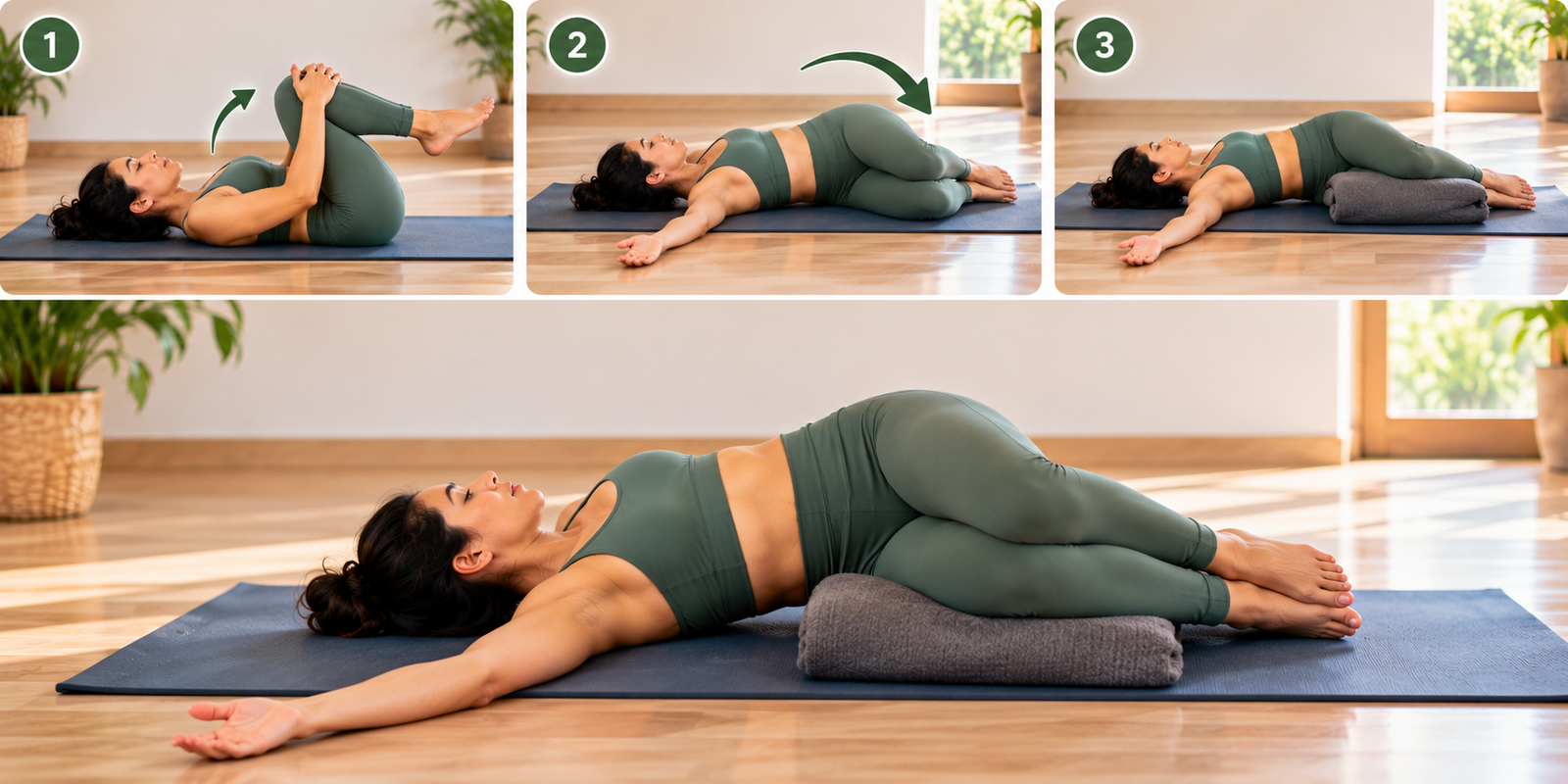
Why it helps: A gentle rotation that can ease stiffness through the back and hips.
How to do it:
- Lie on your back and hug both knees in, then drop them to one side.
- Extend your arms in a T shape and turn your gaze in the opposite direction, only if comfortable.
- Rest your knees on a cushion to keep the twist gentle.
- Breathe slowly and switch sides.
Hold: 30 seconds per side
Make it easier: Keep knees higher and supported; keep feet on the floor.
Skip or adjust if: You feel sharp pain or nerve symptoms. Come back to center right away.
9. Pelvic Tilts
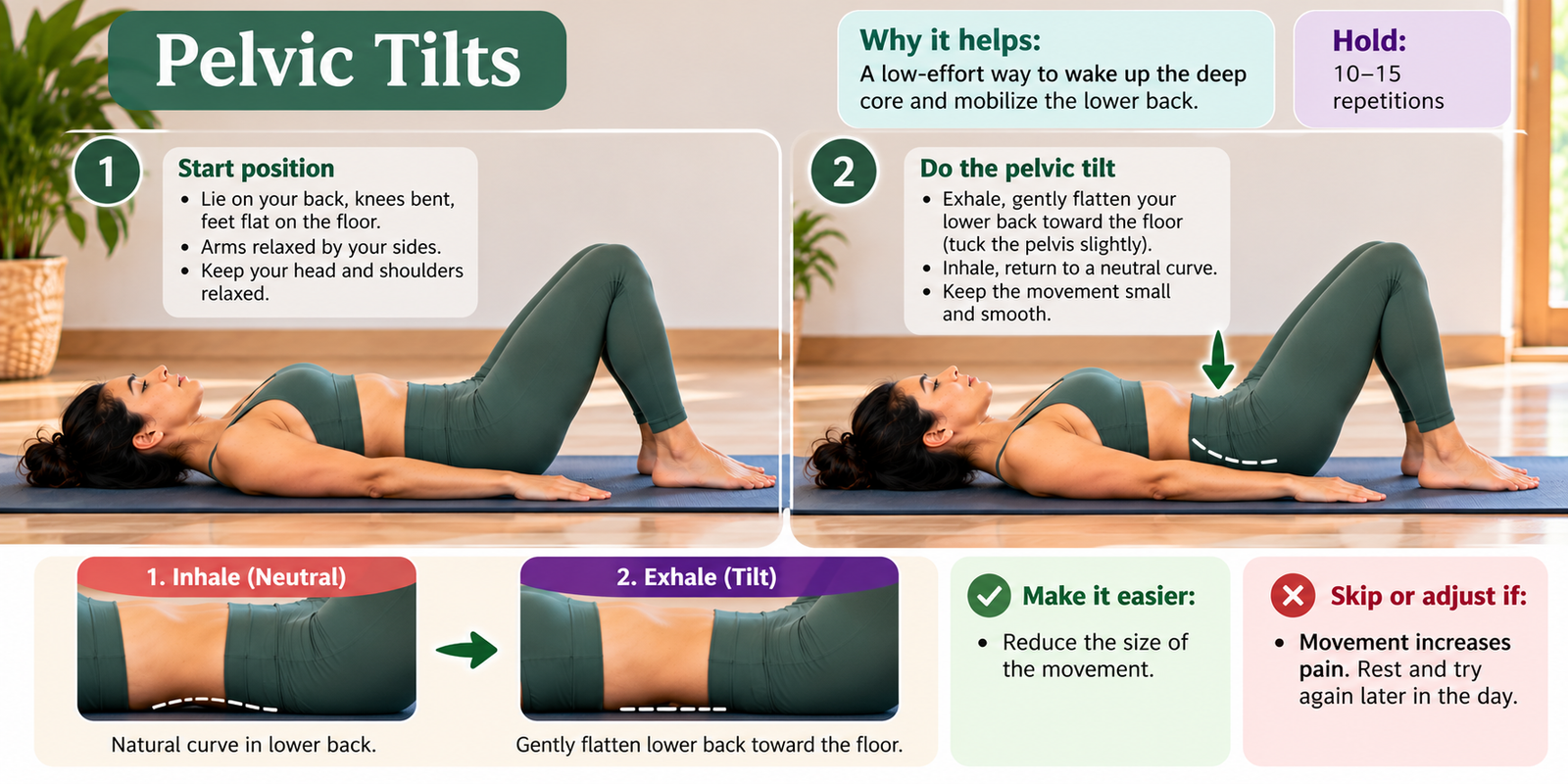
Why it helps: A low-effort way to wake up the deep core and mobilize the lower back.
How to do it:
- Lie on your back with your knees bent and feet flat on the floor.
- Exhale and gently flatten your lower back toward the floor.
- Inhale and return to a neutral curve.
- Keep the movement small and smooth.
Hold: 10–15 repetitions
Make it easier: Reduce the size of the movement.
Skip or adjust if: Movement increases pain. Rest and try again later in the day.
10. Legs-Up-the-Wall Pose (Viparita Karani)
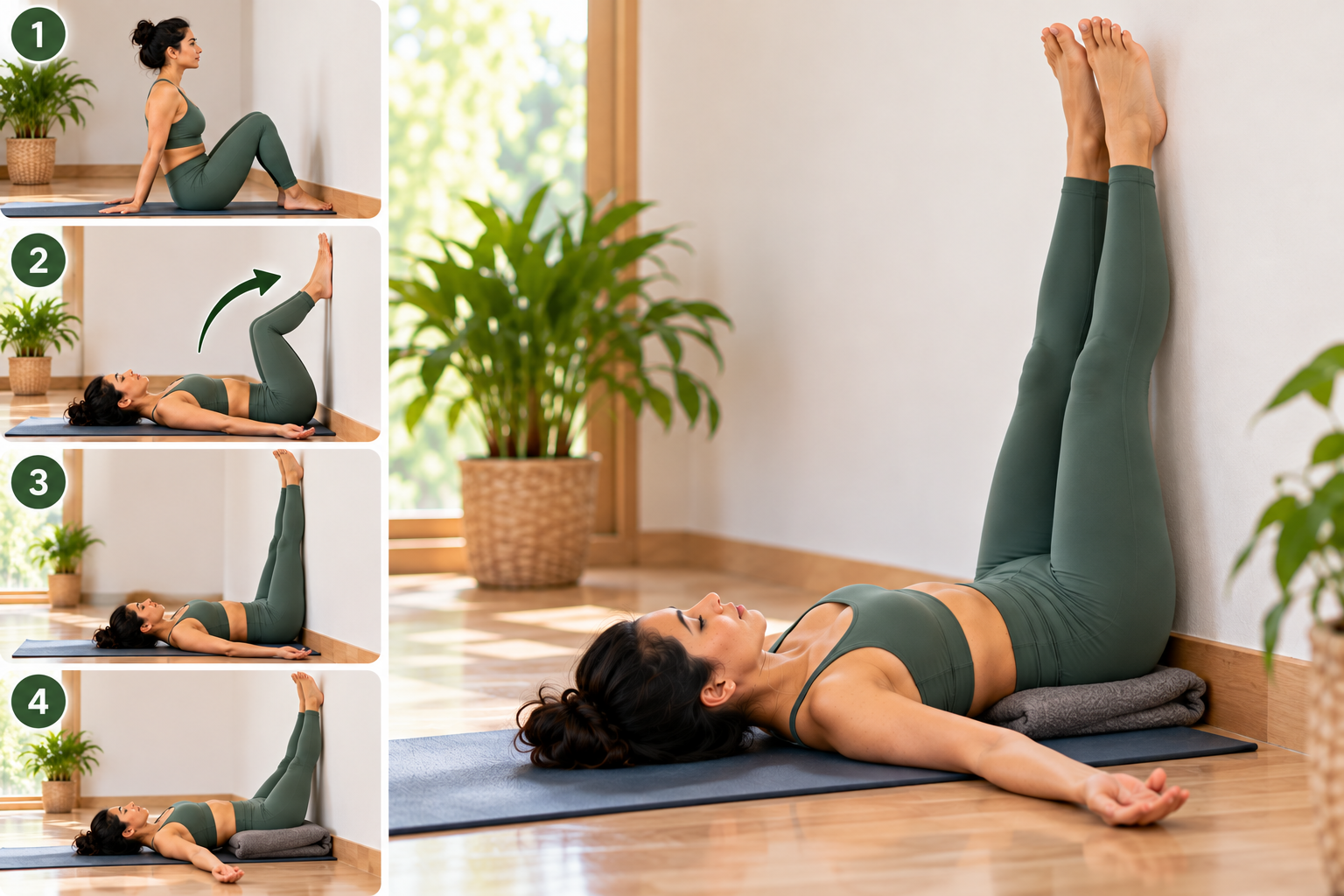
Why it helps: A restful, supported position that lets the back, hips and legs relax.
How to do it:
- Sit sideways next to a wall, then swing your legs up as you lie back.
- Slide your hips close to the wall, or keep them a few inches away if your hamstrings are tight.
- Rest your arms by your sides and breathe slowly.
- To come out, bend your knees and roll onto your side.
Hold: 2–5 minutes
Make it easier: Place a folded blanket under the hips for comfort.
Skip or adjust if: Legs tingle or go numb. Lower them and rest.
Best Yoga Poses for Lower Back Pain
If lower back pain is your main concern, focus on gentle yoga for back pain that builds support and avoids end-range positions.
Your lower back priority list
| Priority | Poses | Why |
| First choice | Pelvic Tilts, Knee-to-Chest, Child's Pose | Low effort, calming |
| Second choice | Cat-Cow, Supine Twist, Bridge | Build mobility and strength |
| Use with care | Cobra, Downward Dog | Helpful for some, irritating for others |
Helpful modifications
- Keep your knees bent in forward folds and downward-facing dog variations.
- Use blocks, straps, and bolsters to reduce the distance to the floor.
- Lift less in backbends than you think you need to.
- Engage your abdominal muscles lightly in lifted poses to avoid putting too much pressure on your lower back.
A quick 10-minute lower back routine
- Pelvic Tilts: 1 minute
- Cat-Cow: 1.5 minutes
- Knee-to-Chest: 1.5 minutes per side (3 minutes total)
- Supine Twist: 1 minute per side (2 minutes total)
- Child's Pose: 1 minute
- Legs-Up-the-Wall: 2 minutes
"With lower back pain you should avoid deep back bends, and be cautious with deep twists and folds." (Sophia Drozd, via Country & Town House)
Yoga Stretches for Lower Back Pain
Short on time? These yoga stretches for lower back can be done on a bed, mat or office floor.
Simple stretches to add
- Reclining Figure-Four: Lie on your back, place one ankle over the opposite knee, and gently draw your legs toward you. Helps relieve tight hips and glutes.
- Happy Baby (gentle): Hold the backs of your thighs or shins and rock lightly from side to side.
- Seated Side Bend: Sit tall and reach one arm overhead, bending sideways rather than forward.
- Standing Forward Fold with Bent Knees: Hang softly and let your head drop.
- Hamstring Stretch with a Strap: Lie on your back, extend one leg upward, and place a strap around your foot.
Breathing: your best free tool
- Belly Breathing: Inhale for 4 counts as your belly rises, then exhale for 6 counts.
- Pause for 1 Breath: Pause for one breath at the end of each stretch.
- Relax Your Jaw and Shoulders: Release tension in your jaw and shoulders to reduce overall tension.
Slow breathing will not fix a structural problem, but it can help you feel calmer and less guarded.
Safe movement checklist
- Move slowly into and out of each position.
- Never stretch into sharp or radiating pain.
- Keep one hand ready to push the floor away or adjust props.
- Stop and rest if symptoms spread to your legs.
Yoga Poses to Avoid When You Have Back Pain
There is no universal "banned" list, because back pain has different causes. Still, certain poses are commonly flagged as riskier, particularly in a flare-up.
| Pose | Why It Can Bother the Back | Gentler Swap |
| Camel (Ustrasana) | Deep arch compresses the lower spine | Sphinx or baby cobra |
| Full Wheel (Urdhva Dhanurasana) | Extreme extension plus heavy load | Bridge with a block |
| Plow / Shoulderstand | Heavy neck and spinal flexion | Legs-Up-the-Wall |
| Deep seated forward folds | Rounding strains discs and hamstrings | Standing fold with bent knees |
| Boat Pose (full) | Back rounds when the core is tired | Bent-knee boat or dead bug |
| Deep, forced twists | Rotation under load can irritate joints and discs | Supine twist with support |
| Fast vinyasa flows | Rapid transitions leave little time for control | Slow, steady sequences |
Why individual needs differ
- Some people feel better with extension, while others feel better with flexion.
- Disc issues, arthritis, sciatica, and stenosis can all respond differently.
- Skill, flexibility, and strength influence how a pose loads your spine.
- Teachers often disagree, which is a reason to test cautiously rather than follow rules blindly.
Red flags inside a pose
- Pain that gets sharper as you hold the pose.
- Pain that shoots into the buttock or leg.
- Numbness, tingling, or weakness.
- Pain that lingers or feels worse the next morning.
If any of these appear, drop the pose and consider a professional opinion.
How Often Should You Do Yoga for Back Pain?
Consistency beats intensity. Short, regular sessions are easier to keep up and kinder to a sensitive back.
A sensible weekly plan for beginners
| Week | Sessions | Length | Focus |
| 1–2 | 3 days | 10 minutes | Pelvic Tilts, Knee-to-Chest, Child's Pose |
| 3–4 | 4 days | 10–15 minutes | Add Cat-Cow, Supine Twist, Bridge |
| 5–8 | 4–5 days | 15–25 minutes | Add Sphinx, Cobra, Dog (modified) |
| 9+ | 3–5 days | 20–30 minutes | Mix, vary, add core and hip strength |
Progression tips
- Increase either the duration or difficulty, but not both at the same time.
- Include one recovery day if you feel sore.
- Repeat what feels good for a week before adding anything new.
- Many research programs last around 12 weeks, so give your body time.
Pair yoga with other helpful habits
- Walk daily, even for 10–15 minutes.
- Change position every 30–45 minutes when sitting.
- Strengthen your glutes and core with gentle exercises.
- Sleep on a surface and in a position that feels comfortable.
Tips for Practicing Yoga Safely With Back Pain
Set yourself up well
- Choose a qualified teacher who understands back issues, if possible.
- Tell the instructor about your pain before class.
- Keep props nearby and use them without guilt.
- Wear comfortable clothing that allows you to move freely.
During practice
- Keep your spine long rather than chasing deep stretches.
- Bend your knees in any forward fold.
- Lift your chest, not your chin, in backbends.
- Skip any pose that makes you hold your breath.
After practice
- Rest in a comfortable position for a minute or two.
- Notice how you feel later and the next morning.
- Keep a quick note of what helped and what didn't.
- Reduce the intensity if you feel worse for more than a day.
Flare-up plan
| Situation | What To Do |
| Pain is sharply worse today | Pause deep poses; try only breathing and pelvic tilts |
| Mild stiffness | Cat-Cow, Knee-to-Chest, Child's Pose |
| Sitting all day | 2-minute breaks: Seated Side Bend, standing fold, walk |
| Poor sleep | Legs-Up-the-Wall and slow breathing before bed |
"The journey of a thousand miles begins with a single step." (Lao Tzu)
Common mistakes (and quick fixes)
| Mistake | Why It Backfires | Fix |
| Stretching hard into the sore spot | The muscles often tighten further to protect the area | Stretch the hips and hamstrings instead, and keep effort mild |
| Doing too much too soon | Sudden new load can cause a flare-up | Add one new pose per week |
| Holding your breath | Raises overall tension | Count a longer exhale than inhale |
| Copying advanced photos | Social media poses often assume years of practice | Choose beginner versions with props |
| Practicing only when it hurts | Gains fade without regular movement | Schedule short, fixed sessions |
Myths vs facts
| Myth | Fact |
| "Yoga will cure my back pain." | Yoga may reduce pain and improve function for many people, but results vary and it is not guaranteed |
| "If a pose hurts, I need to push through." | Sharp or spreading pain is a signal to stop |
| "I must be flexible to start." | Flexibility is a result of practice, not a requirement |
| "More minutes means faster recovery." | Short, consistent sessions are often easier to sustain |
| "Resting in bed is the safest plan." | For most mild back pain, gentle movement is usually preferred over prolonged bed rest |
A desk-day mini routine (5 minutes)
• Minute 1: Stand, interlace fingers and reach overhead, then bend gently to each side
• Minute 2: Standing forward fold with bent knees, swaying slowly
• Minute 3: Seated Cat-Cow in your chair, hands on knees
• Minute 4: Seated figure-four: ankle over the opposite knee, sit tall, hinge slightly forward
• Minute 5: Walk to a window and take five slow belly breaths
Repeat once or twice during long work days. It is a small habit, but small habits are the ones that stick.
When Should You See a Doctor for Back Pain?
Most back pain eases on its own. One public health source notes that up to 90% of low back pain cases improve within a few weeks. Even so, some symptoms need to be checked.
See a doctor if:
- Pain lasts longer than about 4–6 weeks or keeps getting worse.
- Pain began after a fall, accident, or other injury.
- Pain is worse at night or is not relieved by rest.
- You have a history of cancer, osteoporosis, or a weakened immune system.
- You are losing weight without trying.
Seek urgent or emergency care if you notice:
| Warning Sign | Why It Matters |
| Loss of bladder or bowel control | Possible nerve compression (cauda equina syndrome) |
| Numbness in the groin, genitals or inner thighs | Same as above, needs immediate attention |
| Significant leg weakness or loss of feeling | Possible serious nerve involvement |
| Fever, chills or night sweats with back pain | Possible infection |
| Severe pain after major trauma | Possible fracture |
This blog is educational and does not replace medical advice. If you are unsure, ask a doctor or physiotherapist before starting.
Final Thoughts
Back pain can make even simple daily activities uncomfortable. However, gentle yoga may help improve movement, reduce stiffness, and strengthen the muscles that support your back.
Instead of trying to do every yoga pose perfectly, focus on what feels right for your body. Begin with easy movements and slowly build your strength. Give yourself time to improve, as everyone's body is different.
At Nirvana Yoga School in Rishikesh, we believe yoga should be practised with patience, awareness, and proper understanding. Our yoga teacher training programs help students learn about yoga postures, anatomy, and safe movement so they can develop a better understanding of their bodies and their practice.
Whether you are a beginner or have been practising yoga for years, remember that small steps and regular practice can make a difference. Avoid forcing your body into uncomfortable positions, and seek professional guidance if your back pain continues or becomes worse.
The goal of yoga is not to achieve a perfect posture, but to move with greater ease, awareness, and comfort.
In our yoga teacher training courses at Nirvana Yoga School, students learn about yoga poses, basic anatomy, and how the body moves. This helps them understand how to practise yoga safely and make suitable changes to postures when necessary.