Breathing happens all day, but we rarely notice it. Yoga encourages us to notice the breath as well as the movement of the body. When we breathe with attention, we can understand our body better, calm a busy mind, and prepare for meditation.
There are many types of pranayama. Each one uses the breath in a different way. Some are gentle and relaxing. Others are more active and need careful training. In this guide, we will learn seven commonly taught practices: Nadi Shodhana, Bhramari, Ujjayi, Bhastrika, Kapalabhati, Sheetali, and Sheetkari.
What Is Pranayama?
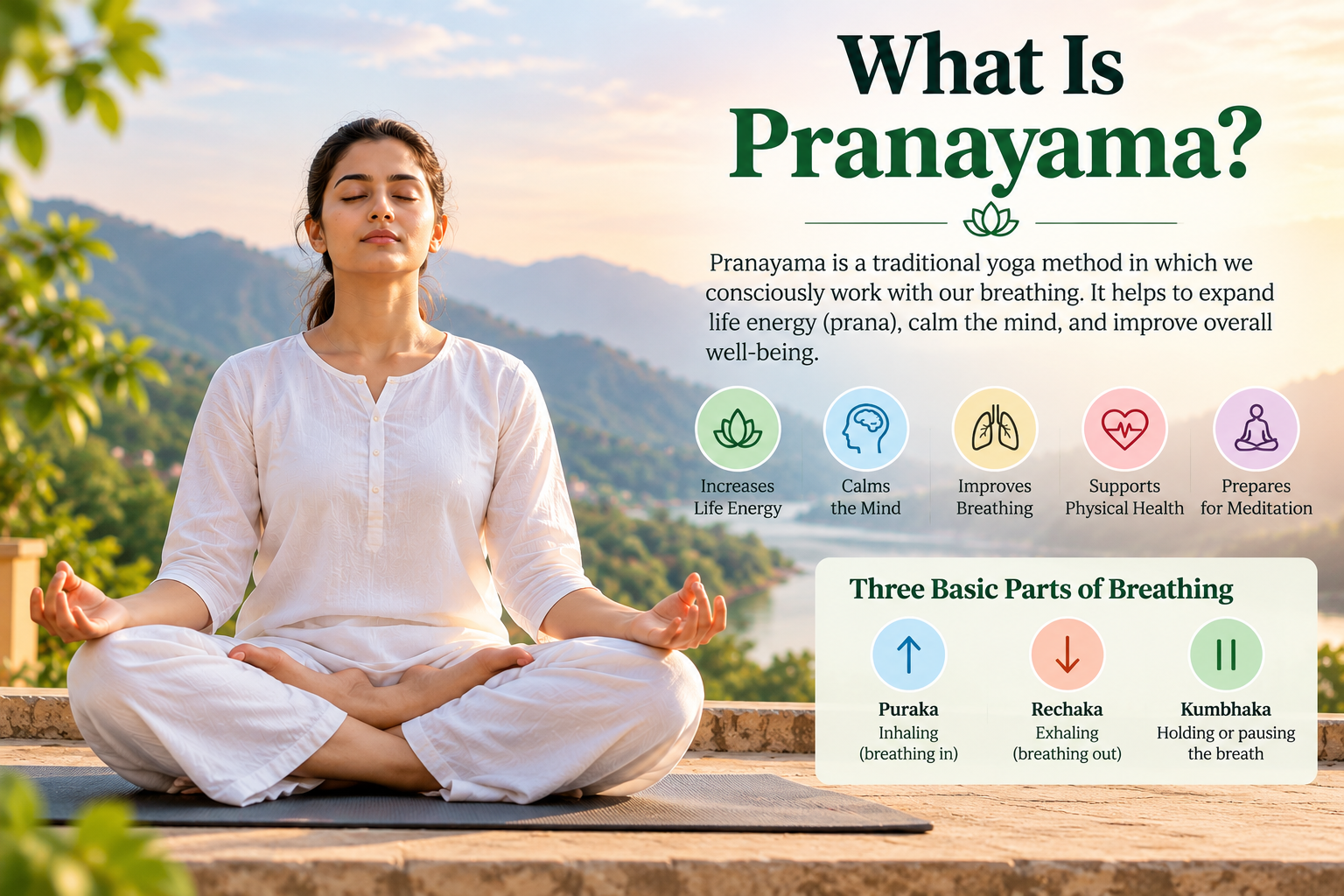
Pranayama is a traditional yoga method in which we consciously work with our breathing. It is the fourth limb of the eight limbs of yoga explained by Maharishi Patanjali.
The Sanskrit word prana means life energy. Ayama means expansion or extension. So, pranayama is traditionally understood as a way to expand and guide prana through breathing practice.
In simple scientific terms, pranayama changes how we breathe. We may change the speed, length, depth, or path of the breath.
Three Basic Parts of Breathing
- Puraka: Breathing in, or inhalation.
- Rechaka: Breathing out, or exhalation.
- Kumbhaka: Holding or pausing the breath.
Breath holding is important in some traditional practices, but it is not needed for beginners. First, learn how to inhale and exhale without stress.
In Yoga Sutra 2.49, Patanjali explains pranayama as the regulation of the natural movement of inhalation and exhalation after a steady posture is developed.
How Many Types of Pranayama Are There?
There is no one fixed number. Different yoga texts and schools teach different groups of breathing practices. Today, teachers may speak about seven, eight, or ten types of pranayama.
Seven Common Types of Pranayama
1. Nadi Shodhana: Alternate Nostril Breathing.
2. Bhramari: Humming Bee Breath.
3. Ujjayi: Victorious or Ocean Breath.
4. Bhastrika: Bellows Breath.
5. Kapalabhati: Skull-Shining Cleansing Breath.
6. Sheetali: Cooling Breath through the tongue.
7. Sheetkari: Cooling Breath through the teeth.
This group of seven is a useful modern teaching list. It is not a fixed list taken directly from one ancient text.
Eight Pranayamas in the Hatha Yoga Pradipika
The Hatha Yoga Pradipika, a well-known traditional yoga text, names eight forms of kumbhaka: Surya Bhedana, Ujjayi, Sitkari, Sitali, Bhastrika, Bhramari, Murchha, and Plavini.
This is different from the modern list above. Nadi Shodhana and Kapalabhati do not appear among these eight forms. The text describes Kapalabhati separately as a Shatkarma, or cleansing practice. Murchha and Plavini are advanced methods and are not suitable for beginners practising alone.
What About 10 Types of Pranayama?
Some modern yoga schools add Surya Bhedana, Chandra Bhedana, and Anuloma Viloma when teaching ten types of pranayama. Surya Bhedana is linked with right-nostril or solar breathing. Chandra Bhedana uses the left nostril and is traditionally linked with calming qualities. Many teachers use the name Anuloma Viloma for breathing through alternate nostrils, but the exact steps are not the same in every tradition.
Names and methods sometimes overlap.
How to Practise Seven Common Pranayama Techniques
Before starting, sit in a comfortable position. You can sit cross-legged, in Vajrasana, or on a chair. Sit tall without stiffness, and let your shoulders rest easily. Do not tighten your stomach or force your breathing.
1. Nadi Shodhana Pranayama (Alternate Nostril Breathing)
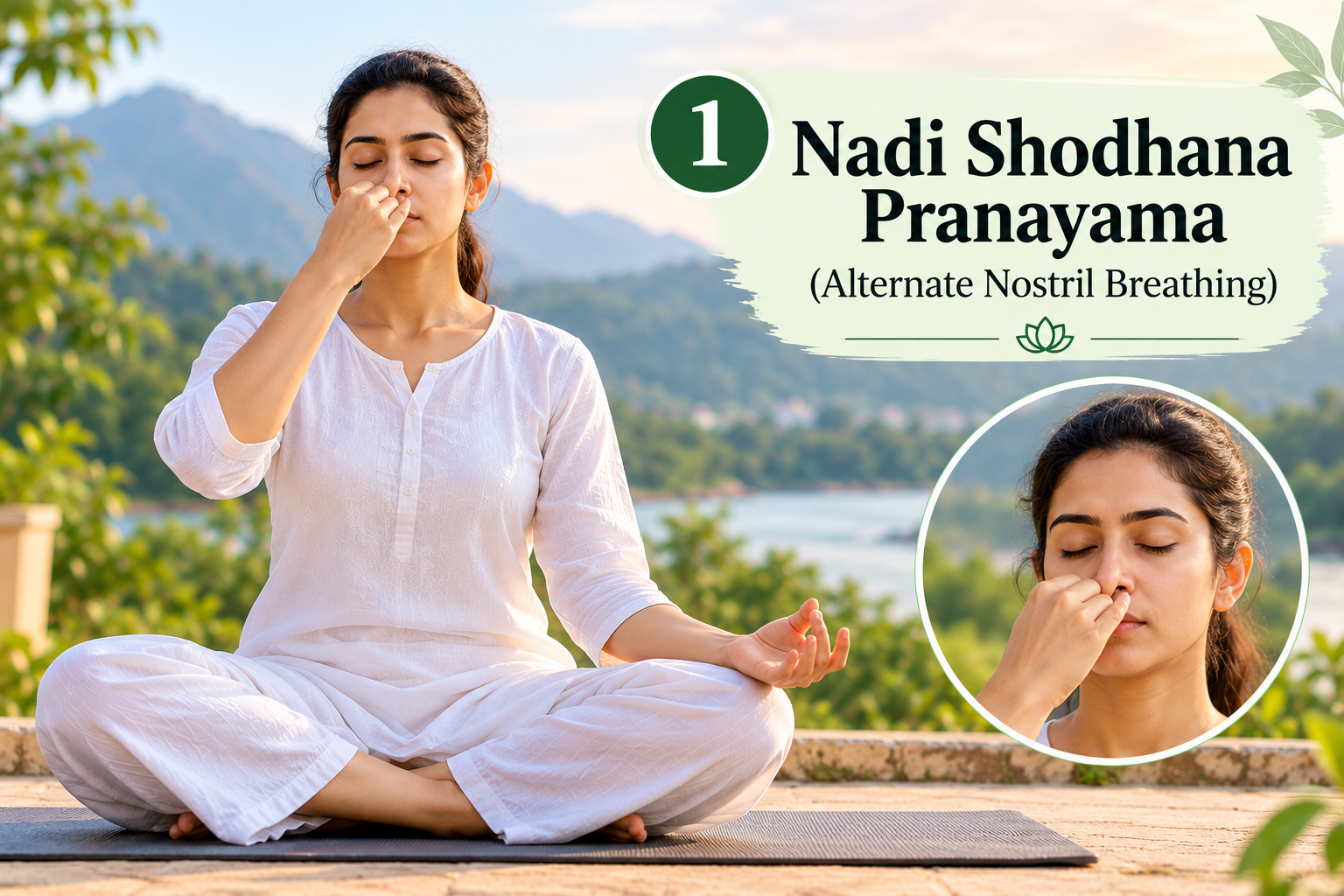
Nadi means a subtle energy channel, and Shodhana means cleansing. In yogic teaching, Nadi Shodhana helps balance the flow of prana. In practice, we breathe through one nostril at a time in a gentle sequence.
How to practice:
1. Sit comfortably with your back straight.
2. Keep your left hand on your knee.
3. Bring your right hand near your nose.
4. Place your thumb lightly against the right nostril, then draw air in through the left side.
5. Touch the left nostril lightly with your ring finger to close it. Open the right and exhale.
6. Inhale through the right nostril.
7. Use your thumb to shut the right nostril, then breathe out slowly on the left side.
This is one complete round. Beginners can start with three to five slow rounds. Keep the breath moving without holding it.
Possible benefits: This practice builds breath awareness and concentration. It may help you relax and feel more settled.
Precautions: Never force air through a blocked nostril. If your nose is badly congested, breathe naturally instead. Avoid long breath holding and difficult breathing ratios. If you have heart or breathing problems, ask a qualified professional before trying advanced versions.
Simple tip: Start slowly and build a regular practice.
2. Bhramari Pranayama (Humming Bee Breath)
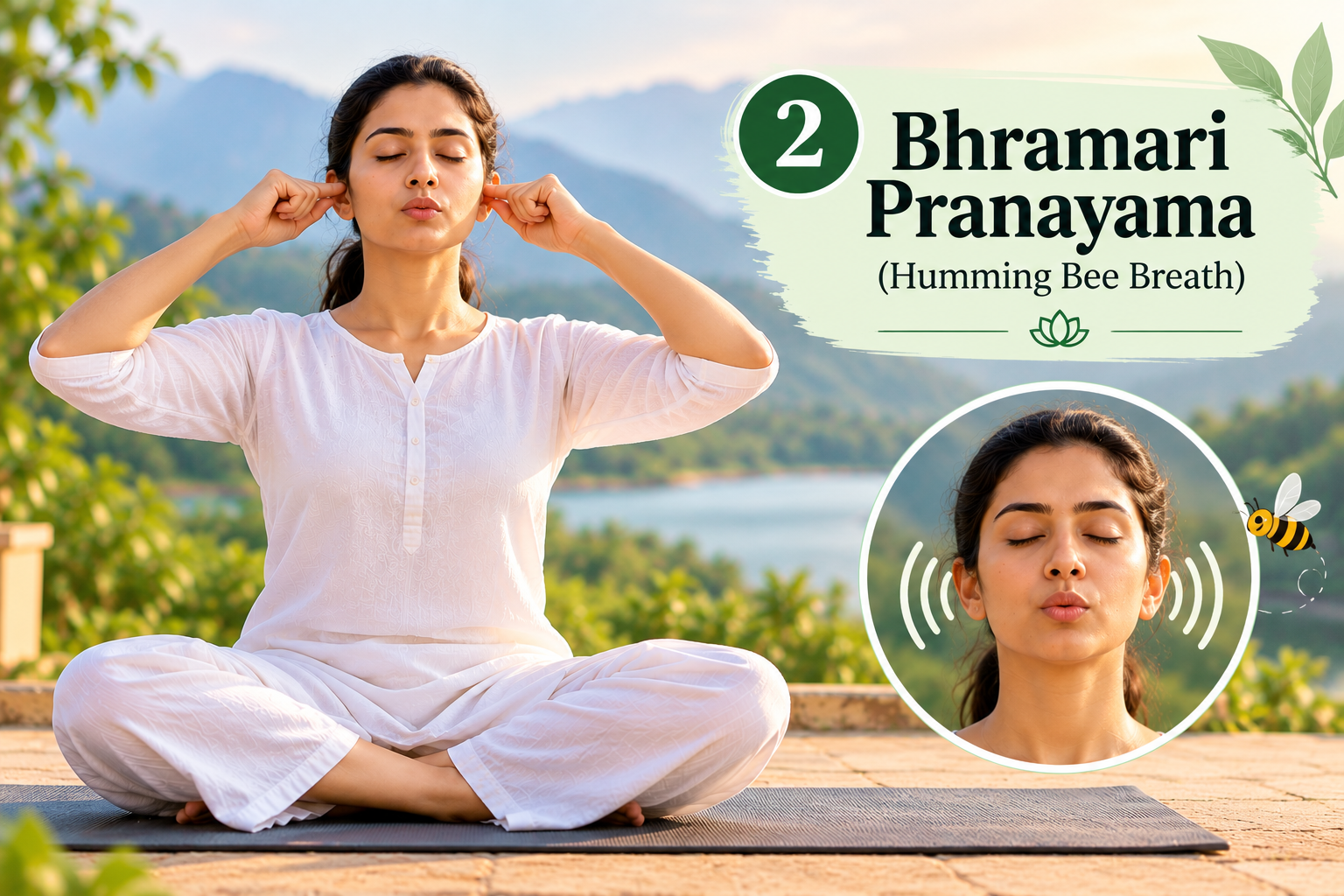
The name Bhramari comes from the bee-like hum made as we breathe out. We breathe in normally and make a soft humming sound while breathing out.
How to practice:
1. Sit in a quiet and comfortable place.
2. Close your eyes if that feels comfortable.
3. Relax your face, jaw, and shoulders.
4. Breathe in slowly through the nose.
5. Close your lips gently and hum as you breathe out.
6. Notice the vibration around the face or throat.
7. Take another natural breath and repeat three to five times.
You may cover your ears gently to reduce outside noise, but this is optional. Never press your eyes.
Possible benefits: Soft humming may help the body settle and make the mind feel less busy. Following the sound gives your attention one simple place to rest. Many students enjoy it before meditation or after a busy day.
Precautions: Do not hum loudly or push too hard. Stop if you feel ear pain, pressure, headache, or dizziness. The humming should be smooth and easy.
Simple tip: After each humming breath, notice the short moment of silence.
3. Ujjayi Pranayama (Victorious or Ocean Breath)
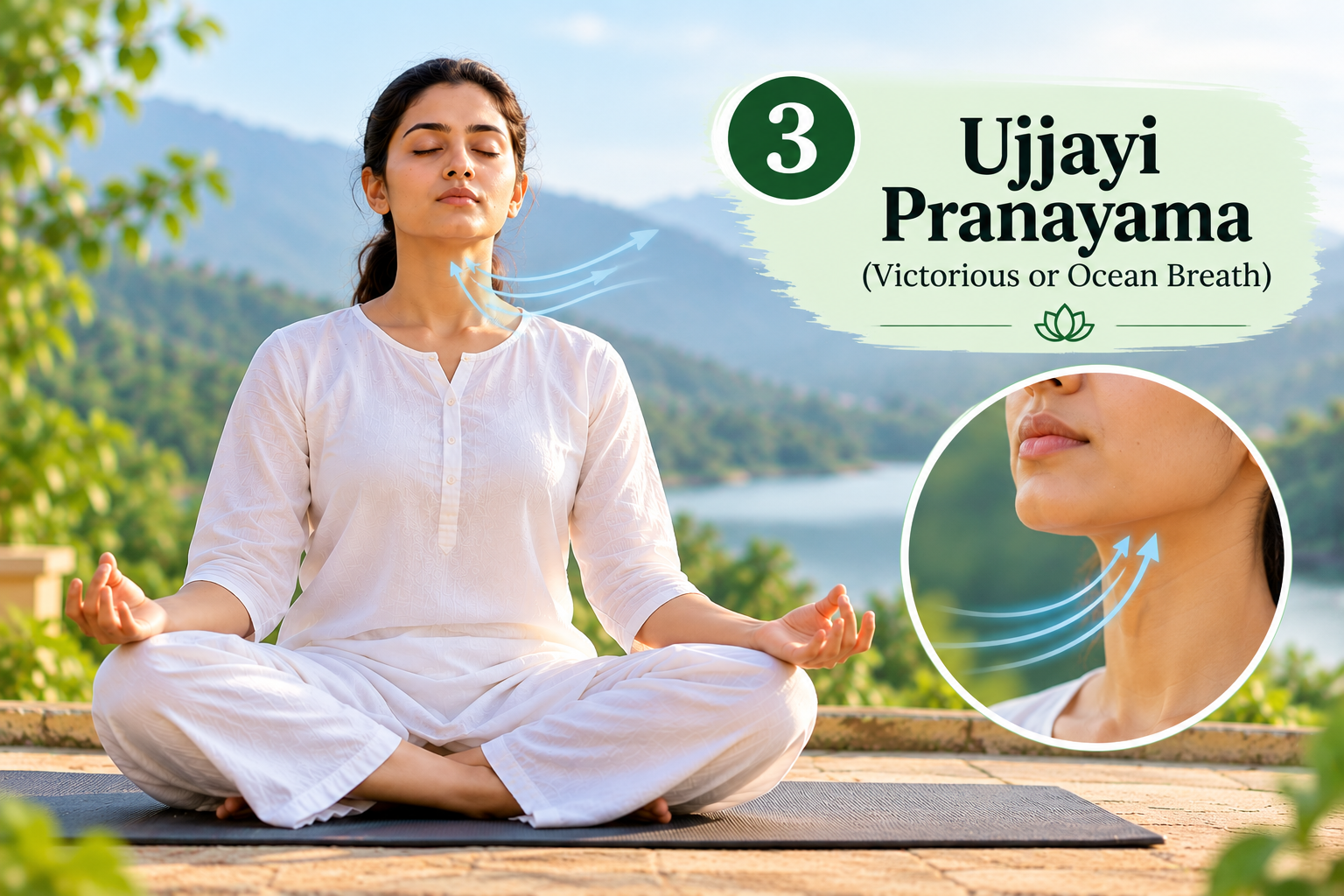
Ujjayi is also known as Ocean Breath because the air makes a quiet, wave-like sound in the throat. We create this sound by gently narrowing the passage at the back of the throat. It is often used during yoga postures because it helps us follow the rhythm of breathing.
How to practice:
1. Sit comfortably and breathe normally.
2. Open your mouth slightly.
3. Breathe out gently as if you are fogging a mirror.
4. Notice the soft feeling at the back of your throat.
5. Close your mouth and breathe through your nose.
6. Keep the same gentle throat feeling so you hear a quiet ocean-like sound.
7. Continue for five comfortable breaths.
The sound should be soft. You do not need to make it loud for the technique to work.
Possible benefits: Ujjayi can make breathing easier to notice during movement. It may help you stay focused and follow a steady pace in yoga practice.
Precautions: Do not squeeze the throat or pull air with force. If you feel strain, return to normal breathing. People who already have breathing difficulties should learn with an experienced teacher.
Simple tip: Listen to the gentle sound, but never strain to make it louder. Relaxation and control matter more than volume.
4. Bhastrika Pranayama (Bellows Breath)
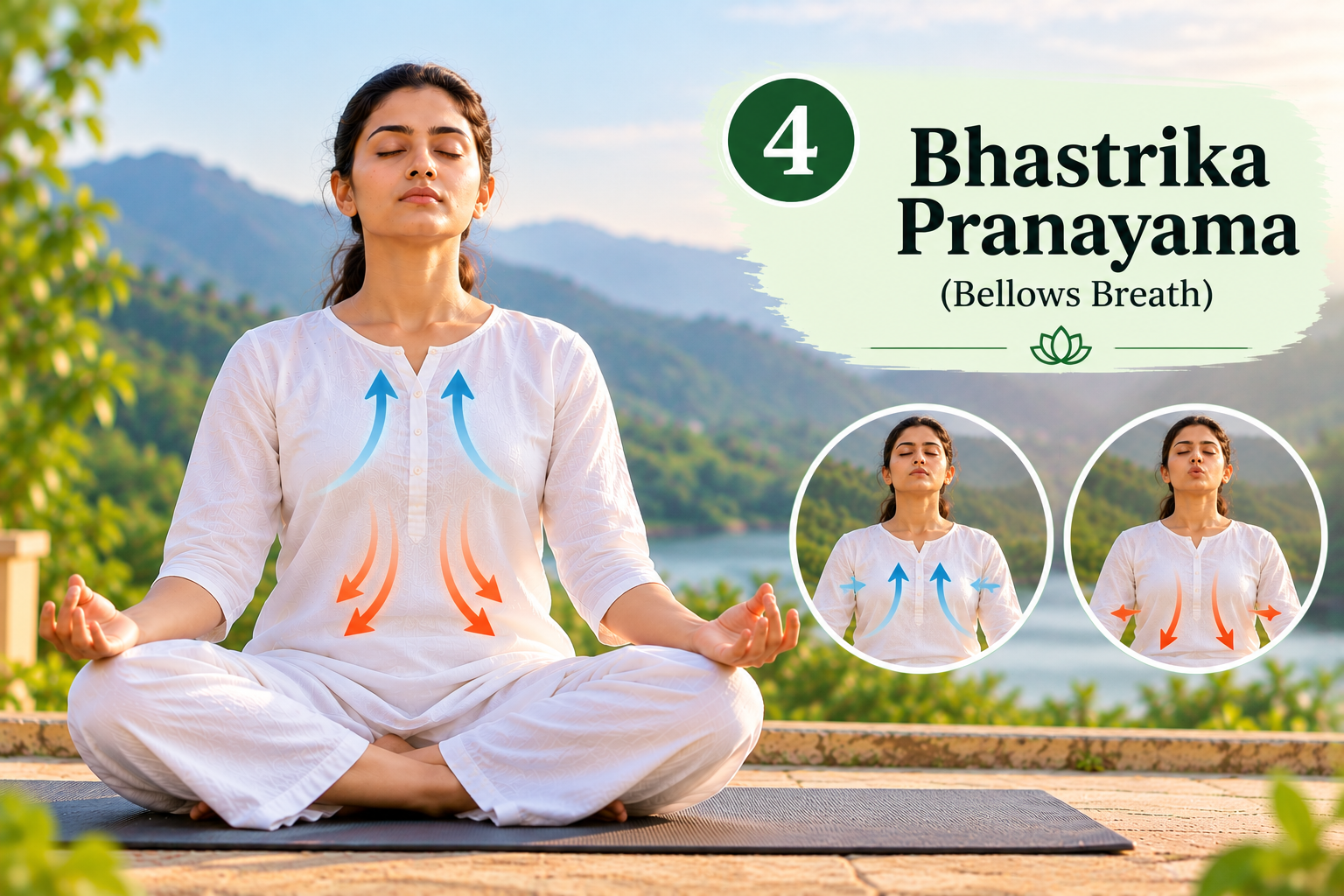
Bhastrika means bellows, a tool used to blow air into a fire. Here, you deliberately move the air in and out rather than letting either part happen passively. It is stronger and more stimulating than the gentle methods above.
How it is practised:
1. Sit upright and relax your shoulders.
2. Begin with normal breathing.
3. Breathe in actively through the nose.
4. Breathe out actively through the nose.
5. Keep both movements controlled, not rushed.
6. Stop after a short supervised practice.
7. Rest and return to normal breathing.
Beginners should learn Bhastrika directly from a trained teacher. Do not begin with fast, strong rounds from written instructions alone.
Traditional purpose and possible effects: Bhastrika is linked with warmth and increased energy in yoga teaching. It may create a feeling of alertness and helps students understand active inhalation and exhalation.
Precautions: Avoid this practice during pregnancy. Seek medical advice and teacher guidance if you have uncontrolled high blood pressure, heart disease, breathing problems, or a history of fainting. Stop immediately if you feel dizzy, shaky, or uncomfortable.
Simple tip: Good technique is always more important than speed.
5. Kapalabhati (Skull-Shining Cleansing Breath)
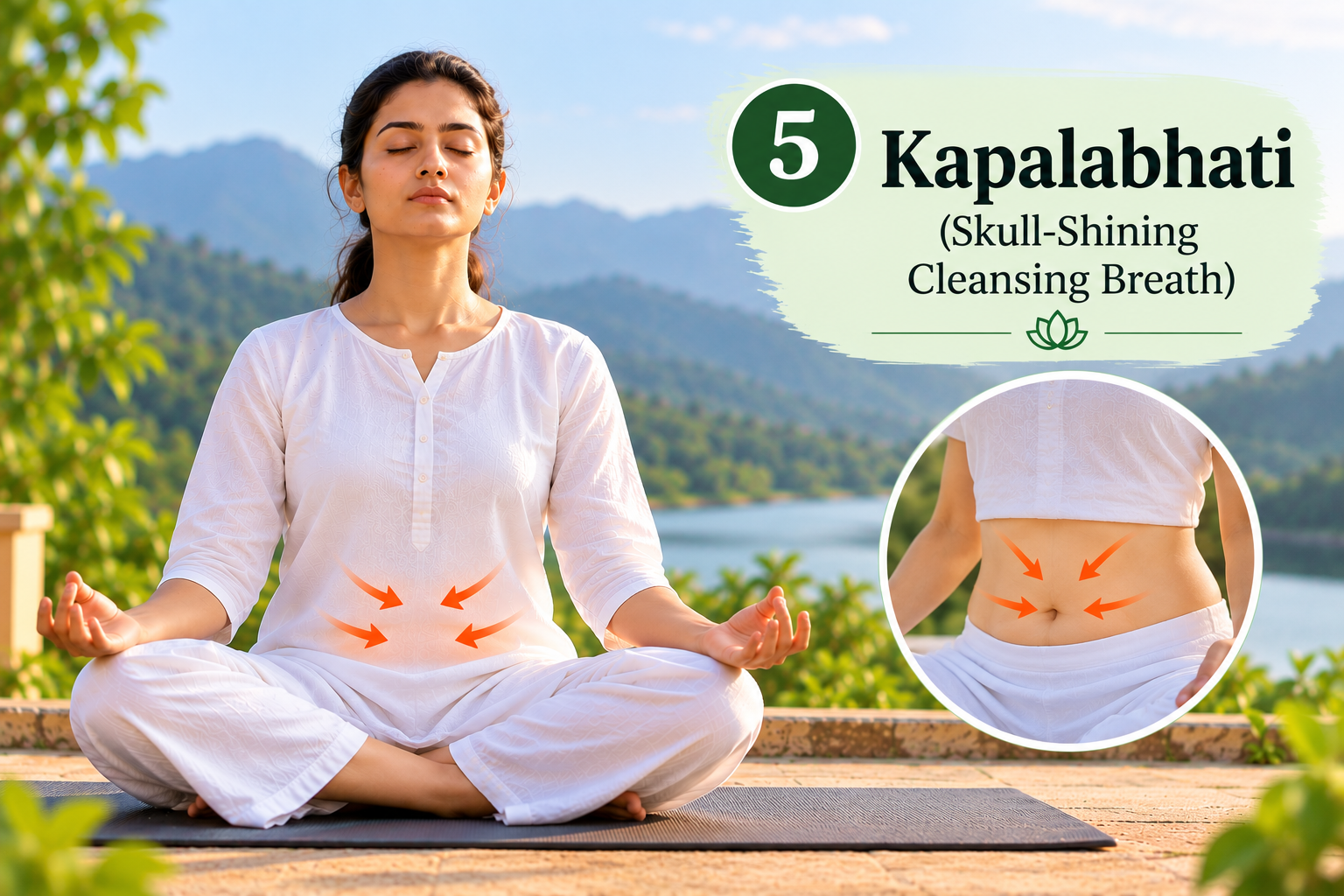
Kapalabhati is often taught in pranayama classes, but classical Hatha Yoga describes it as a cleansing practice, or Shatkarma. In Sanskrit, Kapala refers to the skull, while Bhati suggests brightness or light. Unlike Bhastrika, Kapalabhati uses a strong exhalation followed by a natural, passive inhalation.
How it is performed:
1. Sit comfortably with a straight back.
2. Let your body settle as you breathe in and out at your usual pace.
3. Breathe out through the nose with a quick inward movement of the abdomen.
4. Relax the abdomen and let the next inhalation happen naturally.
5. Repeat only at a controlled pace with a teacher.
6. Stop and return to normal breathing.
New students should not attempt long or fast rounds without direct instruction.
Traditional purpose and possible effects: Kapalabhati is traditionally linked with cleansing. It teaches control of abdominal movement during exhalation and can feel stimulating. However, there is not enough strong evidence to claim that it removes toxins, melts belly fat, or cures digestive disease.
Precautions: Avoid it during pregnancy. Get medical advice if you have high blood pressure, heart disease, a hernia, recent stomach surgery, or significant eye problems. Stop if you have pain, headache, dizziness, or chest discomfort.
Bhastrika vs Kapalabhati: In Bhastrika, both inhalation and exhalation are active. In Kapalabhati, exhalation is active while inhalation is passive. Both require careful teaching and should not include forced breath holding for beginners.
6. Sheetali Pranayama (Cooling Breath)
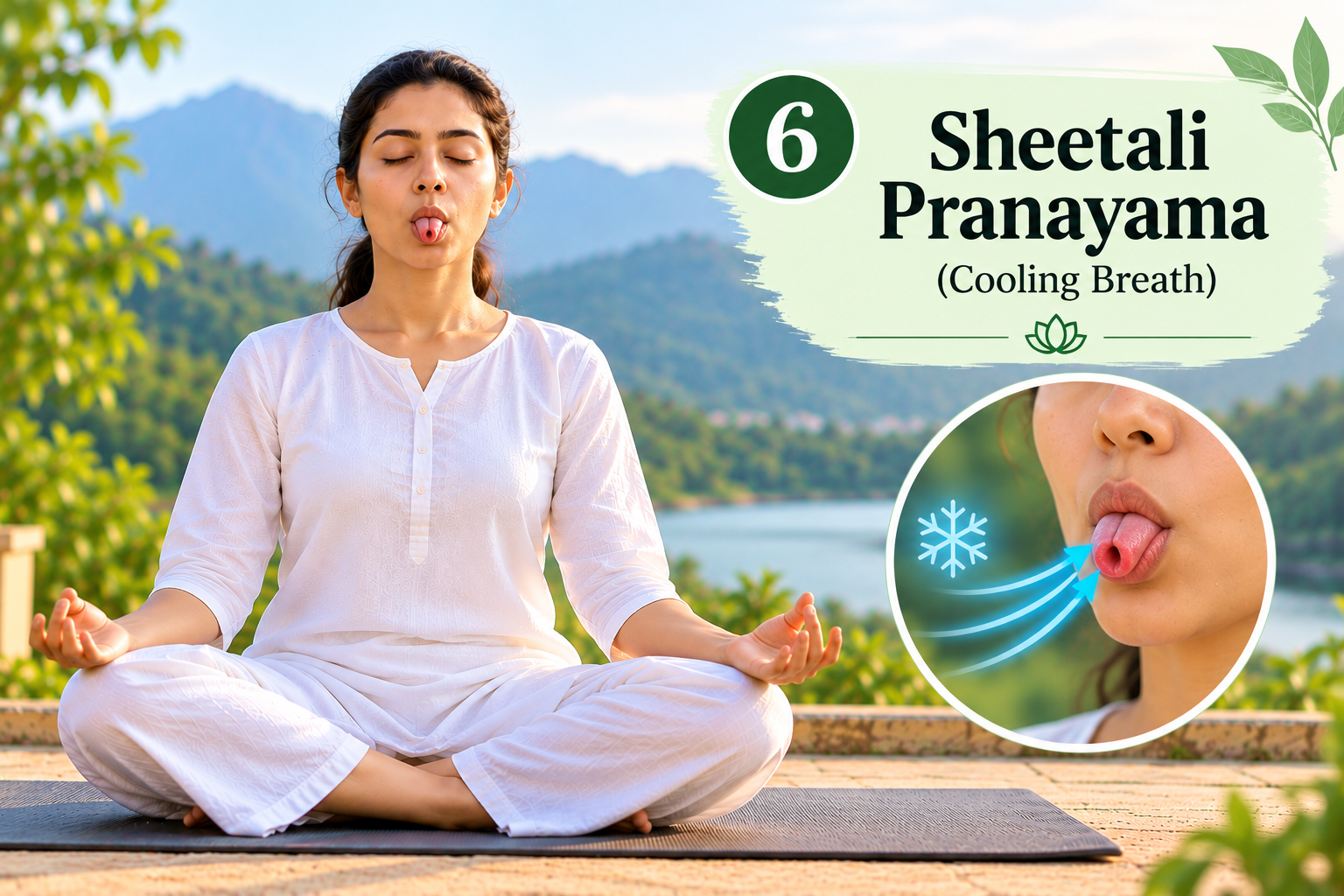
Sheetali is a traditional cooling pranayama. We breathe in through a rolled tongue and breathe out through the nose. Many people feel cool air passing over the tongue. This does not mean it can treat fever or heatstroke.
How to practice:
1. Sit comfortably and relax your shoulders.
2. Put your tongue out gently.
3. Roll the sides of the tongue upward to make a tube, if possible.
4. Breathe in slowly through the rolled tongue.
5. Bring the tongue back and close your mouth.
6. Breathe out slowly through the nose.
7. Repeat three to five times.
Possible benefits: Sheetali gives a cooling feeling in the mouth and may support relaxation.
Precautions: Avoid breathing through the mouth in polluted, dusty, or very cold air. Stop if you start coughing or feel irritation in your throat or lungs.
Simple tip: Some people cannot roll their tongue because of their natural anatomy. This is normal. They can try Sheetkari instead.
7. Sheetkari Pranayama (Hissing Cooling Breath)
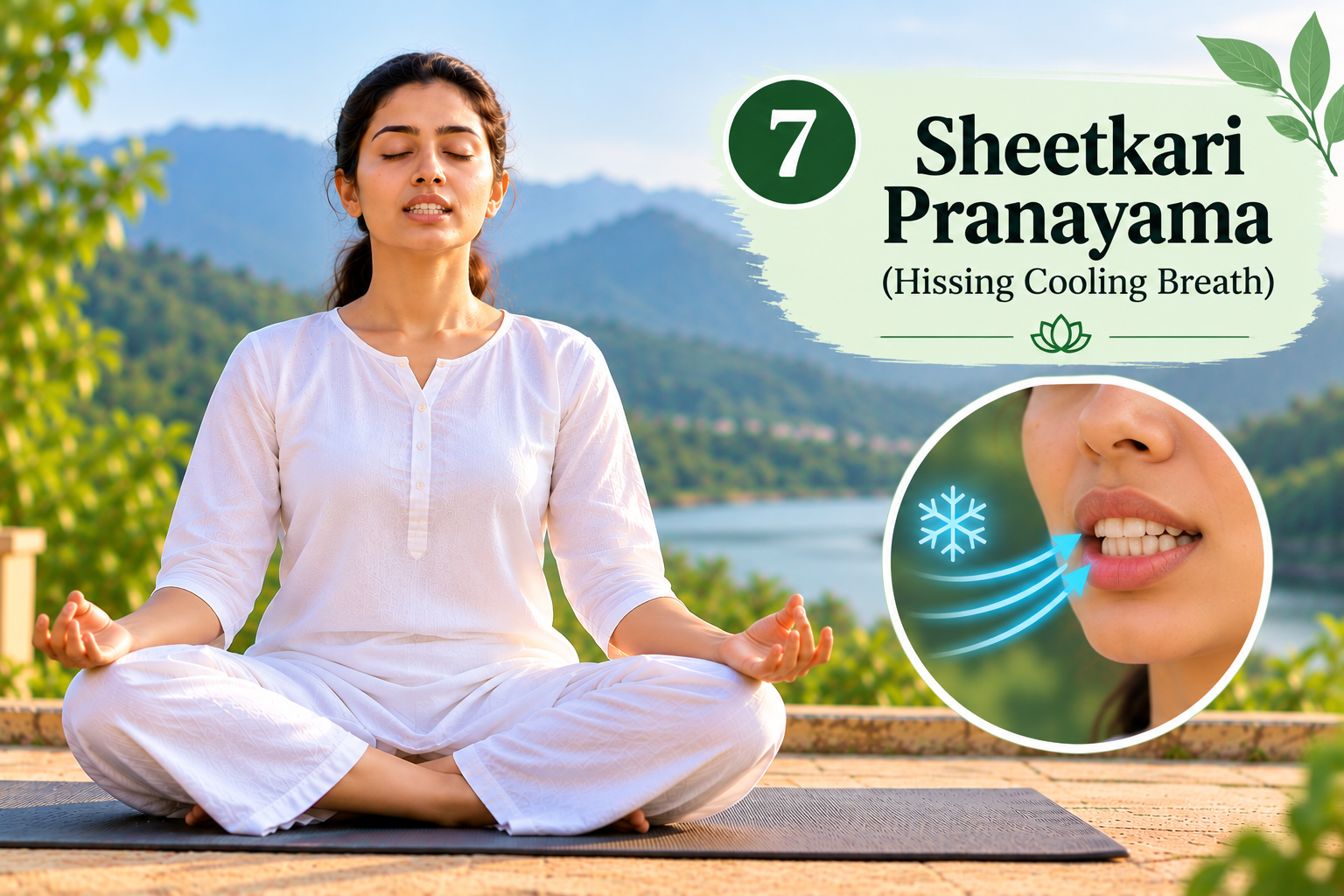
Sheetkari is another cooling practice. Instead of rolling the tongue, we breathe in through gently parted teeth. This makes a light hissing sound, followed by a slow exhalation through the nose.
How to practice:
1. Sit upright in a relaxed position.
2. Bring your upper and lower teeth close together without biting down.
3. Open your lips a little.
4. Breathe in slowly through the space around your teeth.
5. Close your mouth.
6. Breathe out gently through your nose.
7. Repeat three to five times.
Possible benefits: Sheetkari may create a pleasant cooling sensation. It can help with slow breathing and is an easy alternative for people who cannot roll their tongue.
Precautions: Avoid polluted air. If you have sensitive teeth, jaw pain, or irritation from mouth breathing, choose another gentle practice.
Sheetali vs Sheetkari: Both breathe out through the nose. Sheetali breathes in through a rolled tongue, while Sheetkari breathes in through the teeth.
Different Types of Pranayama for Beginners
Beginners do not need to practise all seven techniques. First learn to observe natural breathing. Notice how the stomach and chest move, whether the shoulders are tense, and whether the breath feels comfortable.
Good beginner choices include natural breath awareness, gentle abdominal breathing, Nadi Shodhana without holding the breath, and Bhramari. Soft Ujjayi can also be introduced with guidance. Sheetali or Sheetkari may suit some students. Bhastrika and Kapalabhati need direct supervision because strong breathing can create discomfort.
A Simple 10-Minute Pranayama Routine
- 2 minutes: Sit quietly and observe your natural breath.
- 2 minutes: Practise gentle abdominal breathing.
- 3 minutes: Do slow Nadi Shodhana without holding the breath.
- 2 minutes: Practise soft Bhramari.
- 1 minute: Sit silently and notice how you feel.
This routine is a general example for healthy adult beginners. Choose a quiet place with clean air. Keep your clothing loose and your body relaxed. Stop if you feel dizzy, have chest pain, or find it hard to breathe.
Benefits of Pranayama
Pranayama has a long history in yoga. Traditional teaching explains it as a way to guide prana and prepare the mind for meditation. Modern research studies possible effects on stress, heart rate, blood pressure, and mental well-being.
1. May Help Reduce Stress
When we feel stressed, our breathing often becomes fast or shallow. Gentle breathing practices may help us slow down and feel calmer. Research on breathing exercises suggests possible benefits for stress and anxiety, but some studies are small or have weak methods. Breathing exercises should support, not replace, needed mental healthcare.
2. Builds Breath Awareness
Pranayama teaches us to notice how we breathe during rest, activity, and emotional moments. We may become aware of tight shoulders, a rushed breath, or a habit of holding the breath. This awareness can be useful during yoga, meditation, and daily life.
3. May Support Heart Health
Some studies suggest that slow breathing can help lower heart rate and certain blood pressure readings. A review of seven randomised trials involving 683 people with high blood pressure reported encouraging results. More research is still needed. People taking blood pressure medicine should never stop it because they practise pranayama.
4. Helps Concentration and Meditation
Each technique gives the mind one clear task. In Nadi Shodhana, we follow the breath through different nostrils. In Bhramari, we listen to a humming sound. In Ujjayi, we notice the quiet sound in the throat. These simple points of attention can help prepare the mind for meditation.
5. May Improve General Well-Being
Some participants in pranayama studies report feeling less stressed and more relaxed after regular practice. A 2026 review involving medical students found improvements in reported stress and anxiety, but many studies did not have strong comparison groups.
6. May Help You Relax Before Sleep
Soft Bhramari, gentle Nadi Shodhana, or quiet breath observation can become part of a relaxing evening routine. Avoid strong Bhastrika or Kapalabhati near bedtime if they make you feel more active. People with ongoing sleep problems should seek proper medical advice.
Traditional Ideas and Modern Science
Yoga describes balancing prana, cleansing nadis, and preparing the mind for deeper awareness. Science studies measurable changes such as breathing rate, stress scores, and heart function. Both views can be respected, but subtle energy channels should not be presented as proven physical structures.
How to Choose the Right Pranayama
Choose a practice according to your aim, health, and comfort. For simple breath awareness, try Nadi Shodhana. To settle the mind before meditation, try Bhramari. To connect movement and breathing, try gentle Ujjayi. For a cooling feeling, explore Sheetali or Sheetkari. Learn Bhastrika and Kapalabhati only with trained guidance.
You should feel comfortable during the practice and calm enough to breathe naturally afterwards. If you have a medical condition, speak with your healthcare professional and teacher about suitable changes.
Best Time to Practice Pranayama
You can practise at any time when you feel comfortable and are not rushing. Many yoga traditions prefer early morning because it is often quiet.
Morning: Find a clean, quiet space. Start with gentle breathing and continue with yoga postures or meditation if you wish.
Evening: Choose calming methods such as Bhramari or slow Nadi Shodhana. Avoid strong practices if they make you feel restless.
Before or after food: Formal pranayama is usually more comfortable before eating or after digestion. Wait about two to three hours after a large meal before vigorous breathing. Gentle breath observation may be comfortable at other times.
Daily duration: Five to ten minutes is enough for many beginners. Increase slowly as you learn.
Common Pranayama Mistakes to Avoid
1. Breathing Too Hard
Taking fast or very deep breaths does not always mean getting more useful oxygen. Overbreathing can cause dizziness or tingling. Use only the effort your technique needs, and return to normal breathing if you feel uncomfortable.
2. Holding the Breath Too Soon
Long breath retention is an advanced skill. Beginners should first become comfortable with breathing in and out. Do not copy long breath holds from videos without proper instruction.
3. Trying Every Technique at Once
It is easy to feel that more techniques will bring better results. This is not necessary. Start with one or two gentle methods and practise regularly before adding anything new.
4. Ignoring Warning Signs
Pain, dizziness, a severe headache, or unusual shortness of breath are not signs of successful cleansing. Stop, rest, and seek medical help if symptoms are serious or continue.
5. Copying Advanced Students
Every body is different. A breathing pattern that suits an experienced practitioner may be too strong for you.
6. Treating Pranayama Like a Cure
Breathing practices can be part of a healthy routine, but they cannot take the place of medical care for asthma, hypertension, anxiety conditions, or other health problems. Pregnant people and those with heart, lung, or other significant health conditions should get personal advice before strong breathing practices.
Learn Traditional Yoga and Pranayama in Rishikesh
Reading about pranayama is a good first step. But learning directly from an experienced teacher helps you understand the right breathing pattern, avoid unnecessary effort, and practise safely.
At Nirvana Yoga School in Tapovan, Rishikesh, pranayama is taught together with yoga postures, meditation, philosophy, and anatomy. Students can study breathing practices as part of structured yoga teacher training.
Learning pranayama under proper guidance helps students practise each breathing technique correctly, choose practices that meet their needs, and make changes based on their physical condition.
Conclusion
Pranayama is much more than taking deep breaths. It is a traditional yoga practice that brings attention to breathing, the body, and the mind. The seven techniques in this guide offer different ways to explore breath control, from the quiet rhythm of Nadi Shodhana to the humming sound of Bhramari and the stronger breathing of Bhastrika.
Start with gentle methods. Keep your breathing natural, avoid strain, and learn advanced practices from a trained teacher. Even a few comfortable minutes each day can help you build awareness. In yoga, steady progress begins with patience and attention to the breath.
A good practice should leave you feeling comfortable rather than tired. Take your time as you move from simple breathing towards more advanced methods. With steady learning and regular guidance, you can discover which breathing methods are most useful for your personal yoga journey.