Pain is an unpleasant physical and emotional experience that usually signals that the body is injured, irritated, inflamed, or under stress. In daily life, pain may show up as lower-back discomfort after long hours at a desk, neck and shoulder stiffness from frequent smartphone use, aching knees while climbing stairs, menstrual cramps, recurring headaches, or muscle soreness after exercise.
Understanding the different types of pain can help you recognise what your body may be experiencing, choose appropriate care and understand when practices such as gentle yoga may be useful.
Pain can be classified according to how long it lasts, what causes it and where it is felt in the body. Some pain settles as an injury heals, while other pain may continue for months or years and require a more comprehensive approach.
Integrating yoga into a comprehensive care plan can be an effective strategy.It should not replace medical diagnosis or treatment, but carefully adapted movement, breathing and relaxation may support some people living with persistent pain.
“Pehla sukh, nirogi kaya.”
The first happiness is a healthy body. — Traditional Indian saying
What Is Pain?
Pain is commonly thought of as a warning from the body.
If you touch something hot, twist your ankle or strain a muscle, pain encourages you to stop, protect yourself and allow the affected area to recover.
However, pain is more complex than a simple signal coming from damaged tissue.
The International Association for the Study of Pain describes pain as an unpleasant sensory and emotional experience associated with, or resembling that associated with, actual or potential tissue damage.
This means that pain involves both the body and the nervous system.
Several factors can influence how strongly a person experiences pain, including:
- Physical injury or inflammation
- Previous injuries
- Sleep quality
- Stress and anxiety
- Fear of movement
- General health
- Work and lifestyle habits
- Emotional wellbeing
- How long the pain has been present
This also explains why two people with apparently similar injuries may experience very different levels of pain.
Similarly, a person can sometimes experience significant pain even when an X-ray or MRI does not show major structural damage. The pain is still real.
A useful modern way of understanding pain is through a biopsychosocial approach. This means looking at biological factors, psychological factors and the person's social or lifestyle circumstances rather than focusing only on one painful body part.
Different Types of Pain
There are several ways to classify pain.
For everyday understanding, three questions are especially useful:
1. How long has the pain lasted?
Pain may be acute or chronic.
2. What mechanism is producing the pain?
It may be nociceptive, neuropathic or nociplastic.
3. Where is the pain located?
For example, back pain, neck pain, muscle pain, joint pain, headache or pelvic pain.
Pain can belong to multiple categories simultaneously.
For example, someone may have chronic lower-back pain that includes both muscular pain and irritation of a nerve.
Understanding these differences matters because yoga for pain relief should never be a one-size-fits-all practice.
Acute Pain vs Chronic Pain

One of the simplest ways to understand the types of pain is by duration.
| Feature | Acute Pain | Chronic Pain |
| Duration | Usually short-term | Lasts or recurs for more than about 3 months |
| Common causes | Injury, surgery, sprain, infection, inflammation | Arthritis, persistent back or neck problems, nerve conditions or sometimes no single identifiable cause |
| Typical sensation | Sharp, sudden, throbbing or well-localised | Aching, burning, tiring or widespread; may fluctuate |
| Purpose | Often protects an injured area | May continue even after tissues have healed |
| Main approach | Treat the cause and allow healing | Often needs a broader long-term management plan |
| Effect on daily life | Usually temporary | May affect sleep, movement, work, mood and confidence |
Acute Pain
Acute pain usually begins suddenly.
Examples include:
- An ankle sprain
- A muscle strain
- Pain after surgery
- A burn or cut
- Toothache
- A fresh back injury
- Pain from an acute infection
In many situations, acute pain is useful because it tells you that something needs attention.
As the injury heals, the pain usually reduces.
This is also why practising intense yoga immediately after a fresh injury is generally not a good idea. The first priority should be proper medical evaluation and appropriate recovery.
Chronic Pain
Pain that persists or keeps recurring for longer than three months is generally classified as chronic pain.
Chronic pain may occur with conditions such as:
- Osteoarthritis
- Persistent lower-back pain
- Persistent neck pain
- Neuropathic pain
- Fibromyalgia
- Migraine
- Some inflammatory disorders
Long-term pain can begin affecting much more than the painful area.
A person may sleep badly because of the pain. Poor sleep can increase sensitivity to pain. The person then becomes tired, stops exercising and may become afraid of movement. Reduced physical activity can lead to increased stiffness and muscle weakness.
A cycle gradually develops.
This is why yoga for chronic pain often focuses not only on stretching a painful area but also on breathing, relaxation, gradual movement, strength, sleep and confidence.
Types of Pain According to Cause
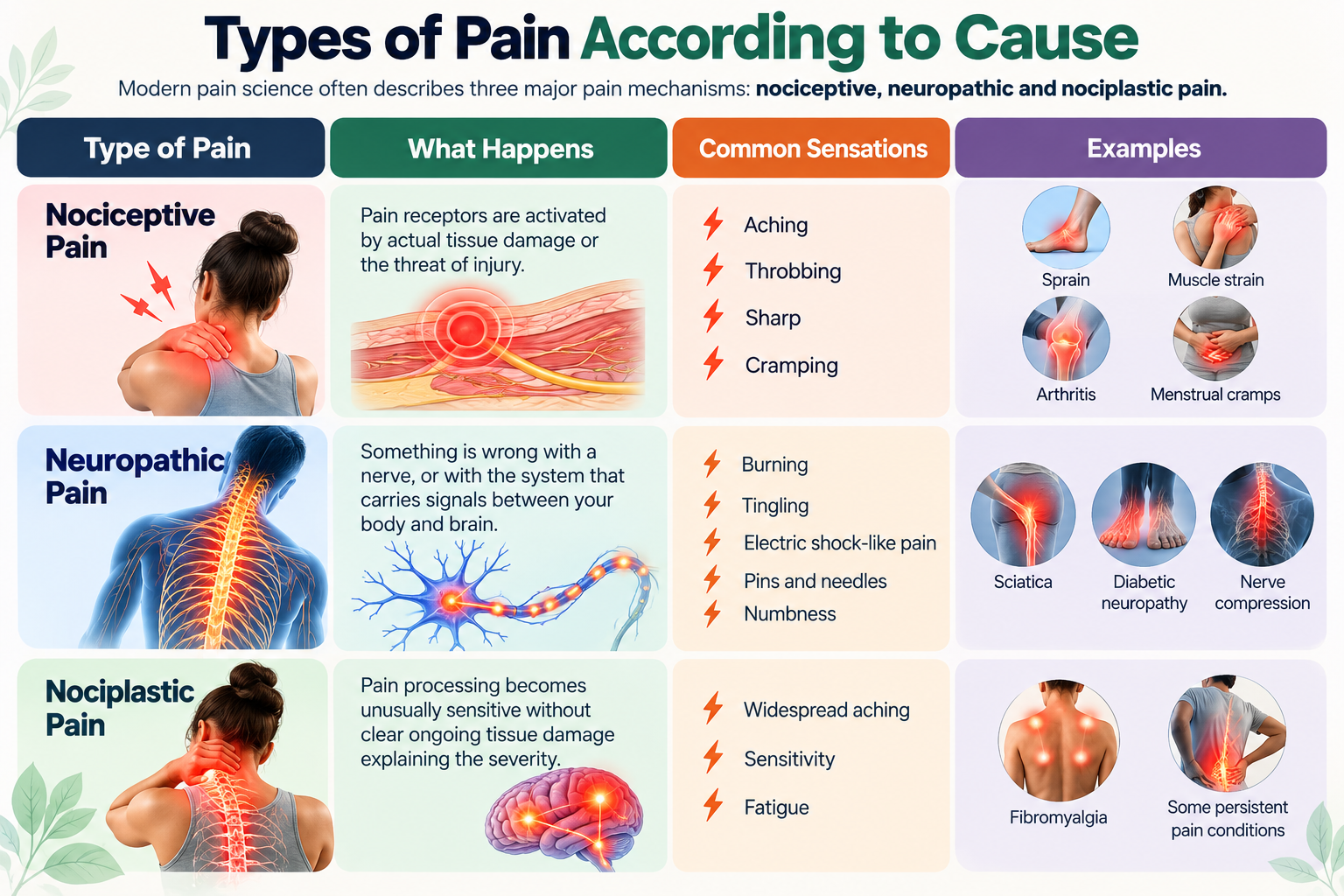
Modern pain science often describes three major pain mechanisms: nociceptive, neuropathic and nociplastic pain.
| Type of Pain | What Happens | Common Sensations | Examples |
| Nociceptive pain | Pain receptors are activated by actual tissue damage or the threat of injury. | Aching, throbbing, sharp or cramping | Sprain, muscle strain, arthritis, menstrual cramps |
| Neuropathic pain | Something is wrong with a nerve, or with the system that carries signals between your body and brain. | Common sensations include burning, tingling, electric shock-like pain, pins and needles, or numbness. | Sciatica, diabetic neuropathy, nerve compression |
| Nociplastic pain | Pain processing becomes unusually sensitive without clear ongoing tissue damage explaining the severity | Widespread aching, sensitivity, fatigue | Fibromyalgia and some persistent pain conditions |
1. Nociceptive Pain
This is the type of pain most people recognise easily.
It occurs when specialized sensory receptors detect actual or potential tissue injury.
Nociceptive pain is generally categorized into two main types: somatic pain and visceral pain.
Somatic pain
Somatic pain comes from structures such as:
- Muscles
- Joints
- Bones
- Skin
- Connective tissues
A sprained ankle, pulled hamstring or arthritic knee are common examples.
The pain may feel sharp, aching, throbbing or tender.
Visceral pain
Visceral pain comes from internal organs.
Examples include pain associated with:
- Menstrual cramps
- Kidney stones
- Gallbladder problems
- Certain gastrointestinal conditions
Visceral pain may sometimes feel more difficult to pinpoint than pain coming from a muscle or joint.
Because abdominal or internal pain can have many causes, unexplained or severe visceral pain should not simply be treated with yoga without medical evaluation.
2. Neuropathic Pain
Neuropathic pain occurs when a nerve or part of the nervous system is damaged, compressed or affected by disease.
People often describe it differently from ordinary muscular pain.
It may feel like:
- Burning
- Tingling
- Pins and needles
- Electric shocks
- Shooting pain
- Numbness
- Unusual sensitivity to touch
Examples include diabetic neuropathy and some cases involving nerve compression in the spine.
Sciatica, for instance, may cause symptoms travelling from the lower back or buttock into the leg.
If pain shoots into the arm or leg or is accompanied by numbness or weakness, simply stretching more strongly is not the answer. The symptoms should be evaluated by a qualified healthcare professional.
Yoga may sometimes form part of rehabilitation later, but the practice needs to be selected according to the underlying condition.
3. Nociplastic Pain
Nociplastic pain is particularly important when discussing long-term pain.
In this type of pain, the nervous system becomes unusually sensitive to pain signals. The amount of pain experienced may not be fully explained by ongoing tissue damage or an obvious nerve injury.
People may experience:
- Widespread pain
- Increased sensitivity
- Poor sleep
- Fatigue
- Brain fog
- Flare-ups following stress or overactivity
Fibromyalgia is one commonly discussed example.
This does not suggest that the pain is unreal or “just in the mind.”
The pain experience is real, but the nervous system's processing of sensation has changed.
For some people in this category, gradually rebuilding movement confidence, reducing stress, improving sleep and using relaxation techniques can be important parts of management.
Gentle yoga, meditation and breathing exercises may therefore be considered as supportive tools when recommended appropriately.
Common Types of Body Pain
Pain can also be described according to the part of the body affected.
In India, everyday lifestyle patterns can contribute to several common complaints—from long hours on laptops to extended phone use, two-wheeler commuting, physically demanding work and prolonged sitting.
| Area | Possible Causes | Common Experience |
| Lower back | Long sitting, lifting, reduced activity, muscle strain, age-related changes | Stiffness, dull ache or pain travelling into the leg |
| Neck and shoulders | Laptop use, prolonged phone use, muscular tension | Tightness, restricted movement, headache or arm symptoms |
| Knees and hips | Osteoarthritis, old injury, muscle weakness, overuse | Pain during stairs, walking, squatting or getting up |
| Muscles | Exercise, overuse, inactivity, tension or injury | Soreness, cramps, tenderness or stiffness |
| Joints | Osteoarthritis, inflammatory arthritis, gout, injury | Swelling, stiffness and reduced movement |
| Head | Tension headache, migraine, eye strain or other causes | Pressure, throbbing or sensitivity |
| Pelvis/lower abdomen | Menstrual pain and various gynaecological conditions | Cramping or aching |
Persistent or unexplained pain should always be medically assessed rather than blamed only on posture, ageing or stress.
Can Yoga Help With Pain?
The simple answer is: for some conditions and some people, yes—but yoga is not a cure for every type of pain.
Research on yoga and pain relief is strongest for chronic lower-back pain.
Studies suggest yoga may produce modest improvements in pain and physical function for people with persistent low-back pain. Research on neck pain, knee osteoarthritis, headache and several other pain conditions is promising in some areas, but evidence is more limited.
Yoga should therefore be understood as a supportive pain-management practice, not a replacement for diagnosis, physiotherapy, medication or other necessary treatment.
How might yoga help?
1. Gentle movement can reduce stiffness
People living with pain often begin moving less because they are afraid movement will worsen their condition.
Sometimes temporary rest is necessary, particularly after an acute injury.
But prolonged inactivity can also contribute to:
- Reduced mobility
- Muscle weakness
- Stiffness
- Loss of confidence
- Reduced physical capacity
Appropriate yoga movements may provide a controlled way to start moving again.
2. Yoga may improve strength
Therapeutic yoga for pain involves much more than simply improving flexibility.
Gentle strengthening of the:
- Hips
- Legs
- Back
- Core
- Shoulders
may improve the body's ability to manage ordinary activities.
3. Breathing may support relaxation
Pain often activates a protective stress response.
The jaw tightens, shoulders rise, breathing becomes shallow and muscles remain guarded.
Slow, comfortable breathing practices may help shift the body towards a calmer state.
This does not make an injury disappear, but it may help reduce unnecessary muscular tension and stress around the pain experience.
4. Yoga can develop body awareness
One valuable skill cultivated through yoga is the ability to notice and respond to subtle signals from the body.
Instead of waiting until discomfort becomes severe, practitioners may learn to notice:
- Muscular tension
- Fatigue
- Breath-holding
- Poor sitting habits
- Stress
- Early signs of overexertion
They can then modify their activity before symptoms become stronger.
5. Relaxation may improve sleep
Persistent pain and poor sleep frequently occur together.
Pain makes sleeping difficult, while insufficient sleep can increase pain sensitivity the following day.
Shavasana, guided relaxation, gentle breathing and meditation may support a healthier relaxation routine.
6. Yoga may reduce fear of movement
After months of pain, people sometimes begin believing that their body is fragile.
A gradual yoga practice can provide safe experiences of movement again.
Gradually returning to activities such as bending, walking, stretching, or strengthening without triggering a significant flare-up can help restore confidence in movement.
“Sthira sukham asanam.”
A posture should be steady and comfortable. — Yoga Sutras of Patanjali 2.46
For pain management, this principle is particularly valuable. A posture does not become more therapeutic simply because it is deeper or more difficult.
Yoga for Back Pain
Back pain is one of the most common reasons people look for yoga for pain relief.
However, back pain can arise from many different conditions and causes.
It may involve:
- Muscle strain
- Reduced strength
- Prolonged inactivity
- Joint changes
- Disc-related problems
- Nerve irritation
- Persistent pain without one clear structural cause
That is why one yoga sequence cannot be recommended for everybody with back pain.
For uncomplicated chronic lower-back discomfort, gentle movements may include:
- Cat-Cow movements
- Supported Child's Pose
- Low Bridge Pose
- Gentle pelvic movements
- Comfortable knee-to-chest variations
- Mild hip mobility exercises
- Relaxation practices
Deep forward bends, aggressive twisting or strong backbending may not be appropriate for everyone.
Someone experiencing pain that radiates down the leg, along with weakness or significant numbness, should consult a healthcare professional before starting a general yoga routine for lower back pain.
Yoga for Neck Pain
Desk work and smartphone use have made neck and shoulder discomfort particularly familiar.
Gentle practices may include:
- Shoulder rolls
- Shoulder-blade movements
- Comfortable chest-opening movements
- Gentle thoracic spine mobility
- Slow neck movements within a pain-free range
- Relaxed diaphragmatic breathing
Avoid forcing the head into deep stretches.
Strong inversions such as Headstand should not be used as a treatment for neck pain simply because they are traditional yoga postures.
The objective of yoga for neck pain should be comfortable movement and better function—not performing advanced asanas.
Yoga for Muscle Pain
Muscle pain may develop after:
- Unusual exercise
- Heavy physical activity
- Repetitive movement
- Muscle strain
- Prolonged inactivity
- Excessive muscular tension
For ordinary muscular tightness, gentle yoga for pain may include slow mobility work, relaxed stretching and breathing.
However, intense stretching of an injured muscle may delay rather than improve recovery.
If muscle pain is severe, unexplained, associated with swelling or weakness, or keeps returning, medical assessment may be necessary.
Nutritional deficiencies such as vitamin D or vitamin B12 deficiency can also contribute to certain symptoms in some people, but these should be diagnosed through appropriate medical evaluation rather than assumed.
Yoga for Joint Pain
Joint pain requires particular care because the cause matters.
For example, osteoarthritis, rheumatoid arthritis and an acute joint injury are very different conditions.
For individuals with stable joint conditions, a suitable yoga practice may help support and maintain:
- Range of motion
- Muscle strength
- Balance
- Confidence with movement
Someone with painful knees may begin with:
- Chair-supported movements
- Gentle quadriceps activation
- Supported Bridge Pose
- Comfortable hip mobility
- Supine leg movements
Deep Lotus Pose, prolonged kneeling and deep unsupported squats may aggravate some painful knees. In yoga for joint pain, modifying a pose is a practical way to make the practice safer and more appropriate.
Yoga Poses That May Help With Pain Relief
There is no universal set of yoga poses for pain relief, because appropriate practices depend on the condition.
However, the following gentle movements are commonly used in modified or therapeutic yoga programmes.
Cat-Cow – Marjaryasana–Bitilasana
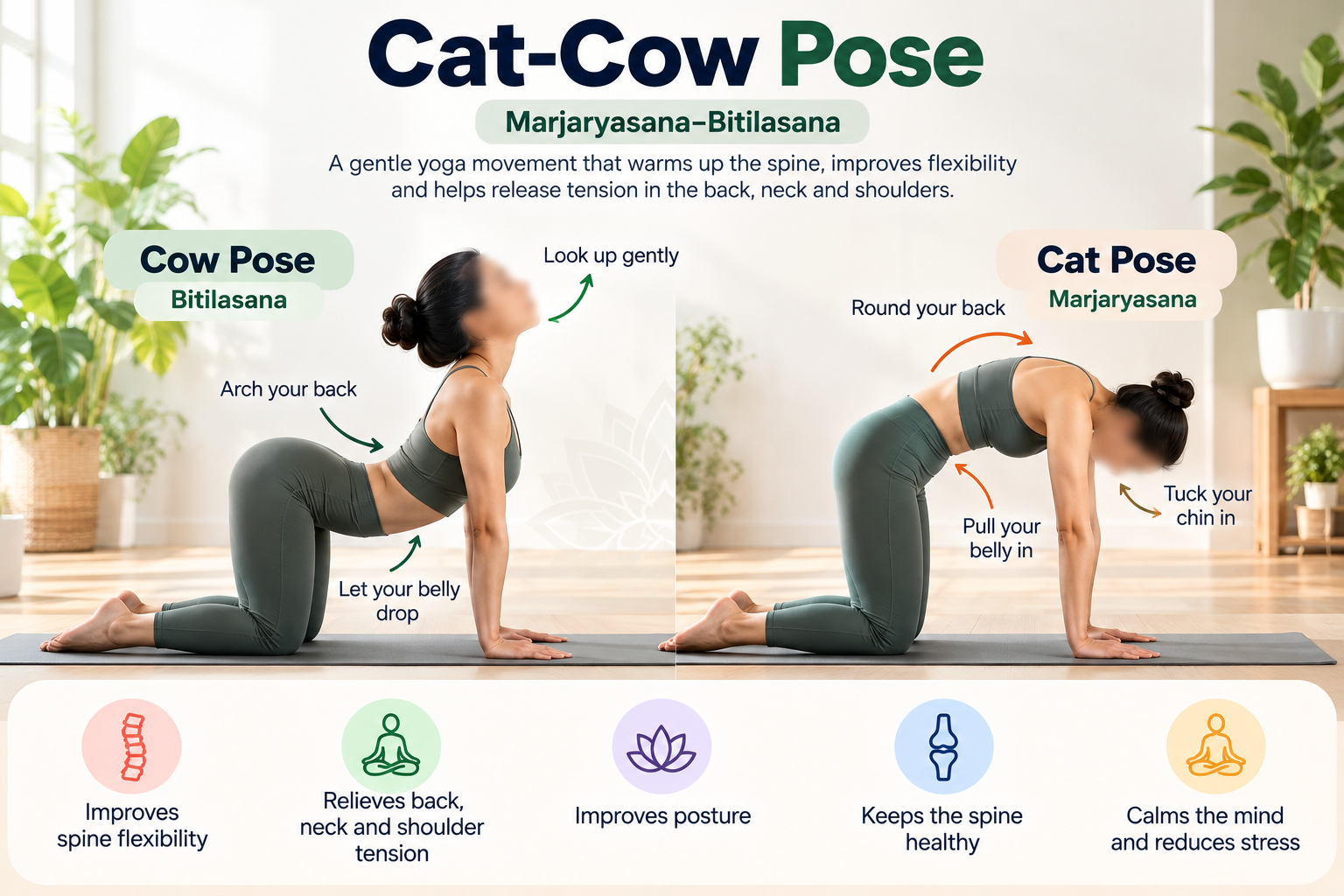
This gentle spinal movement alternates between flexion and extension.
Potential benefits include:
- Encouraging comfortable spinal movement
- Reducing a sense of stiffness
- Coordinating breathing and movement
Keep the movement small if the back or neck is sensitive.
Supported Child's Pose – Balasana
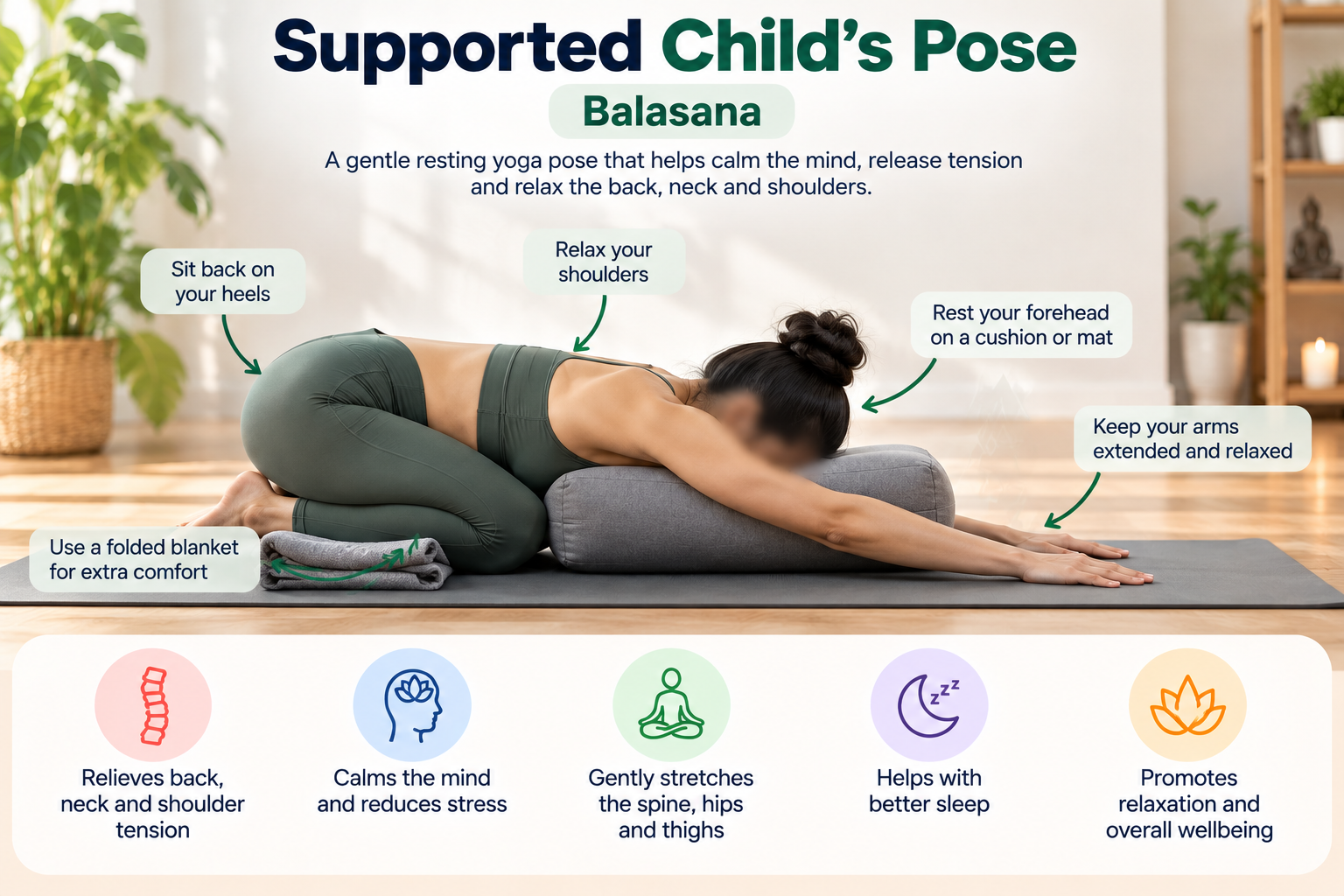
A modified Child's Pose can create a restful position for some people.
Use:
if necessary.
It should feel comfortable, not like an intense stretch.
People with significant knee or hip limitations may need another resting position.
Supported Bridge – Setu Bandhasana
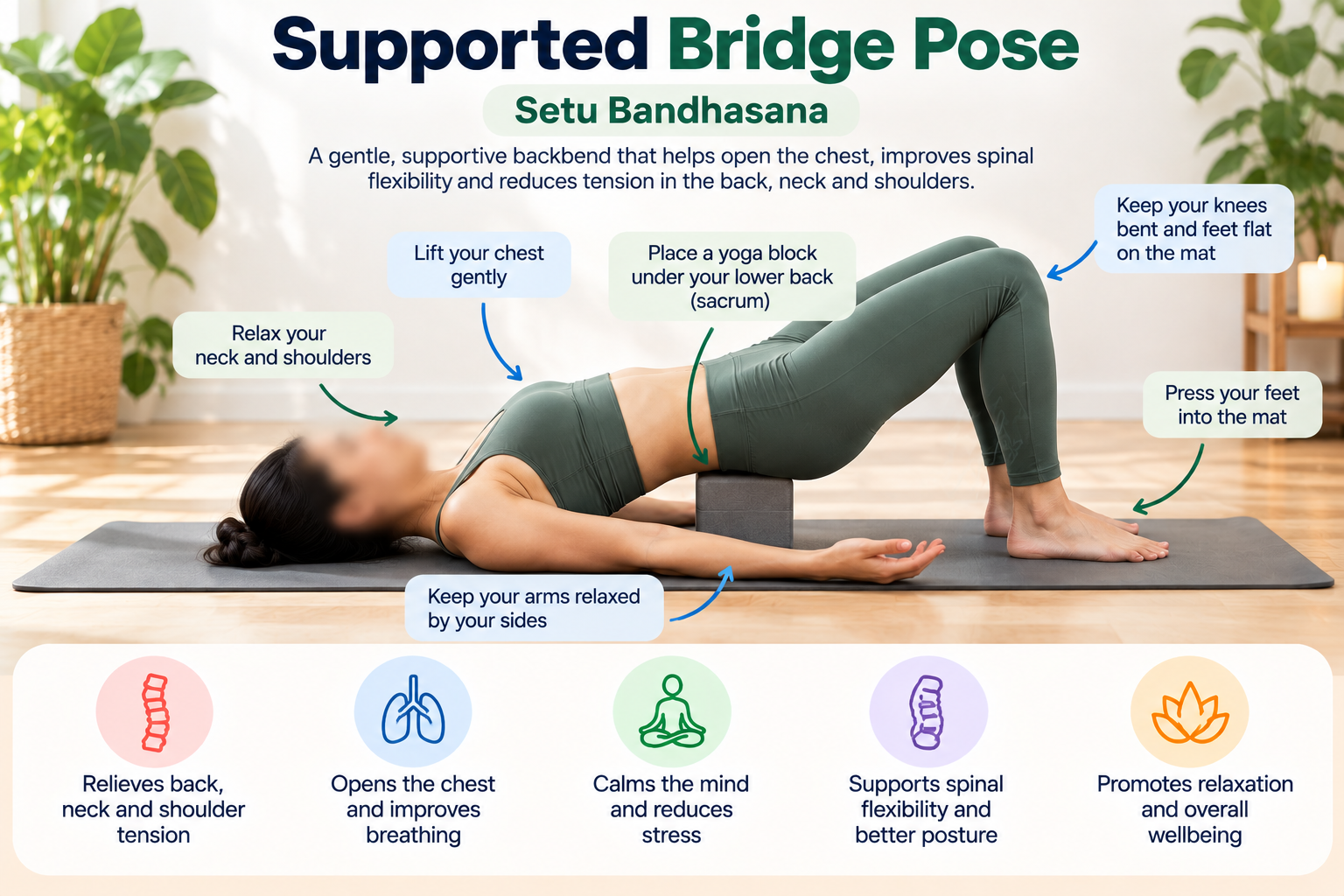
A gentle Bridge variation can activate:
- Gluteal muscles
- Back muscles
- Hip muscles
Instead of trying to lift as high as possible, focus on smooth breathing and comfortable control.
Low Cobra – Bhujangasana
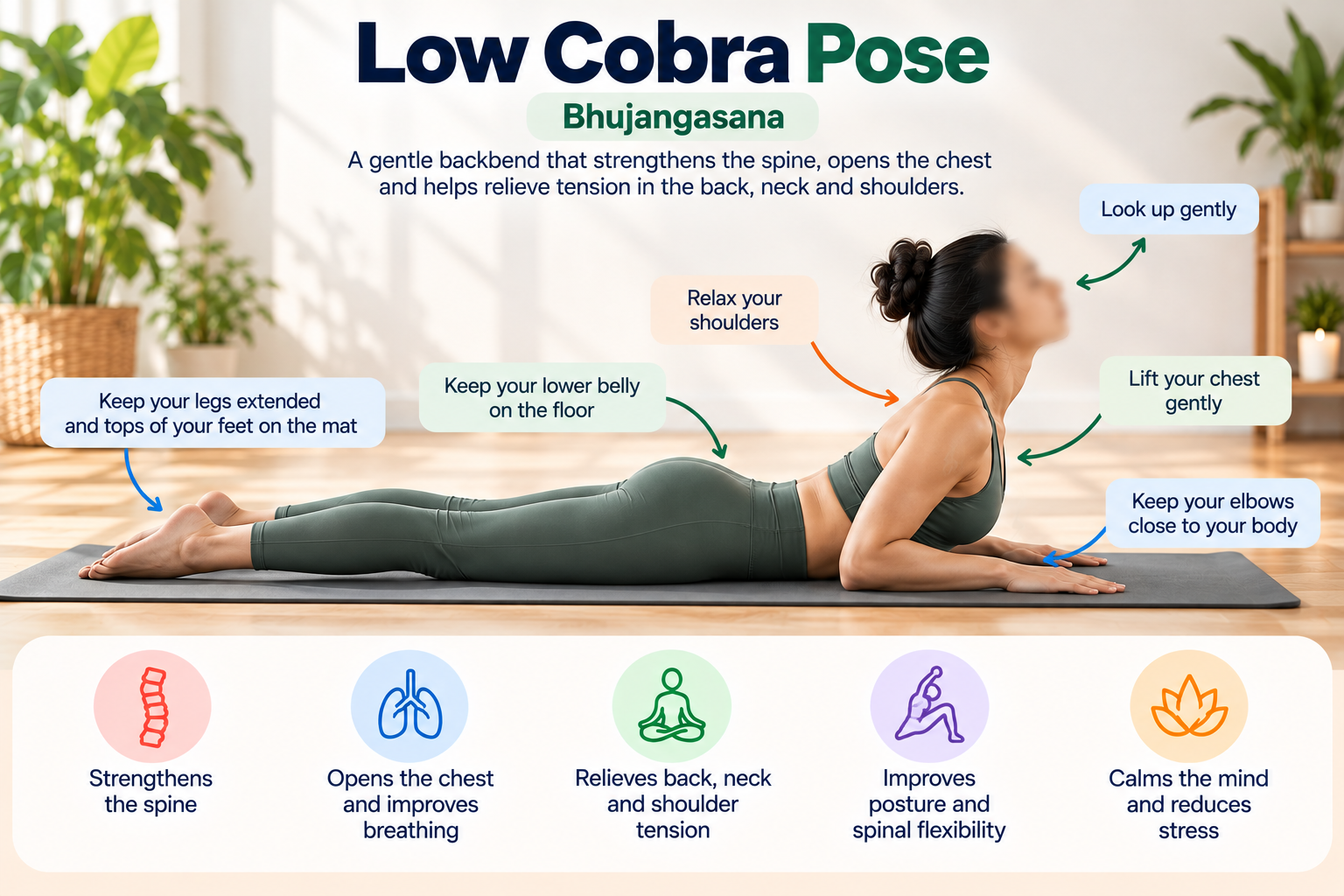
A small Cobra movement may feel useful for certain types of back stiffness.
Keep:
- Elbows bent
- Shoulders relaxed
- Movement comfortable
It is not suitable for every back condition, so stop if symptoms worsen.
Supine Twist
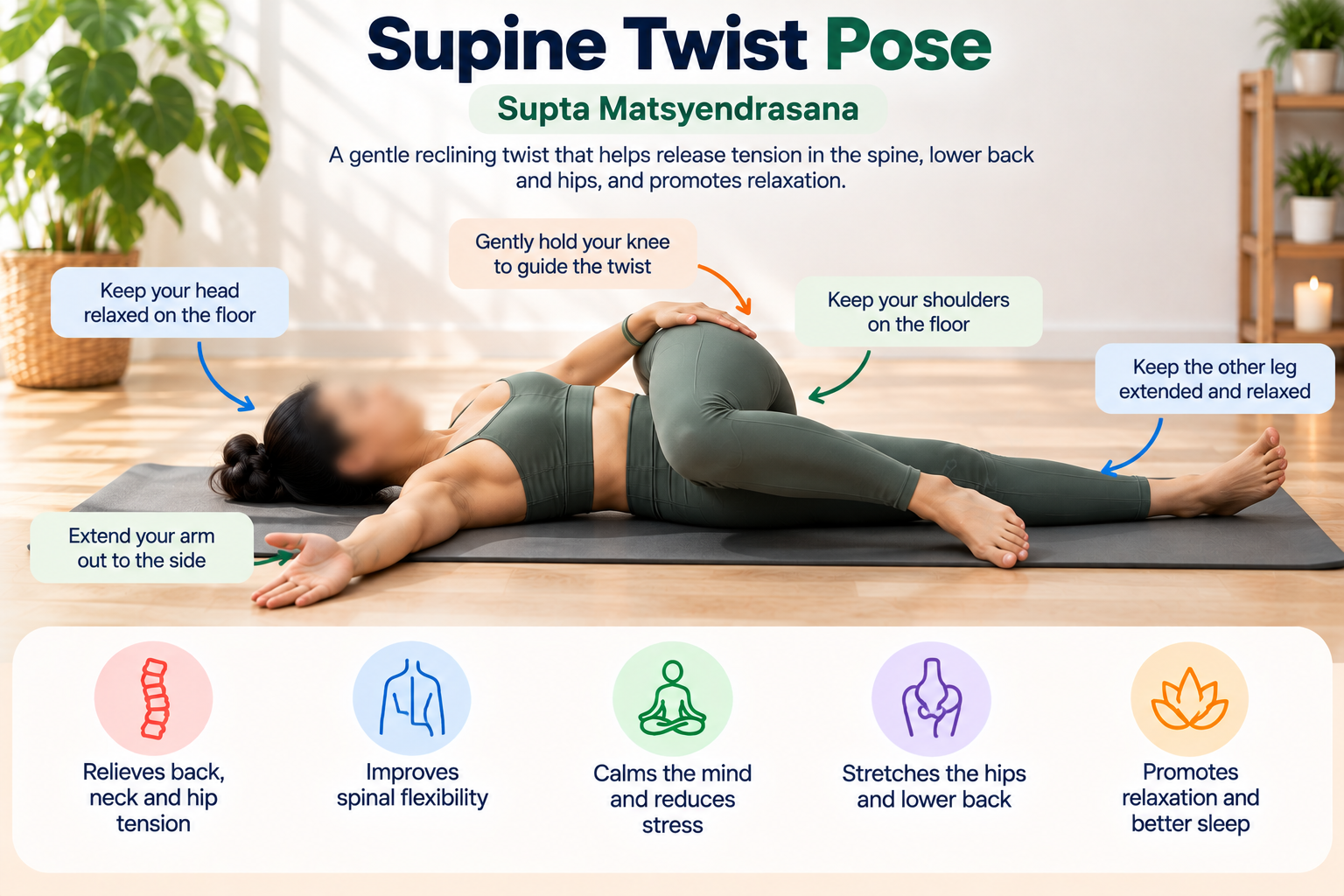
A gentle lying twist can provide comfortable movement through the trunk.
Avoid pulling the knees forcefully towards the floor.
People with disc problems or certain spinal conditions may need modification or may be advised to avoid twisting.
Legs Up the Wall – Viparita Karani
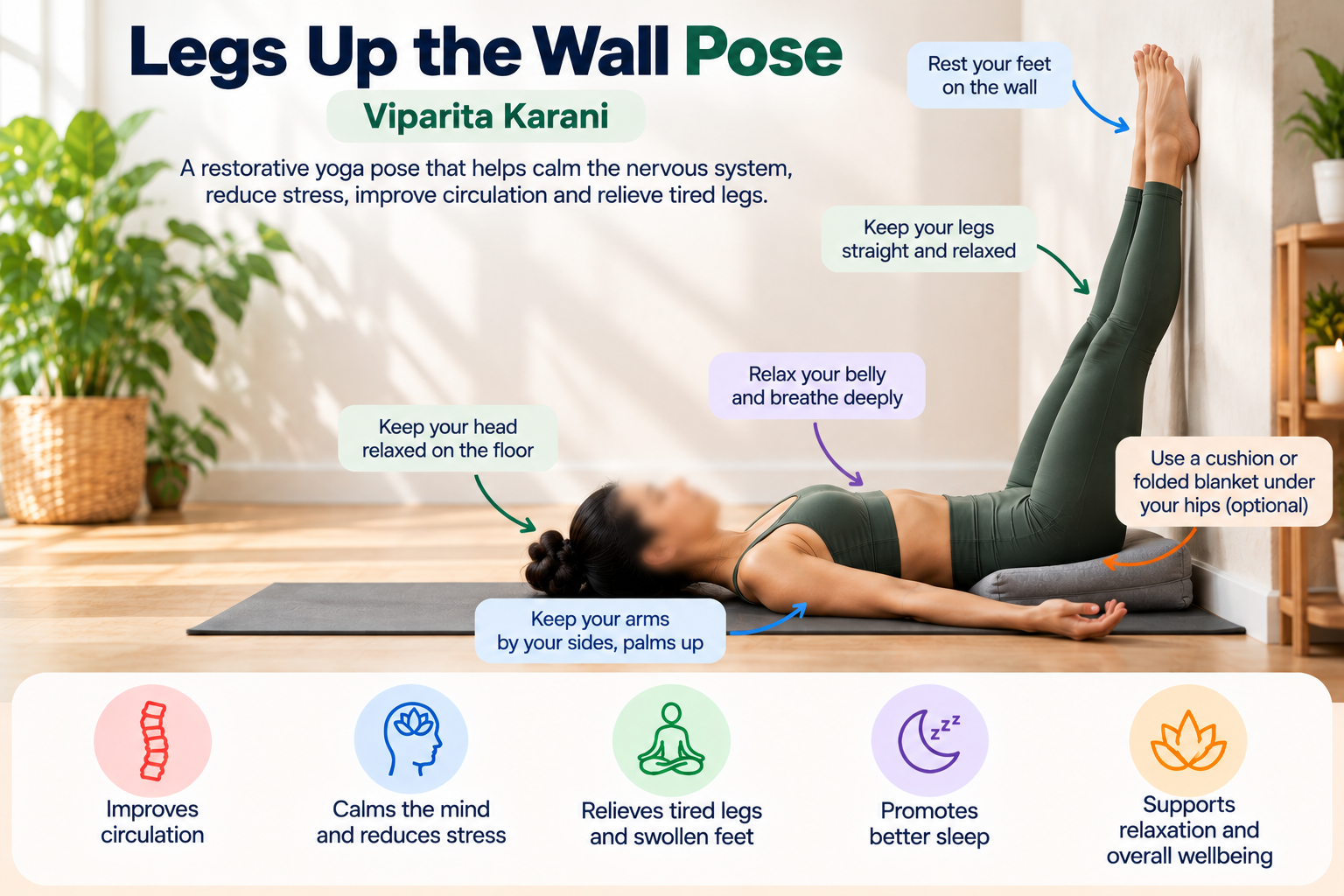
This restorative position is frequently used for relaxation.
It may help someone unwind after prolonged standing or sitting.
The greatest value may simply be the opportunity to slow down, breathe and rest.
Shavasana
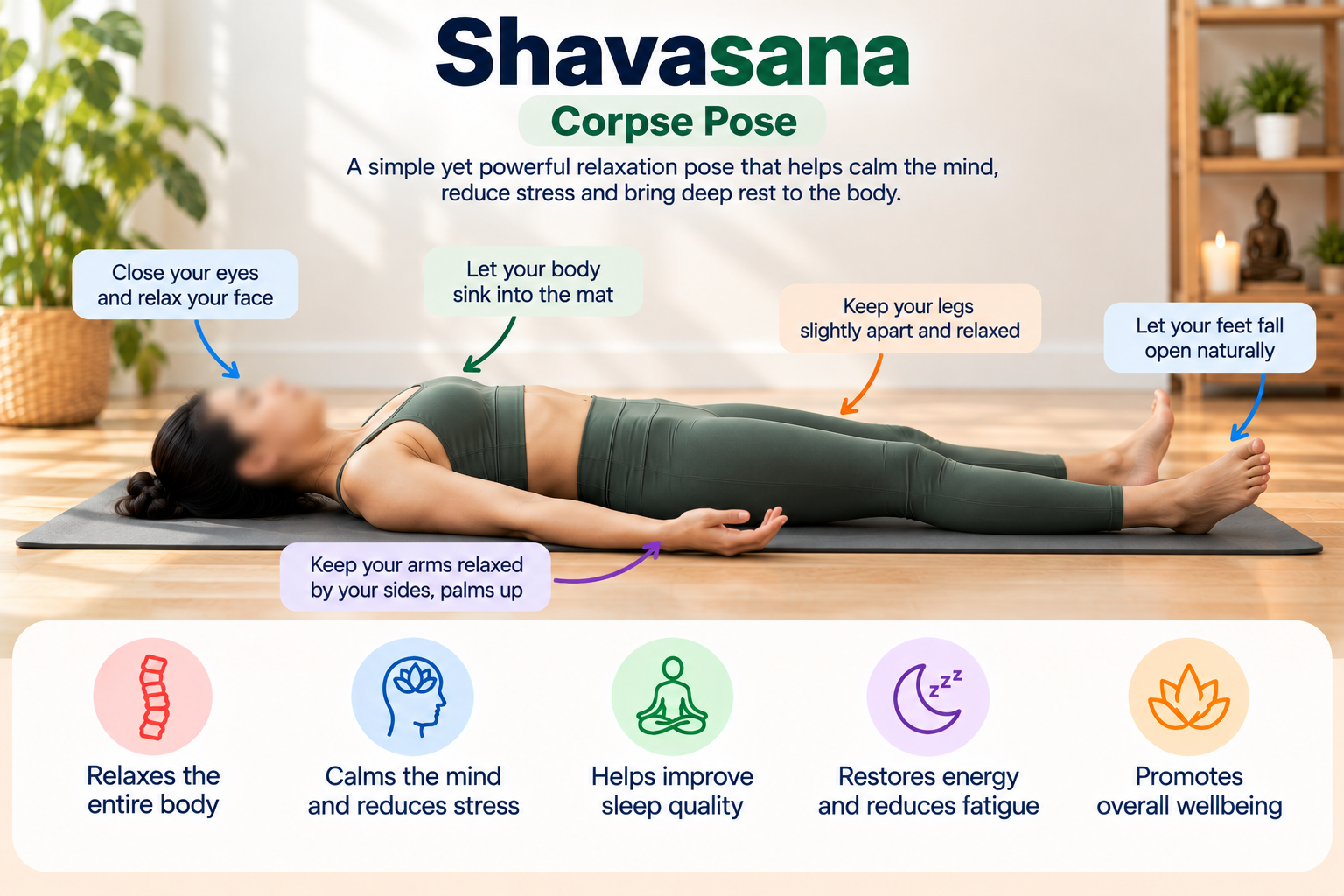
Shavasana deserves a place in almost every gentle pain-management practice.
For someone living with chronic discomfort, consciously relaxing the body without trying to “fix” anything can itself be valuable.
Use support under the knees, head or legs whenever necessary.
Important Rules When Practising Yoga for Pain Relief
When using yoga as part of pain management:
- Start slowly and comfortably instead of pushing yourself to regain your previous level of flexibility right away.
- Use props such as chairs, cushions, bolsters, straps and blocks.
- Stay within a comfortable range of movement.
- Avoid competing with other students.
- Do not assume stronger stretching means better healing.
- Stop if a movement creates sharp, electrical or rapidly increasing pain.
- Stop and seek advice if numbness or weakness develops.
- Inform your yoga teacher about any relevant medical conditions, diagnoses, or treatments you are receiving.
- Follow the advice of your doctor or physiotherapist after surgery or injury.
- Prefer regular, manageable practice over occasional aggressive sessions.
The purpose is to help the body feel safer and more capable—not to force it into difficult positions.
How Yoga Therapy Supports Pain Management
A normal group yoga class and yoga therapy for pain are not necessarily the same thing.
| Regular Yoga Class | Yoga Therapy |
| Designed for a group | More individualised |
| General wellbeing and practice | Usually focused on a particular health concern |
| Similar sequence for many students | Practices may be modified for the individual's condition |
| Pace determined by class | Pace adjusted to individual capacity |
| May emphasise asana | May combine movement, breathing, relaxation and lifestyle education |
A yoga therapist or appropriately trained yoga professional may consider:
- The location of the pain
- Medical diagnosis
- How long symptoms have been present
- Movements that aggravate symptoms
- Movements that feel comfortable
- Work routine
- Sleep
- Stress
- Breathing pattern
- Activity level
- Fear of movement
- Personal goals
A programme may then combine several components.
Gentle movement
Instead of choosing the most impressive posture, the teacher selects movements the person can perform safely today.
Pranayama
Simple breathing practices may be included to reduce unnecessary tension and encourage relaxation.
Aggressive breath retention or forceful pranayama is generally unnecessary for pain relief.
Relaxation and meditation
Chronic pain can keep the nervous system in a state of constant vigilance.
Relaxation and meditation practices may help people respond to discomfort and stress in a calmer and more balanced way.
Gradual strengthening
As symptoms stabilise, strengthening can become important.
People with persistent pain often need to become more capable of movement, not permanently protected from it.
Everyday movement education
Therapeutic yoga may also encourage practical habits such as:
- Taking breaks from prolonged sitting
- Changing position regularly
- Gradually increasing walking
- Improving desk organisation
- Avoiding unnecessary bed rest
- Finding comfortable sleeping positions
When Should You Consult a Healthcare Professional?
Not every pain problem should begin with a yoga mat.
Seek urgent or prompt medical assessment for symptoms such as:
- Intense pain following a fall, accident, or other significant injury.
- Sudden or unusually severe pain
- Chest pain, especially with sweating, nausea or breathlessness
- Newly developed or worsening weakness in an arm or leg.
- Significant numbness or loss of sensation
- New difficulty controlling the bladder or bowel
- Severe back pain with neurological symptoms
- Pain associated with unexplained fever
- Unexplained weight loss
- Persistent night pain
- A hot, red or suddenly swollen joint
- Severe abdominal pain
- Pain that continues to worsen
- Persistent pain that is interfering significantly with everyday life
Pregnant women, older adults, people recovering from surgery and people with conditions such as severe osteoporosis should also discuss appropriate exercise with their healthcare provider.
Yoga is most useful when we respect what it can do—and what requires medical care.
Benefits of Yoga for Pain: Think Beyond the Pain Score
When people begin yoga for pain management, they naturally want their pain level to decrease.
But pain intensity is only one measure of progress.
Someone may still experience occasional discomfort but become able to:
- Walk farther
- Sleep better
- Sit comfortably for longer
- Climb stairs
- Return to work
- Exercise without fear
- Play with their children
- Travel
- Perform household activities
- Feel calmer during a flare-up
These improvements matter.
For chronic pain especially, successful management often means building a fuller and more active life rather than waiting for every sensation to disappear before living normally again.
Final Thoughts
Understanding the types of pain is the first step towards managing pain intelligently.
When used carefully, yoga for pain relief may support movement, strength, relaxation, body awareness and confidence. Evidence is particularly encouraging for chronic lower-back pain, although the benefits are generally modest and yoga is not superior to all other forms of appropriate exercise.
For many people, the most useful lesson from yoga is therefore not “How far can I stretch?”
It is:
How can I move comfortably, breathe calmly and gradually build trust in my body again?
At Nirvana Yoga School, yoga can be approached as a gradual and mindful practice rather than a competition for flexibility. Students experiencing pain should inform their teacher beforehand so practices can be adapted wherever appropriate.
Most importantly, persistent or unusual pain deserves proper assessment. Yoga, physiotherapy, medical treatment, regular physical activity, good sleep and stress management can complement one another.
Pain management works best when the goal is not simply to silence a symptom, but to help the person return to a healthier, more active and confident life.
Medical Disclaimer: This content is intended for educational purposes only and is not a substitute for professional medical advice, diagnosis, or treatment. If you have severe, persistent, unexplained or worsening pain, consult an appropriately qualified healthcare professional before beginning a new exercise or yoga programme.