In 1955, a Burmese-Indian businessman named S.N. Goenka was in serious trouble. He was one of the most successful industrialists in Rangoon, running multiple companies, sitting on chamber-of-commerce boards, living the kind of life people envy.
But he also had migraines so severe that the best doctors in the country couldn't touch them, and a temper that was wrecking his relationships. A friend, half out of desperation, suggested he try a ten-day meditation course being taught nearby by a retired civil servant named Sayagyi U Ba Khin. Goenka went in skeptical and left ten days later without his migraines and with a new life's purpose. He spent the next fourteen years training under U Ba Khin, then moved to India and started teaching what he'd learned to anyone who'd sit still long enough to listen. That technique, Vipassana, now has meditation centers in over ninety countries.
Stories like this are exactly why meditation has stopped feeling like a fringe spiritual practice and started showing up in hospital wards, corporate wellness programs, school curriculums, and phone apps. And it's a whole family of practices with different types of meditations offering something different - some built around sitting silently and watching your breath, some involving chanting, some done lying down, some done walking barefoot across a garden. What ties them together is a simple aim: training attention on purpose, instead of letting it get dragged around by whatever thought, notification, or worry shows up next.
The different types of meditation exist because people come to this practice from wildly different starting points. Someone recovering from anxiety needs something different than someone chasing a spiritual awakening, and someone who can't sit cross-legged for more than ninety seconds needs a different entry point than someone who's spent a decade on a cushion.
So, this guide walks through what meditation actually is, why so many meditation techniques evolved in the first place, and a detailed breakdown of 21 different types of meditation, what each one is, how to practice it, who it's best for, and whether it's a good fit if you're just starting out.
But What Is Meditation in the First Place?
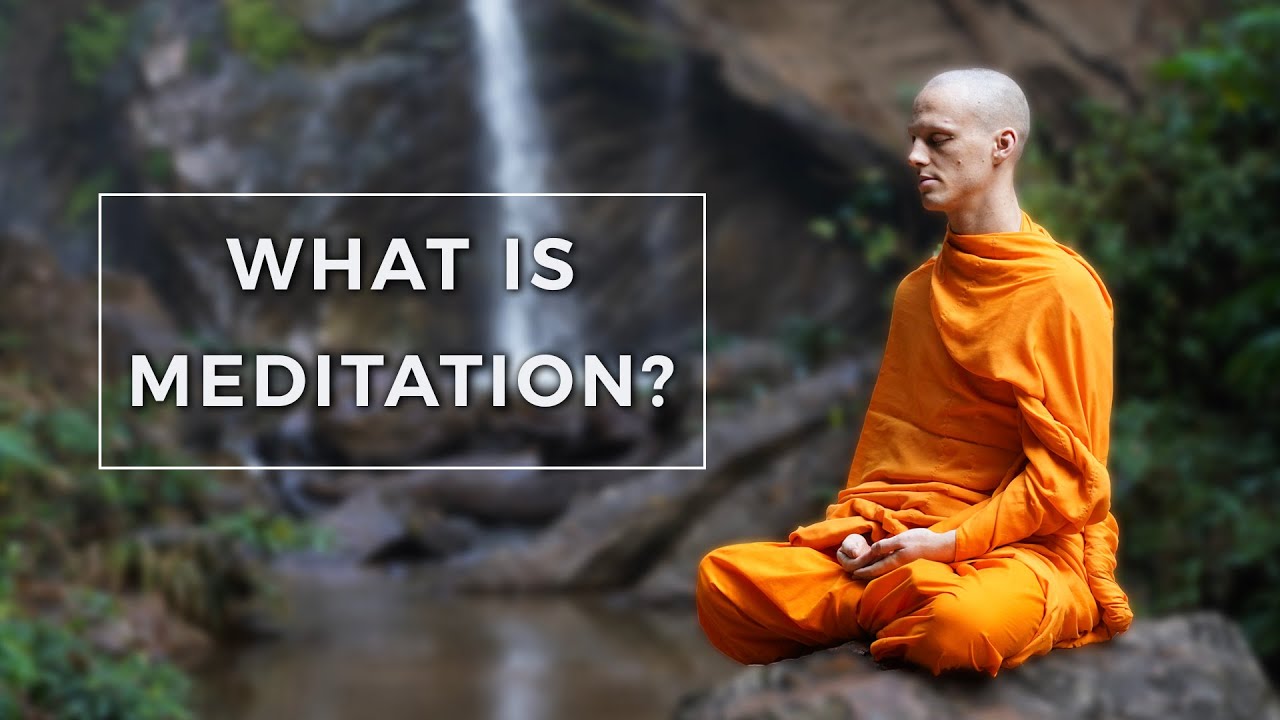
At its simplest, meditation is the practice of deliberately directing and steadying attention, usually on the breath, a sound, a sensation, or a thought. It is done to quiet mental chatter and become more aware of the present moment.
The practice is old, really old. The earliest textual references to meditative practices show up in the Vedas of ancient India, dated to roughly 1500 BCE, and meditation techniques were later formalized within Hindu, Buddhist, Jain, and Taoist traditions across Asia over the following centuries. Buddhist monks in Burma and Sri Lanka preserved and refined many of these methods inside monasteries for hundreds of years before they ever reached the West.
Meditation, mindfulness, and yoga get used almost interchangeably these days, which causes some confusion. Mindfulness is really a quality of attention, like being fully present with non-judgmental awareness, and it can be cultivated through meditation, but meditation is the broader container that includes mindfulness as one approach among many. Yoga, meanwhile, historically wasn't just physical postures; the postures (asana) were originally designed to prepare the body to sit still long enough to meditate.
Did you know? A team at Massachusetts General Hospital and Harvard Medical School, led by neuroscientist Sara Lazar, put people through an eight-week mindfulness program and scanned their brains before and after. Participants who meditated an average of 27 minutes a day showed measurable increases in gray matter density in the hippocampus, the region tied to learning, memory, and self-awareness. At the same time, the amygdala, the brain's fear and stress-response center, showed decreased gray matter density, and that shrinkage tracked closely with how much less stressed participants said they felt. A control group that made no changes to their routine showed none of these shifts. So, meditation was physically reshaping the organ responsible for feeling calm in the first place while obviously helping participants stay calmer.
Why Are There Different Types of Meditation?
![]()
If meditation is fundamentally about training attention, why do we need 21 different types of meditation instead of just one? Here are a few reasons:
- Different spiritual traditions built their own tools: Buddhism gave the world Vipassana and Zen. Hinduism gave rise to Mantra meditation, Chakra meditation, and Kundalini practices. Taoism produced its own internal-alchemy meditations and Qigong. Christian, Sufi, and Jewish contemplative traditions each developed their own versions of silent or repetitive prayer that function almost identically to meditation, even if nobody in those communities calls it that. Each tradition built techniques suited to its own worldview and goals, which is why the forms of meditation you'll find today range from deeply religious to entirely secular.
- People come to meditation with different mental wellness goals: Someone dealing with racing thoughts at 2 a.m. needs something different from someone trying to process grief, and both need something different from an athlete trying to sharpen focus before competition. That's part of why meditation techniques diversified so much.
- Mindfulness and concentration aren't the same skill: Mindfulness practices (like body scan or mindfulness meditation itself) train you to notice whatever arises without gripping onto it. Concentration practices (like Trataka or focused meditation) train you to lock onto a single point and not let go. Both are valuable. They just work in opposite directions, one widens awareness, the other narrows it.
- Relaxation and self-awareness are different destinations: Yoga Nidra and sleep meditation exist mainly to relax the nervous system. Vipassana and spiritual meditation exist mainly to build insight into the nature of your own mind, sometimes at the cost of feeling relaxed in the moment. Confusing the two is one of the most common reasons beginners quit.
21 Different Types of Meditation
Here's the full breakdown. Some of these you've probably heard of:
Mindfulness Meditation
The practice of paying attention to the present moment, thoughts, sensations, sounds, without judging or trying to change any of it - that’s mindfulness meditation. This is the technique behind MBSR and most Western meditation apps.
How to practice: Sit comfortably, close your eyes, and bring attention to your breath. When your mind wanders (it will, constantly), notice where it went and gently bring it back, without scolding yourself for wandering in the first place.
Benefits: Lower perceived stress, better emotional regulation, improved attention span, and, per the Harvard/MGH research above, actual structural brain changes after consistent practice.
Best for: Stress, anxiety, general emotional regulation and beginners who want a scientifically documented starting point.
Beginner-friendly? Yes.
Vipassana Meditation
Now, this one is an ancient Buddhist insight practice, meaning "to see things as they really are." Rather than focusing on one object, you systematically observe bodily sensations to understand the impermanent, ever-changing nature of experience. This is the technique S.N. Goenka spent his life spreading globally.
How to practice: Traditionally taught over an intensive 10-day silent retreat where you scan attention slowly through the body, observing sensations without reacting to them, layer by layer. Shorter daily sessions are possible once you've learned the technique, but the foundational training is usually done at a retreat.
Benefits: Deep self-insight, reduced reactivity to discomfort and a documented history of use in prison rehabilitation programs with measurable behavioral improvements among inmates.
Best for: Spiritual growth, people ready for a serious, structured commitment.
Beginner-friendly? No, but it's powerful. The traditional format (silence, no phones, ten days) is a big ask for a first-timer.
Guided Meditation
Any meditation led by a teacher's voice is a guided meditation. It could be in person, recorded, or through an app, walking you through what to focus on step by step.
How to practice: Put on a recording or join a live session, close your eyes, and simply follow the instructions.
Benefits: Removes the guesswork for beginners, is useful for specific goals like sleep or anxiety relief, and keeps the mind anchored when it tends to drift.
Best for: Total beginners, people who find silent meditation intimidating.
Beginner-friendly? Yes, arguably the easiest entry point of all 21 types of meditations.
Mantra Meditation
This one’s basically repeating a word, phrase, or sound (a mantra) silently or aloud to anchor the mind and prevent it from spiraling into distraction. "Om" is the most recognized mantra, but the technique isn't limited to Sanskrit words.
How to practice: Choose a word or phrase, sit comfortably, and repeat it silently in rhythm with your breath. When thoughts intrude, return to the mantra rather than following them.
Benefits: Easier to stay focused than with breath-only techniques (the repeated word gives the mind something concrete to hold), calming effect on the nervous system.
Best for: People whose minds wander easily and need a stronger anchor than the breath alone.
Beginner-friendly? Yes.
Transcendental Meditation
It’s a specific, trademarked form of mantra meditation developed by Maharishi Mahesh Yogi in the 1950s. It is usually practiced for 20 minutes twice a day using a personal mantra assigned by a certified teacher.
How to practice: Learned only through a certified TM instructor in a paid, structured course, it isn't something you can pick up from a free video, since the mantra assignment and technique are part of the paid instruction.
Benefits: One of the most heavily studied types of meditation in cardiovascular research; several clinical trials have linked regular TM practice to reduced blood pressure and lowered cardiovascular risk in at-risk populations.
Best for: People who want a structured, teacher-led practice with a large clinical research base behind it.
Beginner-friendly? Yes, though the cost and required training is a barrier compared to free alternatives.
Zen Meditation (Zazen)
Zazen is a seated meditation practice from Japanese Zen Buddhism, focused on posture, breath, and observing thoughts without attachment. It is famously minimal and more infamously disciplined.
How to practice: Sit cross-legged (traditionally on a cushion called a zafu), keep the spine straight, half-close the eyes, and focus on breathing from the lower abdomen. Thoughts are acknowledged and released, not chased.
Benefits: Sharper focus, improved posture and body awareness, a strong grounding practice for people drawn to structure and ritual.
Best for: Focus and discipline-building, people who like a defined, traditional framework.
Beginner-friendly? Somewhat. The posture requirements can be tough at first, but the technique itself is straightforward.
Loving-Kindness Meditation
Known in Pali as Metta Bhavana, this practice involves silently directing goodwill and compassion first toward yourself, then toward loved ones, acquaintances, difficult people, and eventually all beings.
How to practice: Sit quietly and mentally repeat phrases like "May I be happy, may I be safe, may I be at ease," then extend the same phrases outward to other people, widening the circle each round.
Benefits: Increased feelings of connection and empathy, reduced self-criticism, studies have linked consistent practice to lower symptoms of depression.
Best for: Emotional healing, resentment or grief, anyone working on self-compassion.
Beginner-friendly? Yes.
Chakra Meditation
Rooted in Tantric and yogic traditions, this type of meditation focuses attention on the body's seven energy centers (chakras), aiming to clear blockages and balance energy flow from the base of the spine to the crown of the head.
How to practice: Sit comfortably and move attention sequentially through each chakra point, often paired with specific sounds, colors, or visualizations associated with each center.
Benefits: Increased body awareness, a sense of energetic balance, often paired well with yoga practice for a full mind-body session.
Best for: People drawn to energy-based or Tantric traditions, those already familiar with yoga.
Beginner-friendly? Somewhat, the concept of chakras takes some learning before the practice clicks.
Spiritual Meditation
An umbrella term for meditation practiced with the explicit goal of connecting to something greater than the self, God, the universe or a higher consciousness. It is found across nearly every world religion in some form.
How to practice: Varies by tradition - could be silent contemplative prayer, chanting scripture, or sitting with an intention to connect. The common thread is a devotional or transcendent aim rather than a purely psychological one.
Benefits: A sense of purpose and meaning, comfort during difficult life periods, community connection when practiced within a tradition.
Best for: Spiritual growth, people already grounded in a faith tradition.
Beginner-friendly? Yes, especially if you already have a spiritual framework to work within.
Yoga Nidra
Often called "yogic sleep," this is a guided practice done lying down, moving awareness systematically through the body to reach a state between waking and sleeping.
How to practice: Lie flat on your back, follow a guided recording that walks attention through different body parts, and stay awake enough to remain aware while your body fully relaxes.
Benefits: Deep physical relaxation, one of the most effective techniques for combating insomnia, used clinically for stress-related fatigue.
Best for: Better sleep, physical exhaustion, people who find seated meditation physically uncomfortable.
Beginner-friendly? Yes… you're lying down, there's a voice guiding you, and there's very little to get wrong.
Breath Awareness Meditation
This is a foundational practice that involves simply observing the natural rhythm of your breath without trying to control it.
How to practice: Sit or lie comfortably and notice the sensation of air entering and leaving your nostrils, or the rise and fall of your chest and belly.
Benefits: Activates the parasympathetic nervous system, quick to learn and works as a portable anxiety-management tool you can use anywhere.
Best for: Anxiety, panic moments and complete beginners.
Beginner-friendly? Yes, probably the single easiest technique on this list.
Kundalini Meditation
This is a practice from the yogic tradition aimed at awakening dormant energy believed to sit coiled at the base of the spine, using breathwork, chanting, and movement to draw that energy upward.
How to practice: Typically combines rapid rhythmic breathing (like Breath of Fire), specific hand and body postures (mudras), and mantra chanting, usually taught by a certified Kundalini yoga instructor.
Benefits: Increased energy and alertness, a strong mind-body integration for people who find purely seated stillness difficult.
Best for: People who want an active, physically engaging meditation style.
Beginner-friendly? No, the breathing techniques can be intense and are best learned under direct instruction rather than from a video.
Read More:- How to Practice Kundalini Meditation
Walking Meditation
It is a mindfulness practice done in motion, bringing full attention to the sensation of each step rather than to a destination.
How to practice: Walk slowly and deliberately, focusing on the feeling of your feet lifting, moving, and touching the ground. Thich Nhat Hanh, the Vietnamese Zen master who popularized this practice in the West, often described it simply as walking as if you were kissing the earth with your feet.
Benefits: Combines light movement with mindfulness, works well for people who find sitting still agitating, easy to fold into an existing daily walk.
Best for: Restless beginners, people who want to build mindfulness into their daily routine without setting aside separate seated time.
Beginner-friendly? Yes.
Sound Healing Meditation
This is a type of meditation that uses sound like singing bowls, gongs, tuning forks, or chanting as the primary anchor for attention. It has roots in Tibetan Buddhist and Indian traditions.
How to practice: Sit or lie down while a practitioner plays instruments (or listen to a recording), letting the vibrations and tones hold your attention instead of a mantra or the breath.
Benefits: Deep relaxation, useful for people who find silence itself distracting, often reported to help with sleep and anxiety.
Best for: Deep relaxation, group meditation settings, people who respond strongly to auditory input.
Beginner-friendly? Yes.
Visualization Meditation
It’s a practice that uses mental imagery - a peaceful place, a healing light, a specific outcome- to direct the mind toward a particular emotional or psychological state.
How to practice: Close your eyes and construct a detailed mental scene, engaging as many senses as possible (what you'd see, hear, smell), holding that image steadily as your point of focus.
Benefits: Useful for goal-setting and motivation, commonly used by athletes for performance preparation, and can reduce anxiety by mentally rehearsing calm outcomes.
Best for: Goal-oriented practice, performance anxiety, creative work.
Beginner-friendly? Yes.
Focused Meditation
This is a concentration-based practice where attention is deliberately fixed on a single object, a candle flame, a sound, a count of breaths, with the goal of building sustained, unwavering attention.
How to practice: Choose one point of focus and hold attention there. Each time the mind drifts (and it will drift often at first), bring it back to the same object, without switching targets.
Benefits: Sharpened attention span, improved task focus and a strong foundation for more advanced concentration practices.
Best for: Focus and productivity, ADHD-adjacent attention struggles (though this isn't a clinical treatment).
Beginner-friendly? Yes, though it can feel more effortful than open-awareness practices at first.
Body Scan Meditation
This type of meditation is a systematic, part-by-part sweep of attention through the body, noticing sensation, tension, and temperature without trying to change anything you find. This is the practice embedded in the first weeks of MBSR.
How to practice: Lie down or sit comfortably and move attention slowly from your toes to the top of your head, pausing at each body part to simply notice what's there.
Benefits: Increased body awareness, effective for identifying where stress physically accumulates, often used as a gateway into mindfulness practice more broadly.
Best for: Stress-related tension, chronic pain management, beginners easing into mindfulness.
Beginner-friendly? Yes.
Sleep Meditation
Any meditation practice specifically structured to help you fall or stay asleep, usually a blend of guided relaxation, breath work, and body scanning delivered in a slow, monotone voice is a sleep meditation.
How to practice: Lie in bed, dim the lights, and follow a guided sleep meditation recording, letting your attention soften rather than sharpen as the session progresses.
Benefits: Reduced time to fall asleep, calmer nervous system before bed, an alternative to screen scrolling as a wind-down routine.
Best for: Insomnia, racing thoughts at bedtime.
Beginner-friendly? Yes.
Trataka Meditation
It’s a yogic concentration technique that involves fixing your gaze on a single point, traditionally a candle flame, without blinking, until the eyes water and the mind settles.
How to practice: Sit at arm's length from a candle flame at eye level, gaze steadily without blinking for as long as comfortable, then close your eyes and hold the afterimage in your mind's eye.
Benefits: Sharpens concentration, said in traditional texts to improve eyesight and memory (modern evidence for the eyesight claim specifically is thin), and builds mental discipline quickly.
Best for: Deep focus training, people drawn to more intense concentration practices.
Beginner-friendly? No. In our courses, most students' eyes start watering at around 40 seconds on the first attempt, which is why we start beginners at 30 seconds and build up across a week. Pushing past discomfort too early is the main reason people abandon this technique
Taoist Meditation
It’s a family of practices from Chinese Taoist tradition focused on cultivating and circulating internal energy (qi), often tied to concepts of balance, breath, and the flow between yin and yang.
How to practice: Techniques vary widely, from seated stillness meditation to internal breathing exercises that direct attention to the lower abdomen (the dantian), often practiced alongside Taoist breathing exercises or movement.
Benefits: Improved internal awareness, a calming effect similar to other breath-based practices, deep cultural roots tying meditation to health and longevity philosophy.
Best for: People interested in Eastern philosophy, those already exploring Tai Chi or Qigong.
Beginner-friendly? Somewhat, the terminology and internal-energy concepts take some orientation.
Qigong Meditation
It’s a moving meditation from Chinese medicine that combines slow, deliberate physical movement, breath control, and focused intention to cultivate qi (vital energy).
How to practice: Follow a sequence of slow, flowing movements paired with deep breathing, keeping attention on the sensation of energy moving through the body rather than on perfecting the movements.
Benefits: Gentle enough for most fitness levels, combines light exercise with meditative focus, commonly used for stress reduction and general vitality in Chinese medicine practice.
Best for: People who want a physically gentle, moving alternative to seated meditation.
Beginner-friendly? Yes.
Which Type of Meditation Is Best for Beginners?
If all 21 different types of meditation feel like a lot, this table narrows it down by what you're actually trying to solve:
| Goal | Best Meditation Type |
| Stress relief | Mindfulness Meditation |
| Better sleep | Yoga Nidra |
| Spiritual growth | Vipassana |
| Anxiety | Breath Awareness Meditation |
| Focus | Zen Meditation |
How to Choose the Right Meditation Technique
With so many meditation techniques available, picking one shouldn't come down to whichever app ad you saw last. A few things worth weighing:
- Your personality matters more than trend-following: If stillness makes you restless, walking meditation or Qigong will stick better than forcing yourself onto a cushion for Zazen.
- Your lifestyle sets real constraints: A parent with a toddler underfoot needs a 5-minute breath practice, not a 10-day silent retreat, at least to start.
- Consistency beats intensity every time: Five focused minutes daily will change your baseline stress level faster than one heroic 45-minute session you never repeat.
- Start with guided sessions if silence feels intimidating: There's no rule that says real meditation has to be unguided; plenty of experienced practitioners still use guided sessions regularly.
- Expect resistance in the first two weeks: Nearly everyone finds the first stretch of any new meditation technique a little boring or fidgety. That's normal, not a sign you're doing it wrong.
Benefits of Meditation
Across the different kinds of meditation, a consistent set of benefits shows up again and again in both traditional teaching and modern research:
- Stress reduction — lower cortisol response and a calmer baseline nervous system with regular practice
- Better sleep — particularly through Yoga Nidra, body scan, and sleep-specific guided sessions
- Emotional balance — reduced reactivity to difficult emotions and improved regulation over time
- Sharper focus — measurable improvements in sustained attention, especially from concentration-based techniques
- Spiritual awareness — a deeper sense of connection or meaning, particularly through Vipassana, spiritual, and mantra practices
- Reduced anxiety — documented drops in self-reported anxiety and, per the Harvard/MGH imaging research, measurable changes in the amygdala tied to stress response
Common Mistakes Beginners Make During Meditation
- Expecting instant results — brain changes documented in research took eight consistent weeks, not eight minutes
- Forcing thoughts away — trying to empty the mind by force usually backfires; the goal is noticing thoughts and gently returning focus, not banishing them
- Inconsistency — meditating intensely for three days then stopping for two weeks resets progress every time
- Wrong posture — slouching or lying down when the technique calls for alertness (and vice versa) makes sessions less effective and often more uncomfortable
- Judging the practice by how it feels in the moment — a "bad" session that felt restless still counts and still builds the underlying skill
- Picking a technique because it's popular rather than because it fits your goals or personality
How Long Should You Meditate Daily?
There's no universal number, but a practical ramp-up looks like this:
- 5 minutes — the right starting point for total beginners; enough to build the habit without triggering the "I don't have time for this" excuse
- 10 minutes — where most people start noticing real day-to-day differences in stress and mood, typically after a few consistent weeks
- 20 minutes — the range used in most clinical research (including the Harvard/MGH studies above), associated with measurable long-term changes
Better to meditate for 5 honest minutes daily than to promise yourself 30 minutes and quit after four days.
Meditation and Yoga: What's the Connection?
Yoga and meditation are frequently sold as separate products - a yoga class here, a meditation app there - but historically they were never meant to be split apart. In the classical yogic framework, physical postures (asana) existed specifically to prepare the body to sit in meditation without pain or restlessness for extended periods. The physical practice was the warm-up act; meditation was the main event.
That relationship still shows up in modern secular contexts. Kabat-Zinn's MBSR program deliberately combined yoga with seated mindfulness meditation because moving the body first tends to make the mind more willing to settle afterward. If seated stillness has always felt impossible, doing even ten minutes of slow stretching beforehand often makes the meditation portion noticeably easier.
Final Thoughts
There's no single "correct" meditation technique, and treating this like a search for the one perfect method usually backfires. The people who stick with meditation long-term tend to be the ones who experimented, tried mindfulness for a month, tried a body scan for a few weeks, eventually landed on whatever actually fit their temperament and schedule.
Consistency matters far more than doing any technique perfectly. A wandering mind during meditation is basically the entire practice. Every time you notice you've drifted and bring attention back, that's the exercise working, not you doing it wrong.