Kundalini yoga aims to activate all seven chakras and awaken the conscious and divine energy within, which flows via the inner channels known as nadis (Ida, Pingala, and Sushumna). The word "chakra" means "wheel" in Sanskrit. Each kundalini chakra, channels energy from the universe into the body's energetic system.
The chakras are typically seen as colored wheels of light or local auras. The influence of each chakra on our lives varies according to its state of balance. Some of the finest practices that might assist one in achieving this balance include yoga and meditation.
Poses to Balance The 7 Chakras
kundalini chakras when balanced lead to spiritual awakening and consciousness of the divine. Kundalini asanas promote blood circulation and increase the flow of prana. It leads to a balance of the kundalini energy and chakras.
It is recommended that Kundalini yoga must be practiced under the guidance of an experienced practitioner. Join the 200-hour Kundalini Yoga Teacher Training Course to learn how to balance the 7 chakras.
Mooladhara / Root Chakra
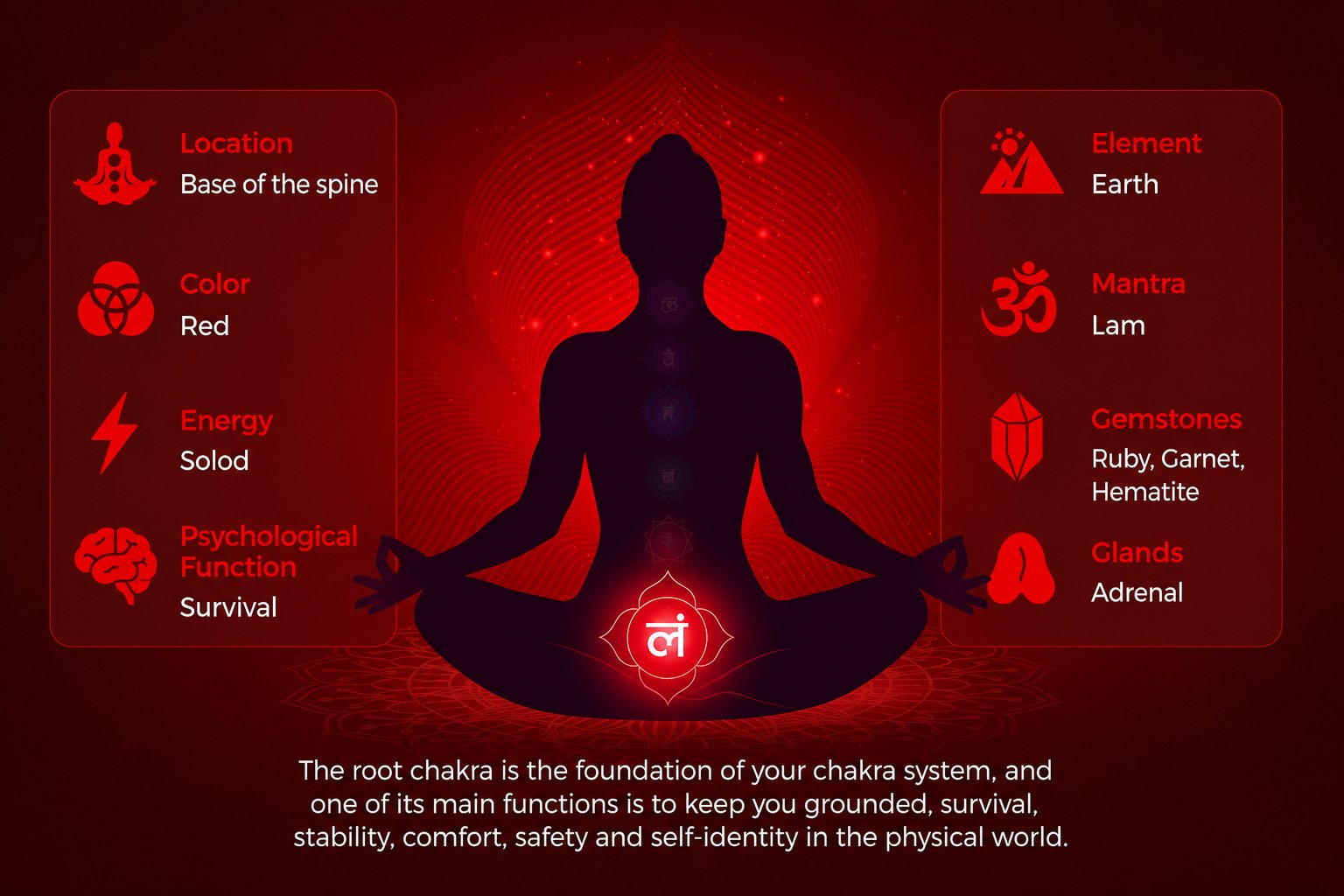
Signification - Safety, security grounding
Location- Base of the spine
Chair Pose
This pose is also called Utkatasana and is considered a very powerful standing yoga posture. It looks like sitting on an imaginary chair, which is where it derives its name from. It is proven to strengthen the legs, build core stability, and engage the upper body.
- Stand on the mat with the spine lengthened in Tadasana.
- Take a deep breath, and lift your arms above the head so that they are parallel to one another.
- Exhale and bend your knees. Avoid leaning forward.
- Lower your body to assume a half-squat position.
- Maintain a parallel between your thighs.
- Hold the pose and maintain balance for 10 breaths.
- The chair pose is a basic stretch of yoga for knee arthritis, which helps to soothe the knee pain and strengthen the muscles.
Garland Pose
Garland Pose brings you low to the ground, naturally drawing your awareness to the base of the spine where the Root Chakra is believed to reside. The deep squat also improves hip mobility while encouraging a sense of balance and stability. It is a gentle reminder that sometimes feeling stronger starts with slowing down.
- Sit as low as possible by bending your knees and placing the heel flat on the floor, slightly out from the hips.
- In a wide squat posture, get your buttocks as near to the floor as possible.
- Bend both elbows to bring both hands together in front at chest height. With elbows, gently press the knees apart.
- Maintain the shoulders back, stretching your spine.
- Hold the posture for 30 seconds.
Bridge Pose
Bridge Pose strengthens the muscles that support your body every day while creating space through the hips and lower back. For Root Chakra practice, it reinforces feelings of stability by helping you build strength from your foundation. The steady lift and controlled breathing can leave you feeling more balanced after just a few rounds.
- Lie on the back. Bend your knees.
- Spread your legs with your feet flat on the ground.
- Stretch your arms out to each side of your body to touch the back of the heels
- Gently raise your hips up
- Tuck your chin in slightly toward your chest, which helps lengthen the back of your neck.
- Put your hands under the back and interlace the fingers.
- Hold for 30 seconds.
Swadhisthana / Sacral Chakra
Significance - Sensuality, creativity, emotions
Location- Lower Abdomen, just below the navel
Bound Angle Pose
Bound Angle Pose gently opens the hips and inner thighs, areas closely connected with the Sacral Chakra. This posture encourages flexibility while helping release physical tension that can build up after long hours of sitting. Many people find it easier to relax into slow, steady breathing once they settle into this pose.
- Come to a seated position. Pull your feet' soles together, letting your knees fall to the sides.
- Hold onto the outsides of the feet. Bend slightly forward from the hips and lengthen the spine.
- Now, flap the thighs like the wings of the butterfly. Perform the butterfly pose for 30 seconds.
Forward Fold
This asana for Kundalini Chakra awakening is also known as Uttanasana and is a basic yoga stretch. This move stretches the backs of your legs and your lower back, opening the back body, improving many organ-level health, calming the nervous system, and stimulating digestion.
- Sit with the legs extended in front.
- Contract the belly inward and gently press your sitting bones into the floor.
- Inhale and extend your back.
- Exhale and bend forward from the hips.
- Maintain a straight back and avoid overstretching.
- Hold your big toes if your hands reach your feet as you glide across.
- Keep your elbows bent, extending them outward, and keep your shoulders away from your ears.
- To extend the position further, raise your head slightly and lengthen across the front of your chest with each inhale.
- Try to fold farther into the posture with each exhale.
- Release the feet gradually, and take a breath to exit the pose.
- Hold the pose for 30 seconds.
Triangle Pose
Triangle pose (or the Trikonasana) helps build full-body strength, stretches the hamstrings, hips, and spine, and opens the chest. It improves balance and focus, stimulates digestion, and helps relieve mild back pain and stress.
- Stand on the mat in Tadasana. Bring the right foot forward at 90 degrees and place the left foot at a 45-degree angle.
- Inhale, extend the arms to the side in a T-shape
- Breathe out to bend your body to the right from the hips
- Try to place the palms of the right hand on the mat or grab the ankle
- Extend the left hand upwards toward the ceiling and look up.
- Open up the chest and straighten the shoulder
- Hold the pose for 30 seconds.
- Repeat the same with the other side.
Also Read: Chakra Symbols
Manipura / Solar Plexus Chakra
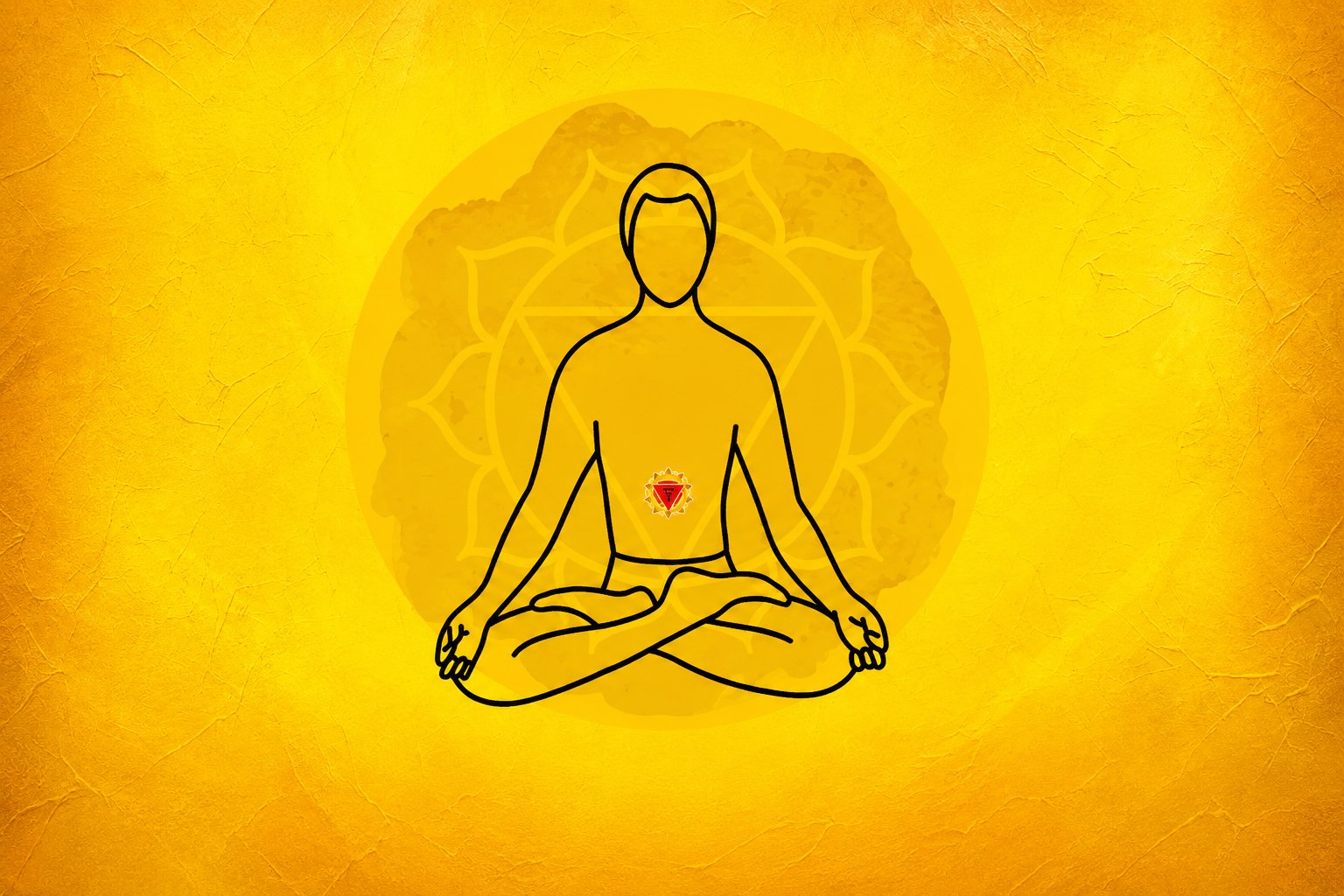
Significance - Self-esteem, strength, willpower
Location - Below the ribcage
Downward dog
This is a foundational yoga pose that helps in a full-body stretch and strength workout. delivers a full-body stretch and strength workout. It allows you to elongate your spine, build upper-body strength in the arms and shoulders, and as a mild inversion, it also boosts blood circulation to the brain and helps relieve stress.
- Come on all fours, place your hands under your shoulders and your knees under your hips.
- Raise your hips and straighten the legs, tuck your toes beneath, and push back through the hands.
- Spread the fingers on the mat for support.
- Move your shoulder blades from the ears toward your hips.
- Sink your heels toward the floor, rotate the thighs inward, and maintain a high tail.
- The space between the hands and feet should be the same.
Boat pose
This yoga posture for Kundalini Chakra Awakening builds deep core strength, improves balance, and tones the abdominal and leg muscles. It also supports digestion, stimulates internal organs, and enhances overall body stability by engaging the spine and hip flexors.
- Take a comfortable cross-legged seat in Sukhasana or Padmasana
- While keeping the legs crossed, gently bend back and rest utterly flat on the back.
- Raise the upper back. Use the elbows and palms for support, and extend the neck backward so that only the head is touching the floor.
- Maintain elbows on the floor, take hold of the left foot with the right hand and then the right foot with the left hand.
Knee to chest
The knee-to-chest is an incredibly simple exercise known to relieve lower back tension, improve hip and glute flexibility, and lessen morning stiffness. With a single exercise, you get to enhance joint mobility and help counter the tight posture caused by long periods of sitting.
- Lie down on the back.
- Bend both knees and draw them towards the chest. Hug the knees with both arms.
- Hold for a few breaths and release.
Anahata / Heart Chakra
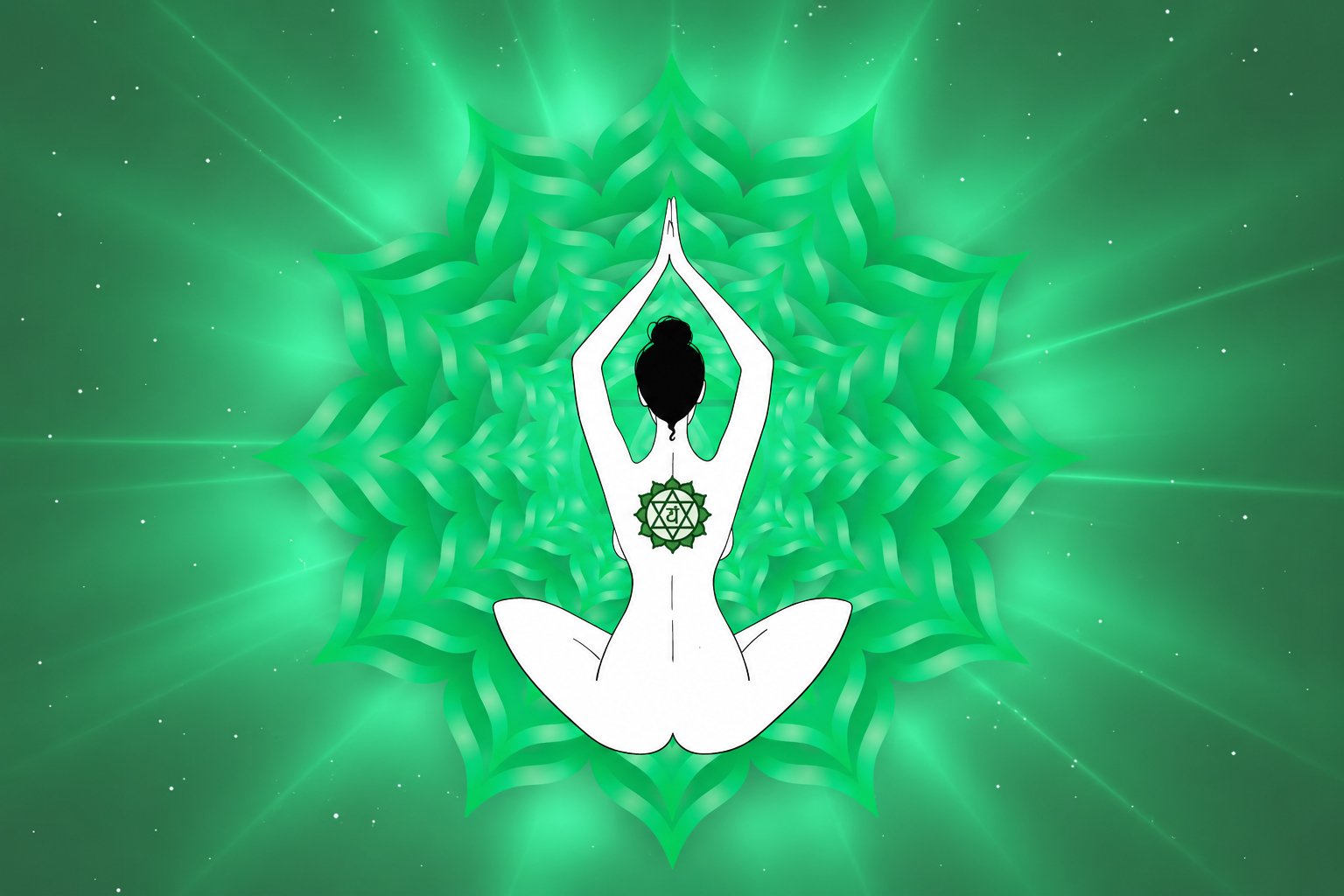
Significance - Love, kindness, compassion
Location - Centre of the chest
Half Lord of the Fishes
Ardha Matsyendrasana, also known as Half Lord of the Fishes, is a seated spinal twist that helps with the mobility of the spine, stretches out the hips and shoulders, and realigns the abdominal organs. By gently compressing the midsection, this pose helps stimulate digestion, provides relief from constipation, and boosts blood circulation flowing to the spleen, kidneys, and liver.
- Take a seat with the legs out in front of you
- Place the left foot on the outside of your right thigh and bend the left knee.
- Grasp your left knee with your right hand and turn your body slightly to the left,
- glancing over your left shoulder.
- Hold for a few breaths, then switch to the other side.
Camel Pose
This deep kneeling backbend stretches the front of the body while strengthening the back. It helps with many modern problems like desk slouching and improves spinal flexibility, opens the chest, and boosts energy levels.
- Kneel and sit upright
- Place both hands on the hips and slowly open up the chest for a slight backbend
- Gently bring the hands down to touch your heels or yoga blocks
- Let the shoulder blades engage
- Hold the pose for 5-8 breaths.
- Bring the hands to the hips again and support the lower back to release and bring the body upright.
Cobra Pose
Cobra Pose gently lifts the chest while strengthening the back muscles that support good posture. It is often included in Heart Chakra sequences because the broad chest opening encourages openness and easier breathing. Even a small lift can feel refreshing after spending hours leaning over a computer or phone.
- Lie face down on the mat. Place legs at a hip-width distance.
- Place your palms down, just below the shoulder blades. Bend the elbows.
- Raise the upper body by pulling your chest away from the floor as you breathe in.
- Maintain comfortable inhalation and exhalation and hold for 10 breaths.
Vishuddha / Throat Chakra
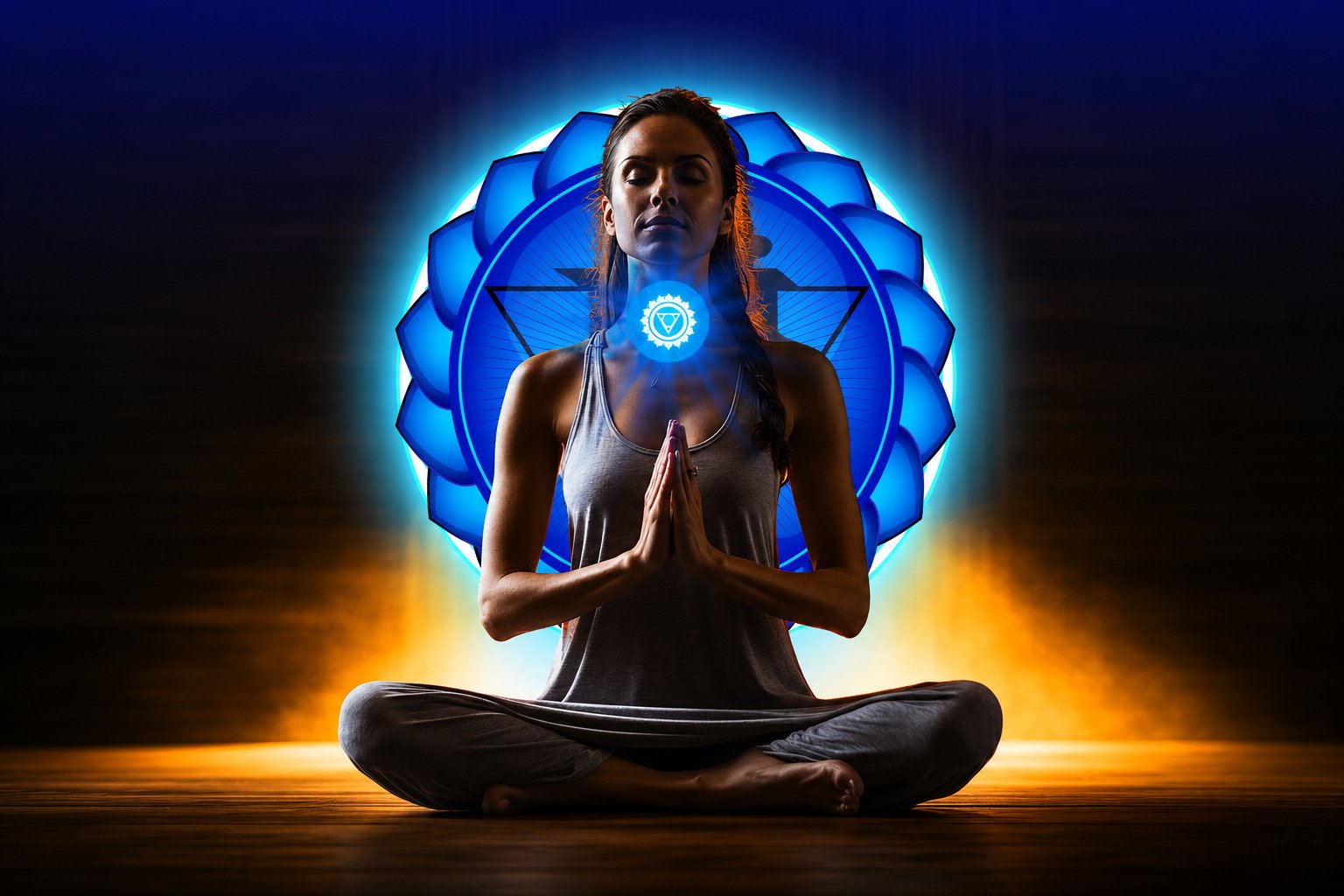
Significance - Communication, authenticity, expression
Location - At the throat
Plough Pose
This pose helps you by offering a deep stretch for the shoulders, spine, and upper back while naturally directing attention toward the throat. Slow breathing helps you settle into the posture without unnecessary tension.
- Lie down on the back
- Bring the knees to the chest and raise the legs upright
- Support the hips with your hand to lift it off the floor
- Inhale to engage the core
- Lower down the legs above the head to touch the toes to the ground
- Press the hands together with palms down while keeping your arms straight
- Hold the pose for 10 breaths.
Fish Pose
Fish Pose stretches the front of the neck and chest while creating space across the upper body. Since many people spend their day looking down at screens, this posture can feel like a welcome reset.
- Take a comfortable cross-legged seat in Sukhasana or Padmasana
- While keeping the legs crossed, gently bend back and rest utterly flat on the back.
- Raise the upper back. Use the elbows and palms for support, and extend the neck backward so that only the head is touching the floor.
- Maintain elbows on the floor, take hold of the left foot with the right hand and then the right foot with the left hand.
- Hold for 15-30 seconds.
- Release the posture by first letting go of the toes. Maintain the palms on the floor to support the head as you straighten it.
Cat and Cow stretch
The cat-cow stretch is a gentle posture that you do on your hands and knees that arches and rounds your spine. It improves back flexibility, relieves tension in the neck and shoulders, strengthens the core, and helps improve your posture and reduce stress.
- Starting on all fours, place your hands under your shoulders and your knees under your hips to perform the cat-cow stretch.
- Breathe in as you drop your belly, arch your back, and raise your head (Cow Pose).
- Breathe while bending your back and bringing your chin to your chest (Cat Pose).
Ajna / Third Eye Chakra
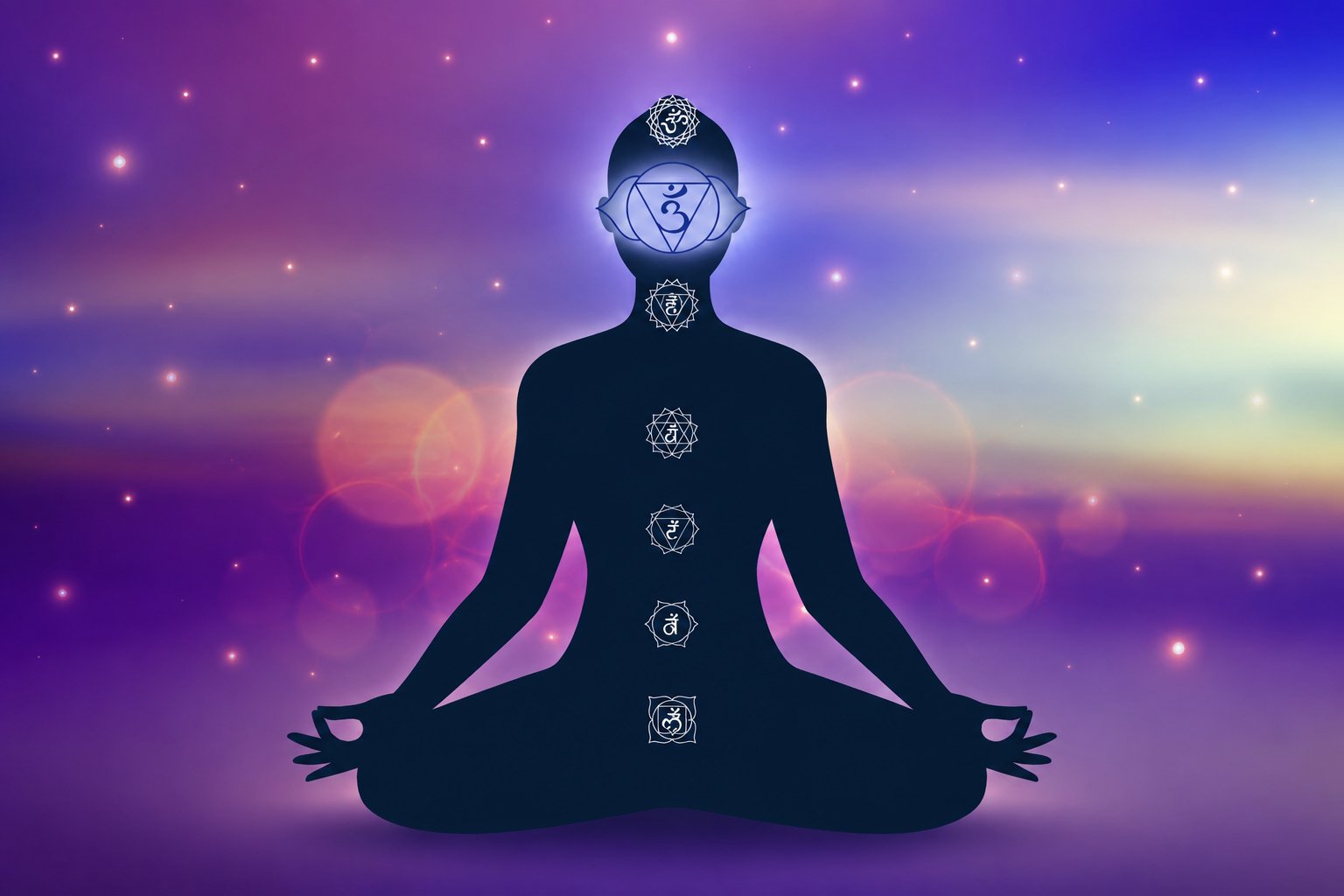
Significance - Intuition, imagination, wisdom
Location - Center of the eyebrows
Cow Face Pose
Called the Gomukhasana, this stretch is a deep, foundational seated exercise that targets the shoulders, chest, and hips. It acts as an excellent countermeasure for desk-bound posture by relieving tension in the upper and lower body and promoting spinal alignment.
- Sit in the Dandasan pose and extend the legs in front.
- Move your right heel over to the left hip's side and align the left heel with your right hip.
- Elongate the spine
- Inhale, raises the arm. Exhale, bend the left elbow to rest the hand on the back.
- Lift the right arm, bend the elbow so that it faces the ground, and clasp the fingers together.
- Avoid letting the head lean forward. Maintain an upright spine.
- Hold for 8-10 breaths. And gently release the hands.
- Repeat with the other side.
Child Pose
Child's Pose is a restful posture that encourages stillness while gently turning your attention inward. Since the Third Eye Chakra is linked with awareness and intuition, this position creates space for mindfulness without demanding physical effort. Sometimes the most valuable part of a yoga practice is simply slowing down enough to notice your breath.
- Place your knees slightly apart on the ground.
- Exhale and bend forward. Slightly tuck your chin.
- Extend the arms on the ground in front of you or extend them back toward the feet, palms up.
- Let the weight of the shoulders stretch the shoulder blades widely across the back.
- Breathe in gently and deeply for 30 seconds.
Thunderbolt Pose
Thunderbolt pose, or Vajrasana, is a simple kneeling yoga posture. It uniquely aids digestion right after meals, improves lower body flexibility, strengthens pelvic and back muscles, and calms the nervous system for meditation.
- Place your knees together on the ground.
- As you gently sit onto your heels, ensure your weight is spread equally on the foot and heels.
- Lengthen your spine and let your shoulders come down.
- Place your hands on your thighs and relax them.
- Take calm, deep breaths in and out.
- Raise your head and gaze straight.
Sahasrara / Crown Chakra
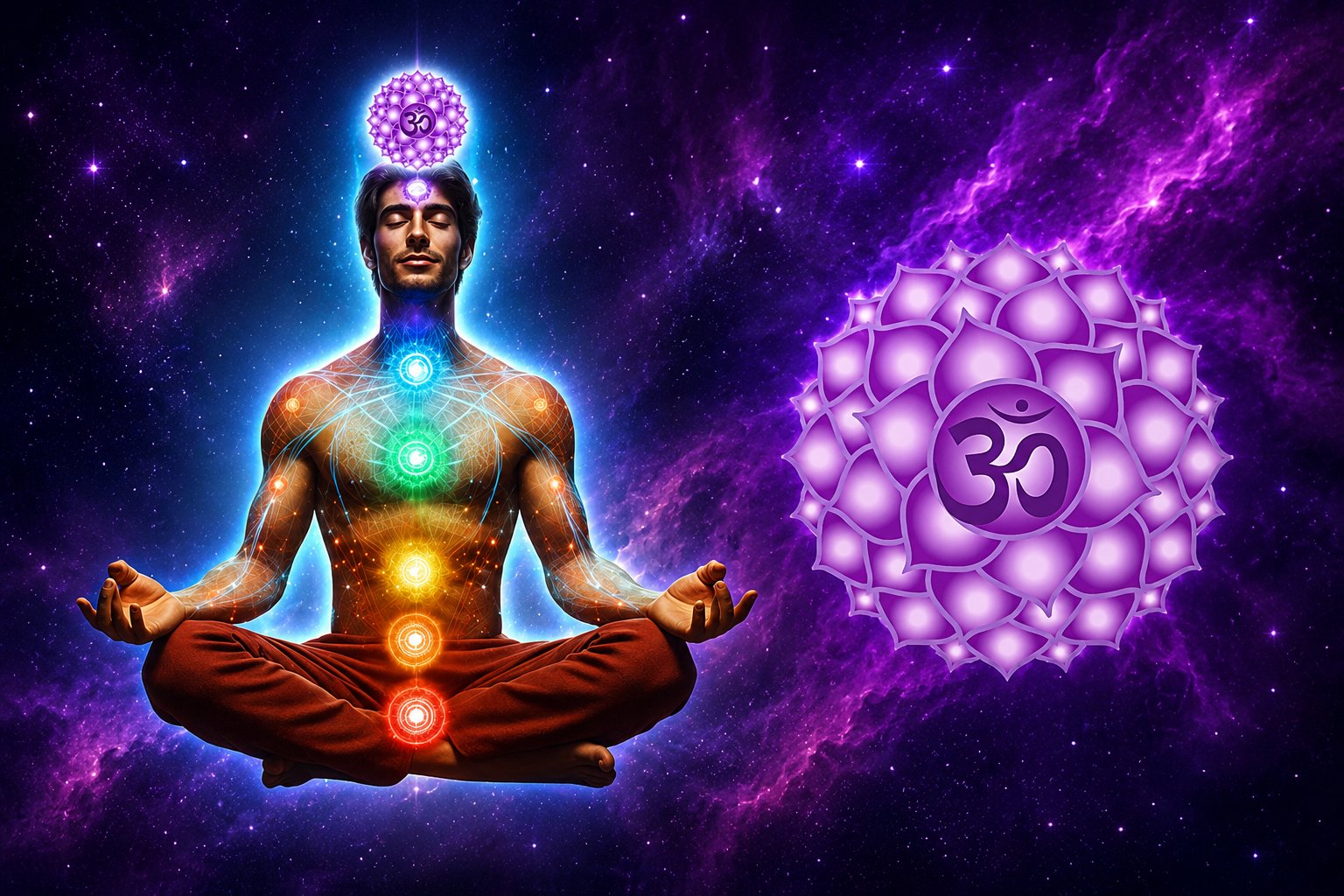
Significance - Consciousness, spirituality, oneness
Location - Above the head
Padmasana
Lotus Pose (or Padmasana) has long been associated with meditation because it creates a stable, comfortable seat for longer periods of stillness. For Crown Chakra practice, the goal is not flexibility for its own sake but finding a posture that allows your attention to remain on the breath instead of physical discomfort. If the full expression feels restrictive, a simple cross-legged seat works just as well.
- Sit on the mat with the spine elongated
- Bend your knee and place the left foot on the right thigh
- Now take the other foot to place it on the left thigh
- Place your hands on top of the knees in a mudra
- Take deep breaths to hold the pose.
Rabbit Pose
Rabbit Pose (Sasangasana) is a powerful yoga forward bend that decompresses the spine, stretches the upper back and neck, stimulates the thyroid gland, and calms the nervous system to relieve stress.
- Kneel on the mat.
- Start with the knees hip-distance apart. Place the tips of the feet down.
- Inhale and extend your hand back to cup your heels or to clasp the ankles.
- Exhale and bend forward to rest the top of the head on the floor.
- Lower the chin near the middle of the collarbones.
- Maintain an average pace of breath for 30 seconds in this position.
- To release the pose, bring the head up and come to sit in the kneeling posture in Vajrasana
by lowering the buttocks back toward the heels.
Savasana
Corpse Pose may look effortless, but remaining completely still can be surprisingly challenging. This final relaxation allows the body to absorb the benefits of your practice while giving the mind a chance to settle. Many people finish feeling clearer and more refreshed than they expected from simply lying quietly for a few minutes.
- Lie on the mat comfortably
- Place the legs apart from each other in a relaxed position
- Place the arms apart from the body
- Keep your eyes closed and take deep breaths
- Hold the pose for 10 minutes
- Roll to the side to sit up.