Bridge Pose may appear simple at first, but it offers much more than just a gentle backbend. This grounding posture, known as Setu Bandhasana, helps build strength in the back, glutes, and legs while creating a gentle opening through the chest, shoulders, and hips.
It is especially helpful for people who spend long hours sitting, as it encourages better posture and helps release tension from commonly tight areas. Along with its physical benefits, Bridge Pose can promote better circulation, support overall body awareness, and bring a sense of calm and relaxation to the mind. Whether practiced as part of a yoga flow or held as a peaceful finishing pose, it helps create balance between strength, flexibility, and stillness.
Bridge Pose at a Glance
| Pose Name | Sanskrit Name | Difficulty Level | Primary Muscles Targeted | Main Benefits |
| Bridge Pose | Setu Bandhasana | Beginner–Intermediate | Back & Glutes | Strengthens the Back |
| Yoga Category | Backbend / Mild Inversion | Easy–Moderate | Hip Flexors & Hamstrings | Improves Posture |
| Main Focus Area | Spine & Chest | Beginner Friendly | Core & Abdominals | Opens the Chest |
| Energy Center | Vishuddha Chakra (Throat) | Beginner–Intermediate | Shoulders & Neck | Supports Calm & Clarity |
| Additional Benefits | Thyroid Stimulation | Controlled Breathing Needed | Quadriceps | Improves Circulation |
How to Do Bridge Pose
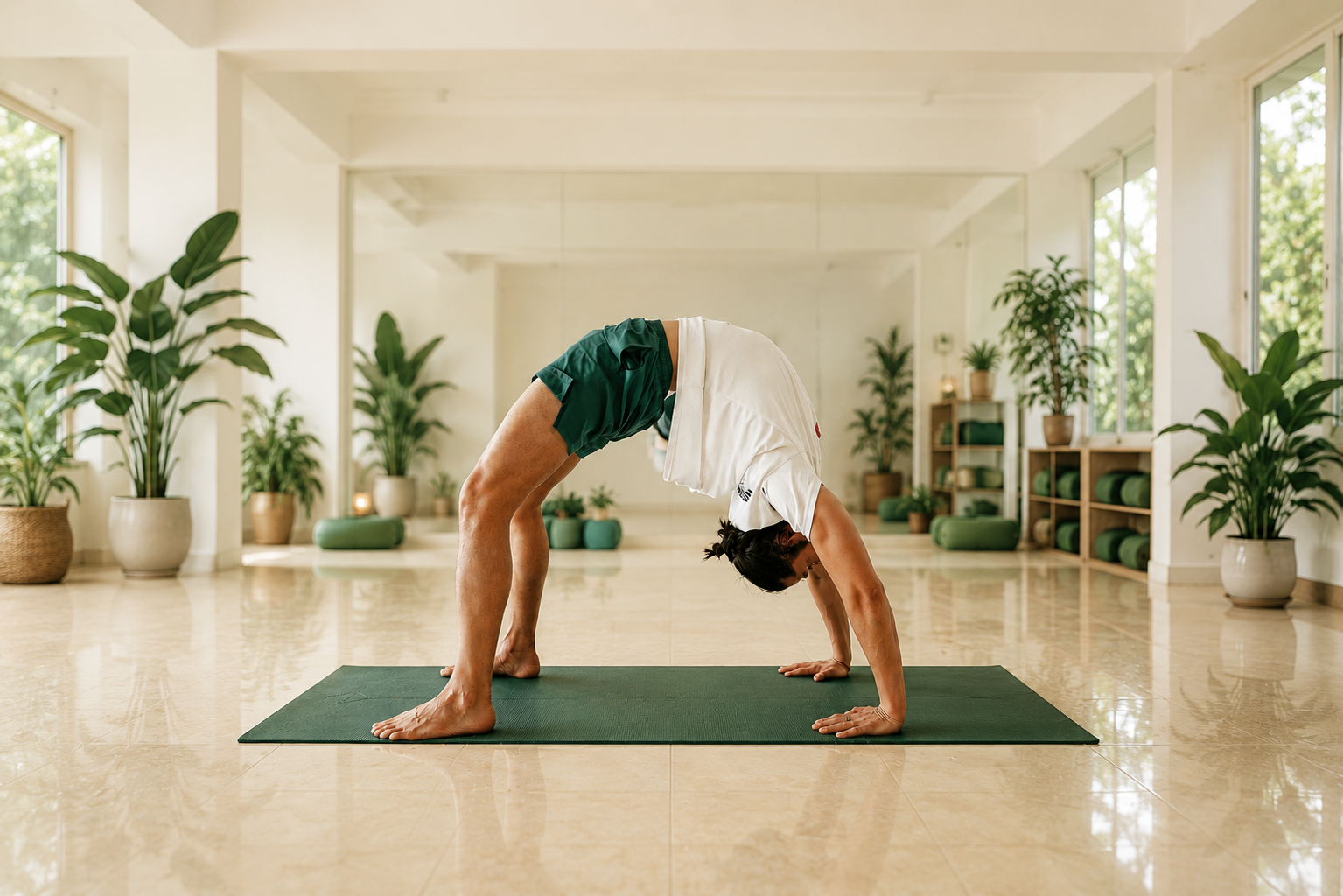
- Lie down on your back with your arms relaxed beside your body and your palms facing the floor.
- Bend your knees and place your feet firmly on the mat, keeping your heels close to your sitting bones for support.
- Take a deep breath in and press your feet and arms into the floor as you slowly lift your hips toward the ceiling.
- Gently roll your shoulders underneath your body to open your chest. If it feels comfortable, you can interlace your fingers behind your back.
- Keep your thighs and feet parallel and avoid letting your knees fall outward.
- Hold the pose for 5–10 deep breaths, focusing on keeping your chest lifted, your breathing steady, and your neck relaxed.
- To release, slowly let go of your hands and lower your spine back down to the mat, moving one vertebra at a time with control.
What Are the Benefits of Bridge Pose?
Bridge Pose, also known as Setu Bandhasana, is much more than just a gentle stretch. This simple yet powerful pose helps strengthen the back and glutes, improve posture, and open the chest, making it easier to breathe deeply and relax. It also gently works on the abdominal area and is traditionally believed to support the thyroid region.
Beyond the physical benefits, Bridge Pose can create a sense of calm and balance by helping quiet the mind and relax the nervous system. In yogic tradition, this pose is connected with the Vishuddha (throat) chakra, which represents communication, self-expression, and the ability to express yourself with clarity and confidence.
Physical Benefits of Bridge Pose
Strengthens the Back and Glutes
Bridge Pose helps activate the muscles along your spine, lower back, and glutes. With regular practice, it can build strength in these areas, helping support better posture and a more stable body throughout the day.
Opens the Chest and Shoulders
As you lift your hips and gently roll your shoulders back, the chest naturally opens. This creates more space around the upper body and can help you breathe more deeply while releasing tension from the shoulders.
Improves Spinal Flexibility
The gentle backbend in Bridge Pose helps counter the effects of sitting for long hours, especially the rounded posture caused by working at a desk or looking at screens. It encourages the spine to move more freely and comfortably.
Stretches the Hip Flexors
When the hips lift into the pose, the front of the hips and thighs receive a gentle stretch. This can help release tightness and stiffness that often builds up from spending too much time sitting.
Strengthens the Legs
Your legs play an important role in supporting the pose. Holding the lifted position engages the thighs, hamstrings, and surrounding muscles, helping improve lower-body strength and stability.
Mental Benefits of Bridge Pose
Beyond its physical benefits, Bridge Pose can also have a positive effect on your mind and emotional well-being.
Encourages Calm and Relaxation
The gentle chest opening and steady breathing involved in Bridge Pose can help release stress and create a feeling of relaxation. It encourages the body to slow down, helping you feel calmer and more balanced during your practice.
Supports Mental Clarity
Holding Bridge Pose with slow, controlled breaths gives you a chance to quiet distractions and stay present. This mindful focus can help clear the mind and bring a greater sense of awareness.
Builds Confidence Through Practice
Like many yoga poses, Bridge Pose teaches patience and consistency. As you become more comfortable and stronger in the posture, it can help build confidence, improve body awareness, and create a deeper connection with yourself.
Bridge Pose Benefits for Posture and Desk-Related Tension
For many people, sitting for hours at a desk has become a daily routine — but it can also lead to tight hips, rounded shoulders, and stiffness in the back. Bridge Pose (Setu Bandhasana) is a simple yet effective posture that helps open up areas of the body affected by prolonged sitting.
How Bridge Pose Helps Improve Posture:
- Opens the chest and shoulders: Sitting for long periods often pulls the shoulders forward and creates tension across the chest. Bridge Pose gently stretches these areas, helping restore a more open posture.
- Strengthens the muscles that support your spine: By engaging the back and glute muscles, this pose helps build the strength needed to maintain better posture throughout the day.
- Releases tight hip flexors: When we sit for extended periods, the front of the hips can become stiff and tight. Bridge Pose provides a gentle stretch that helps improve hip mobility.
- Encourages better body alignment: Practicing this pose regularly increases body awareness and helps you develop healthier movement patterns.
Bridge Pose won't instantly correct years of poor posture, but making it part of a regular yoga routine can gradually help your body feel stronger, more balanced, and more comfortable.
Bridge Pose for Circulation, Thyroid Support, and Digestion
Beyond improving posture, Bridge Pose also offers benefits that support overall well-being. Its gentle lifting motion, chest opening, and controlled breathing create a calming effect throughout the body.
Promotes Better Circulation
The gentle elevation of the hips and opening of the chest can encourage blood flow and help improve oxygen circulation, leaving you feeling more energized and refreshed.
Supports the Thyroid Region
In traditional yoga practice, the throat and neck opening in Bridge Pose is believed to stimulate the thyroid area, which is associated with metabolism and energy balance.
Helps Support Digestion
The gentle engagement and compression of the abdominal area may help stimulate the digestive organs. Many yoga practitioners find this soothing, especially when dealing with occasional bloating or digestive discomfort.
Overall, Bridge Pose is a well-rounded posture that supports strength, flexibility, relaxation, and better awareness of how your body feels.
Modifications and Variations of Bridge Pose
One of the best things about Bridge Pose is that it can be adjusted to match your body's needs, flexibility, and experience level. Whether you're a beginner, looking for extra support, or wanting to explore a deeper variation, these modifications can help you practice comfortably and safely.
Supported Bridge Pose
If you want a more relaxing version of Bridge Pose, try using a yoga block for support. After lifting your hips, place the block horizontally under your sacrum (the flat bone at the base of your spine). Allow your body to gently rest on the block while keeping your chest open and your breathing steady.
This variation reduces the effort required to hold the pose, making it a great option for beginners, restorative yoga sessions, or days when your body needs a softer practice. It allows you to enjoy the benefits of the pose while focusing more on relaxation, gentle opening, and mindful breathing.
Bridge Pose vs. Supported Bridge Pose
| Feature | Bridge Pose | Supported Bridge Pose |
| Difficulty | Beginner–Intermediate | Beginner Friendly |
| Muscle Engagement | Active, continuous | Passive, restful |
| Effort Level | Moderate | Low |
| Best For | Strength Building | Restorative Practice |
| Hold Duration | Shorter (5–10 breaths) | Longer (1–5 minutes) |
One-Legged Bridge Pose
Once comfortable in the full pose, try extending one leg straight up toward the ceiling while keeping the other foot grounded. This variation increases the challenge to balance and core stability.
Dynamic Bridge Pose
For a more active variation, gently lower and lift the hips in a slow, controlled rhythm rather than holding the pose statically — a good way to build strength through repetition rather than a single sustained hold.
Bridge Pose Muscles Worked
Bridge Pose feels deceptively effective because it engages several muscle groups simultaneously:
- Erector Spinae — muscles running along the spine, supporting the backbend
- Gluteus Maximus — the primary muscle lifting the hips
- Hamstrings — support hip extension throughout the hold
- Hip Flexors — stretched as the hips extend upward
- Quadriceps — stabilize the legs during the lift
- Core Muscles — engage to protect and support the lower back
This combined engagement is what makes a seemingly simple lift feel surprisingly challenging to hold well.
Common Mistakes to Avoid in Bridge Pose
Like many yoga poses, Bridge Pose may look simple, but small alignment mistakes can affect how comfortable and effective the posture feels. Paying attention to these details can help you practice safely and get the most benefits from the pose.
Letting the Knees Fall Outward
Allowing the knees to move away from each other can reduce stability and place extra stress on the joints. Try to keep your thighs parallel and your knees pointing forward throughout the pose.
Lifting Too High and Overarching the Lower Back
It can be tempting to push the hips as high as possible, but forcing the movement may create unnecessary pressure in the lower back. Focus on engaging your core, glutes, and legs while lifting with control.
Holding Your Breath
When a pose feels challenging, many people unknowingly hold their breath. Keep your breathing slow and steady to help your body stay relaxed and supported.
Keeping the Feet Too Far Away
If your feet are placed too far from your hips, your knees may take on more pressure and your glutes and hamstrings may not engage properly. Position your feet comfortably close enough so your legs can support the lift.
Turning Your Head While Holding the Pose
Avoid looking around or turning your neck while your hips are lifted. Keep your gaze toward the ceiling and your neck relaxed to protect the cervical spine.Small changes in alignment can make a big difference.
Who Should Avoid Bridge Pose?
Although Bridge Pose is generally safe for many people, it may need to be modified or avoided in certain situations.
Avoid or practice with guidance if you have:
- Recent neck, shoulder, or spinal injuries
- Severe lower back pain or a herniated disc
- Recent abdominal or spinal surgery
- Pregnancy, especially during later stages
- Uncontrolled high blood pressure
Always listen to your body and avoid pushing through pain or discomfort. A mindful and safe practice is more important than forcing a pose.
Precautions and Tips for Bridge Pose
Bridge Pose offers real benefits, but a few safety guidelines are worth keeping in mind:
Protect the Neck: Keep the chin slightly tucked and avoid turning the head from side to side while the hips are lifted.
Engage the Core: Activating the abdominal muscles alongside the glutes helps protect the lower back and distributes effort more evenly.
Breathe Steadily: Maintain slow, even breaths throughout the hold rather than tensing up and holding the breath.
Modify as Needed: Use a block under the sacrum for a gentler, more restorative variation, or shorten the hold if any strain is felt.Practiced mindfully, Bridge Pose offers a simple but effective way to build strength, improve posture, and create a moment of calm within a yoga practice.
At Nirvana Yoga School, we believe yoga is never just about mastering postures. Every asana carries deeper wisdom when practiced with awareness. If you wish to experience authentic yogic learning beyond physical practice, explore our courses and begin your journey where yoga is truly experienced — here in Rishikesh.