Are you tired of the same old workout practices? Are you seeking more enjoyable poses to push your physical and mental limitations? Acro yoga is the answer. This dynamic practice fosters trust, communication, and interpersonal connections by fusing the mindfulness and grace of traditional yoga.
What is Acro Yoga?
Acro yoga entails two or more people cooperating to produce a lovely, harmonious movement pattern. In this yoga, one person becomes the flyer, executing different poses and motions in the air, while another assumes the role of the base, offering stability and support. Acro yoga combines aspects of athleticism and technique with those of yoga, such as groundedness and mindfulness.
Benefits of Acro Yoga
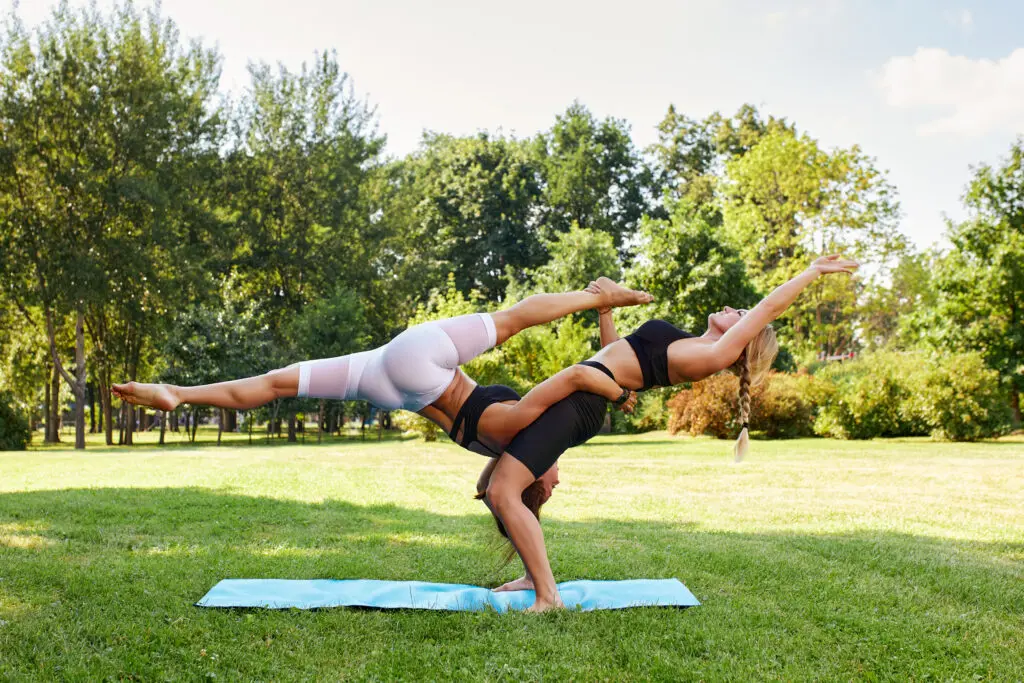
Physical Benefits of Acro Yoga
Enhances strength, flexibility, and balance on a physical level
Muscles in the arms, legs, and back are stretched throughout the practice. Engaging your deepest core is what allows you to float. You'll experience more endurance and stamina as you practice more, enabling you to hold positions for extended periods.
Stimulates organs of the body
Acro Yoga uses the entire body in various balancing and planes of motion. Due to its dynamic nature, one learns to engage both Mula bandha and Uddiyana bandha simultaneously to rely on one stable center of gravity.
Body Balance
Acro Yoga demonstrates how to achieve power through counterbalance by utilizing opposing forces, such as push and pull.
Mental and Emotional Benefits of Acro Yoga
Builds focus
Mentally, this yoga challenges your focus and concentration. It requires you to be fully present in the moment as you coordinate movements and communicate with your partner.
Improves communication
Without much verbal conversation, one's ability to interpret each other's body language, tone of voice, and visual clues will determine safety.
Helps to make a quick decision
It takes practice to become aware of how the body moves. Acro yoga teaches you to develop self-control and persistence. You will sharpen the ability to adjust to change when it presents itself while keeping composure.
Overcome fear of falling
Making your way back down is essential to reaching incredible heights, and Acro Yoga teaches you how to do so with grace and mindfulness while declining from the pose. One finds the process serene despite the concerns.
Build deep connections
It encourages interpersonal relationships, openness, and sensitivity on an emotional level. You develop a strong sense of cooperation and trust as you rely on your partner for stability and support.
Spiritual Benefits of Acro Yoga
When did you most recently take a moment to express gratitude in your life? Life frequently calls for us to continue on a continuum of doing, giving, and supporting other people. One person only sometimes bears all responsibilities when practicing therapeutic acro yoga. You must give yourself permission to accept and offer in equal measure that incorporates gratitude for you and your partner into the routine.
Basic Principles of Acro Yoga
The base, flyer, and spotter are the three primary roles around the practice.
The base
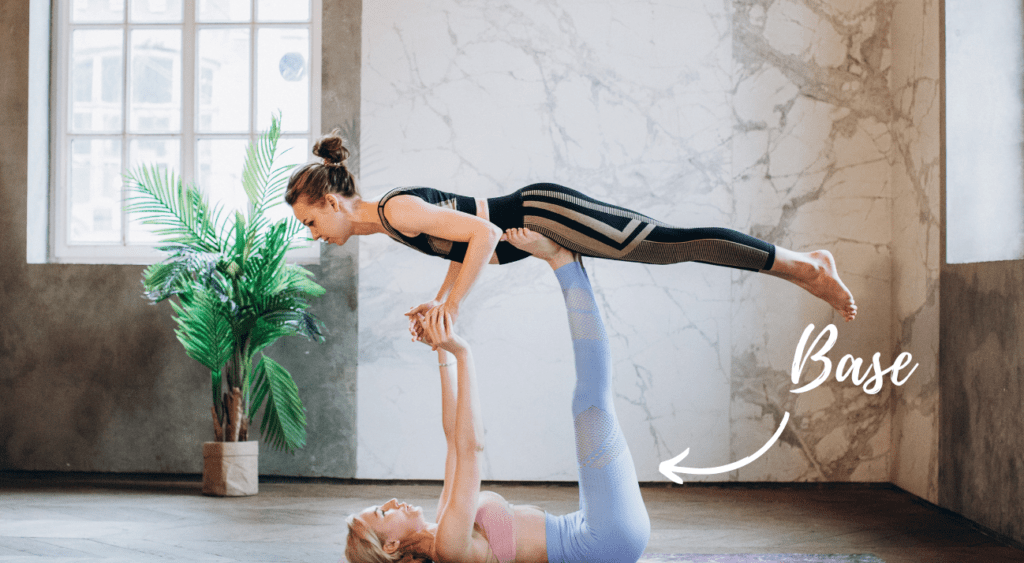
A base can be in a standing position or lying on the abdomen. The base's primary objective is to support and stabilize the flyer rested on top and transition between different poses.
The flyer
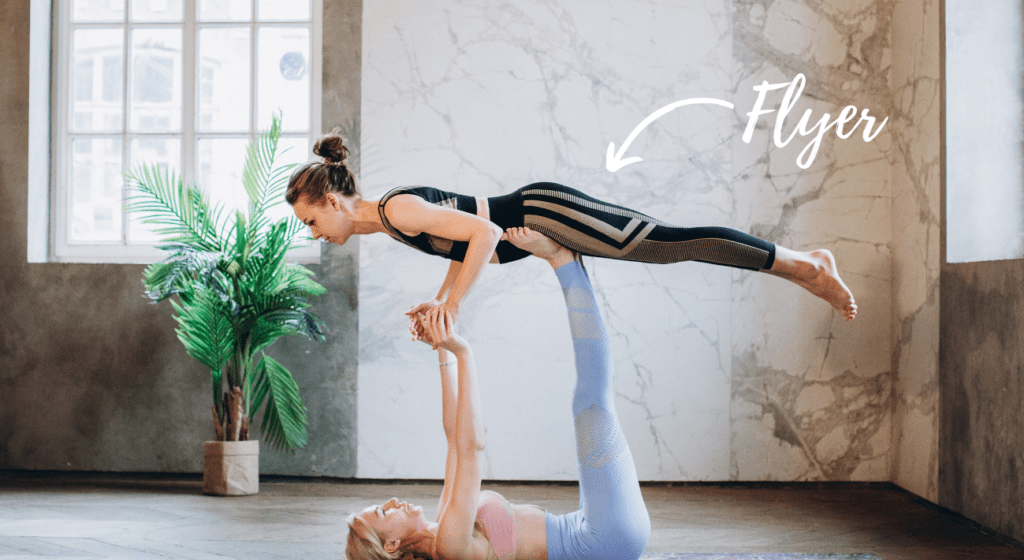
To stay elevated above the ground and maintain balance, the flyer uses one or more points of contact with the base. Their primary objective is to move with awareness and maintain good body tension with the base.
The spotter
This individual is responsible for guaranteeing the safety of the practice. The flyer's safety is the spotter's first concern. They maintain awareness and observation of the flyer to detect potential falls or provide hands-on support for the flyer and base.
Acro Yoga Poses for Beginners
With these beginner-friendly poses, you'll gain confidence, enhance your communication ability, and strengthen your foundation.
Throne Pose
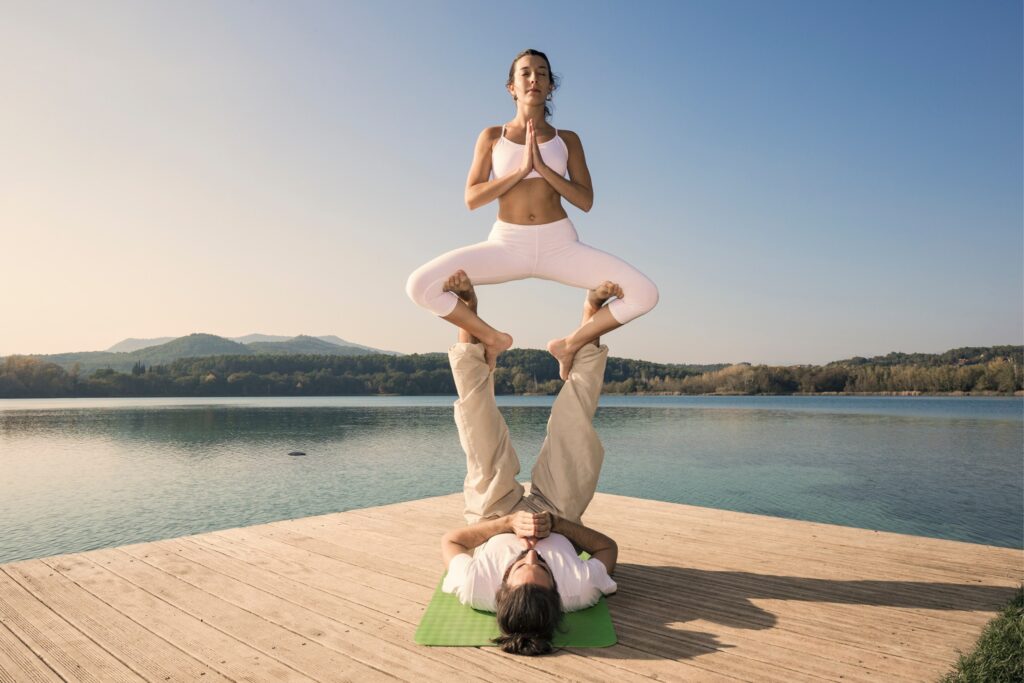
To provide a "throne" for the flyer, the base sits on the ground with its knees bent. Using their core for balance, the flyer sits on the base's feet.
Bird Pose
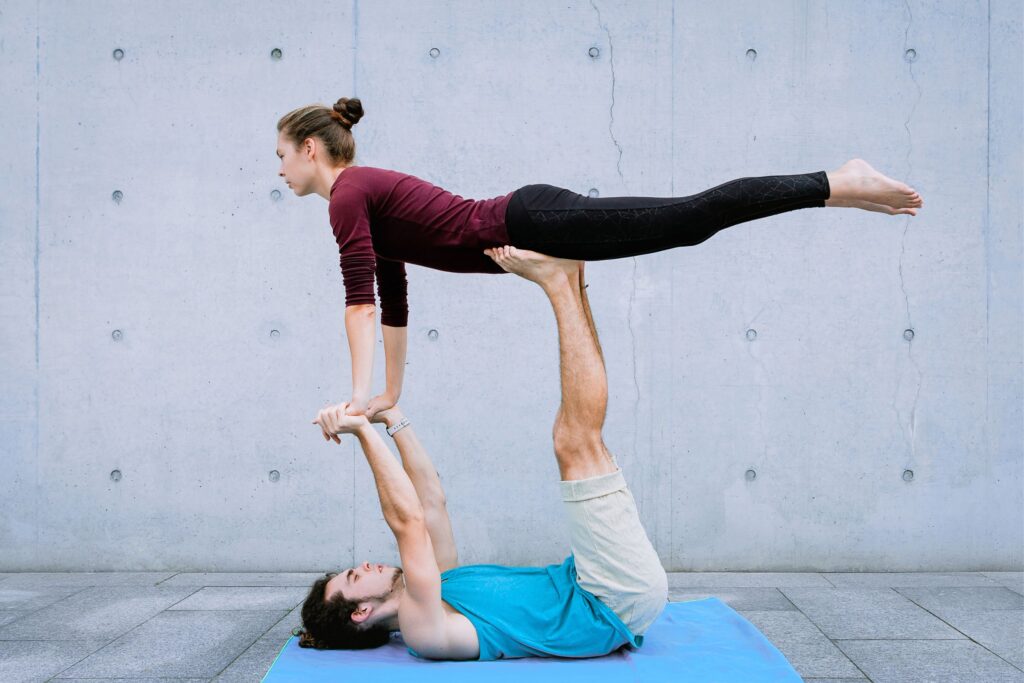
The base holds the flyer's hands and supports their feet while the flyer leans forward and extends their legs. The base and the flyer must possess balance and core strength to do this pose.
Fish on a Rock
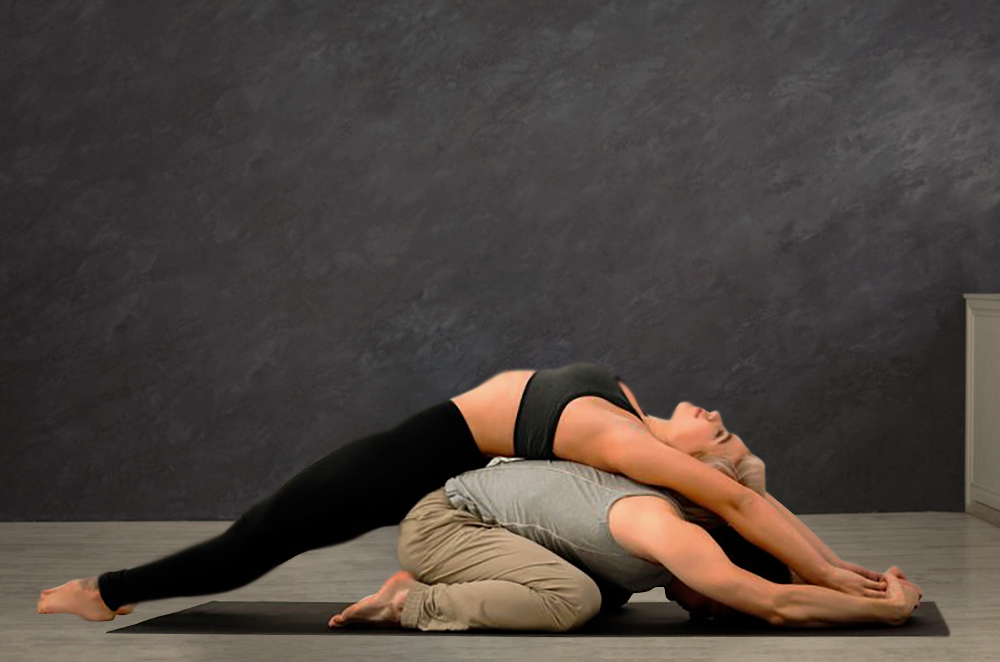
The base will move into Child's Pose, with their hands extended out in front of them and their knees out wide as they rest their forehead on the ground. Flyer will then lie on its back on top of the base so that its back arches over the base's back for a nice, deep stretch. The flyer can extend their legs and let their arms go out to the sides to surrender to the pose entirely.
Plank on Plank
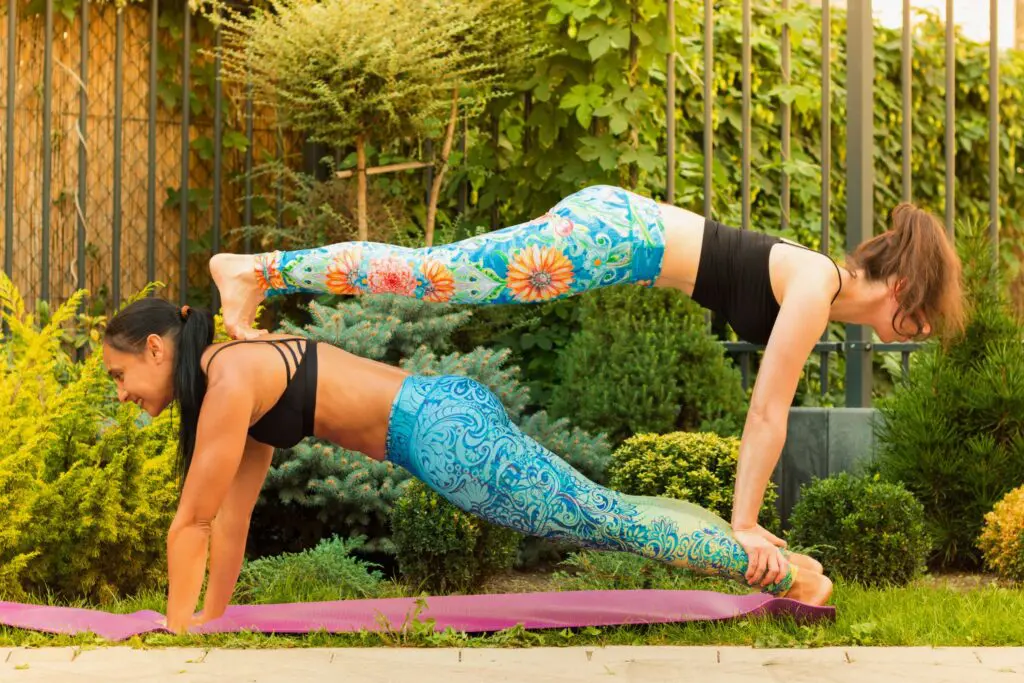
The base will come into a high plank pose, stacking their shoulders over their wrists, arms straight, and core engaged. Their fingers should be stretched out, and their palms should be firmly planted in the ground. The flyer will next grasp hold of the base's calves or ankles. They will then step one foot up onto one shoulder and then the other on the other, one foot at a time.
High-flying whale
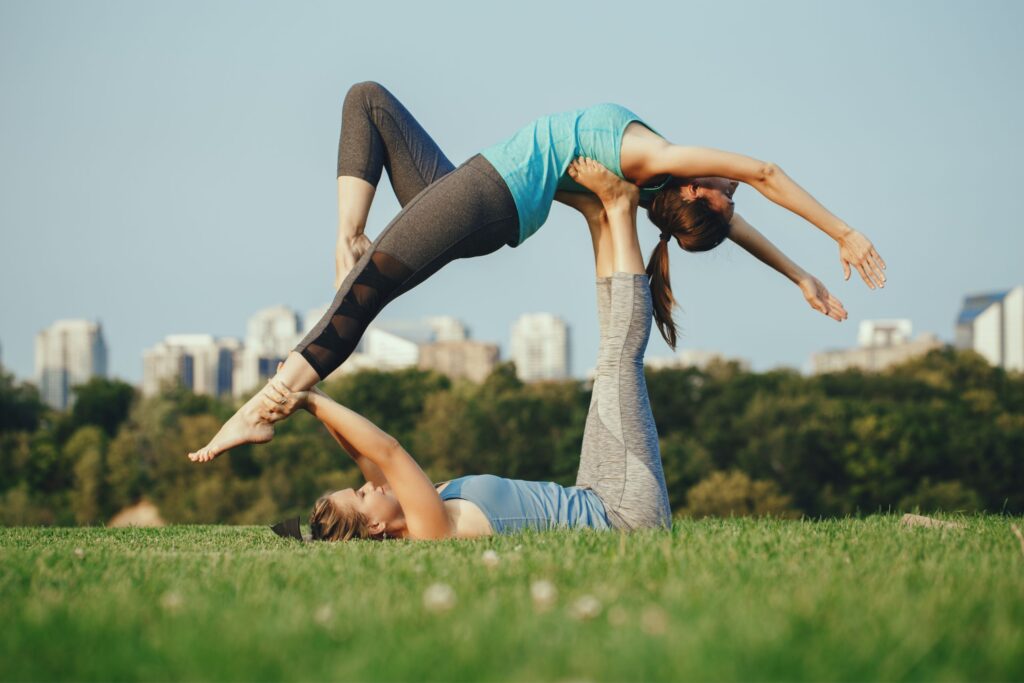
With their feet up and their backs on the ground, the bases begin. The flyer frames the base's feet around their ears by positioning themselves near the head. The base places their feet on the flyer's upper back by grabbing their ankles and extending their legs towards their head. The flyer leans back onto the foot of the base, engaging their entire body. The base gradually raises the flyer's feet off the ground while they support the flyer's weight with them, enabling the flyer to enter the backbend. Then, the flyer can stretch their hands.
Foot to shin
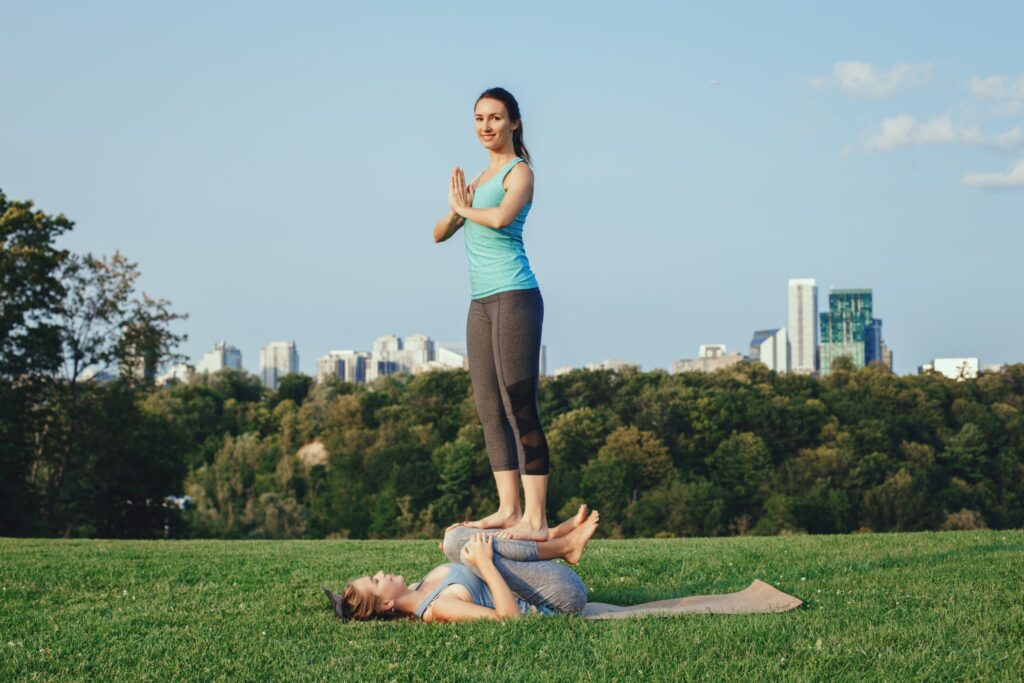
The flyer sets the base on the base's shin. Once the flyer is up, they gaze forward. The base may extend their knees to 90 degrees to make it more challenging. To come down, the base grips the flyer's hand and steps down one leg at a time.
Safety Measures and Precautions for Acro Yoga
Safety should be the first concern in acro yoga practice, just like any physical activity. The following are some crucial pointers to remember:
Warm-up
Before practicing acro yoga, always warm up your body. This lowers the chance of injury by preparing your muscles and joints for the poses.
Communication
Maintain lines of communication open and transparent with your partner. Set up cues or indications to show comfort zones, adjustments, or when to stop.
Spotter
To ensure safety, have a spotter present when attempting advanced postures or sequences. The spotter guides and supports the flyer and base, offering assistance as needed.
Advance Gradually
Take your time with your advancement. Before attempting more challenging poses, master the core ones. Injuries might result from rushing into challenging movements with more preparation.
Pay Attention to Your Body
Be mindful of your body's limitations and cues. Discuss your discomfort or uneasiness with your partner and adjust the pose accordingly.
Acro yoga is a journey that challenges the body, mind, and spirit. Acro yoga is a transformative approach to building community, enhancing physical health, and fortifying relationships via connection, trust, and communication with others.