Ever tried standing on one
leg and suddenly realized your balance has a mind of its own?
That little Wobble is exactly why Vrikshasana, or tree pose, is more interesting than it looks.
Inspired by the steady strength of a tree, Vrikshasana is a simple standing yoga pose that challenges your balance, focus and stability. And no, you don’t need to stand perfectly still like a statue on your first try! Whether you’re a complete beginner or looking to improve your yoga practice, this pose is a great place to start.
So, let’s see how to practice this tree-inspired pose without falling out of the forest!
What Exactly is Vrikshasana?
Ever wondered why this yoga pose is called the Tree pose?
The answer is actually pretty simple. Vrikshasana comes from the Sanskrit words Vriksha, meaning tree and Asana, meaning pose or posture.
In this pose, you stand firmly on one leg while placing the sole of your other foot against the inner calf or thigh. Your hands can rest in a prayer position at your chest or stretch overhead, while your gaze stays fixed on one point to help you maintain balance.
And here’s the interesting part: Vrikshasana isn’t just about standing on one leg without falling over! It asks your legs, core, hips and mind to work together. This posture reflects the quality of a tree, strong at the base while reaching upward.
So, if your first attempt involves a little wobbling, don’t worry. Trees sway in the wind, too!
With regular practice and patience, you can gradually become more comfortable.
How to do Vrikshasana without wobble
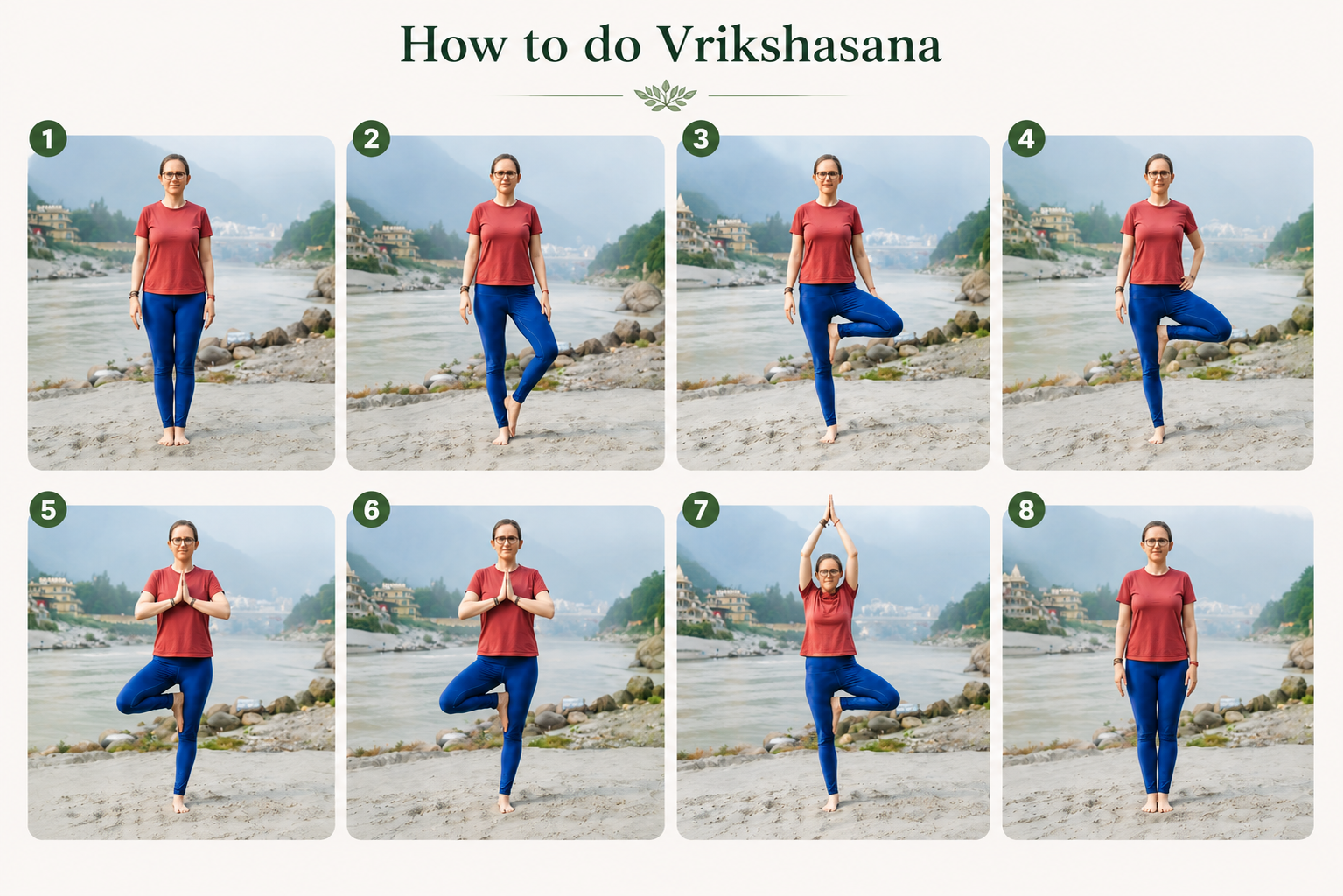
Don't worry, you don't need perfect balance or years of yoga experience to try Vrikshasana. And if you wobble a little, congratulations: you're officially practicing!
The trick is to take it slowly, keep your breathing natural and focus on one steady point. Here's how to get into Tree Pose step by step:
1. Start standing tall
Stand upright with your feet together or comfortably apart. Keep your spine straight, shoulders relaxed, and arms by your sides.
2. Find your standing leg
Shift your weight gently onto your left foot. Keep the standing foot firmly grounded and your leg active without locking the knee.
3. Lift the other foot
Bend your right knee and slowly bring your right foot towards the inner side of your left leg.
4. Find the right spot
Place the sole of your right foot against your inner calf or inner thigh - never directly on the knee joint.
5. Find your focus point
Choose one stationary object in front of you and keep your gaze there. This simple trick can make balancing much easier.
6. Bring your hands together
Place your palms together in front of your chest. Feeling steady? You can slowly raise your arms overhead.
7. Stand tall and breathe
Keep your spine long, shoulders relaxed, and hips comfortably aligned. Take slow, natural breaths while holding the pose.
8. Come out slowly
Lower your arms, gently release your raised foot and return to a comfortable standing position. Repeat on the other side.
Beginner tip: If your balance isn't cooperating today, practice beside a wall. There's absolutely no prize for falling dramatically out of Tree Pose!
Vrikshasana Benefits
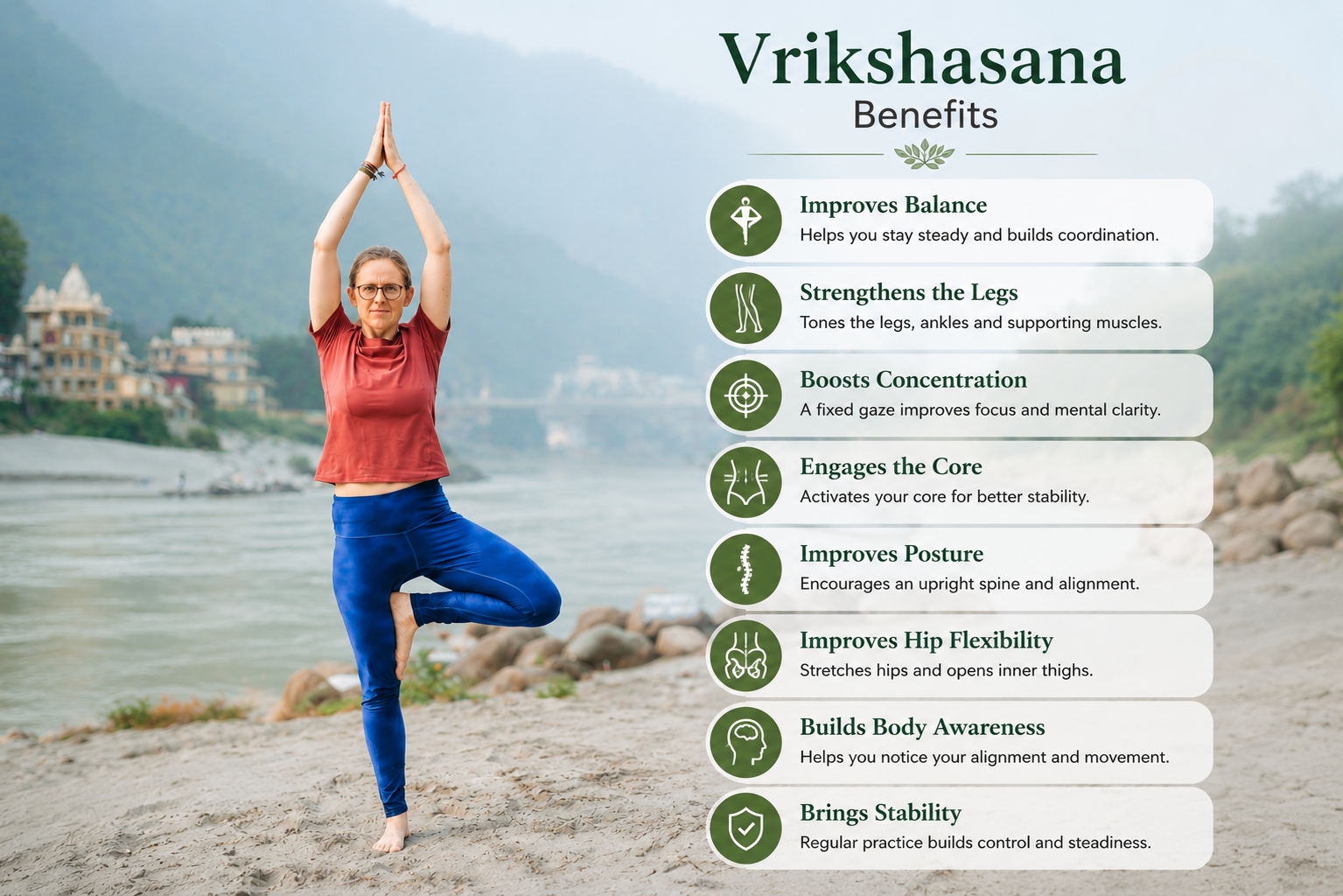
Vrikshasana may look like a simple one-leg pose, but there’s more happening beneath the surface. With regular, mindful practice, it gives more benefits than you think:
- Improves Balance: Challenges your body to stay steady on one leg.
- Strengthens the Legs: Engages the standing leg, ankles and surrounding muscles.
- Boosts Concentration: A fixed gaze helps train focus and mental attention.
- Engages the Core: Your core works quietly to keep you stable and upright.
- Supports Better Posture: Encourages an elongated spine and relaxed shoulders.
- Improves Hip Flexibility: Gently works the hips and inner thighs.
- Builds Body Awareness: Helps you notice your alignment, weight and movement.
- Mindful Breathing: Staying still makes it easier to slow down and focus on your breath.
- Bring Stability: Regular practice can help you become more comfortable with controlled, steady movement.
Start Where You Are: Vrikshasana For Beginners
If your first attempt at Vrikshasana involves wobbling, hopping or putting your foot down five seconds later, don’t worry. That’s completely normal! As a beginner, focus less on holding the “perfect” tree pose and more on feeling stable. Start with these simple tips :
- Use a wall: Keep it nearby for a little extra confidence.
- Fix your gaze: Pick one stationary point and look at it.
- Ground your standing foot: Think of it as your tree's roots.
- Start low: Place your lifted foot on the inner calf before trying the thigh.
- Keep breathing: Holding your breath won't magically improve your balance!
- Keep it short: A few comfortable breaths are enough when you're starting.
- Practice both sides: Your balance may be better on one side, and that's okay.
Common Mistake While Practicing Vrikshasana
Tree pose may look simple, but tiny alignment mistakes can make balancing much harder
Watch out for these common habits :
- Placing the foot directly on the knee
- Locking the standing knee
- Looking around instead of fixing your gaze
- Holding your breath
- Leaning the torso to compensate for lost balance
- Forcing the lifted knee outward
- Rushing into or out of the pose
Practice with Awareness But Also Precautions
Vrikshasana is generally a gentle, beginner-friendly yoga pose, but that doesn’t mean you should push through discomfort just to nail the perfect tree pose. Keep these precautions in mind:
- Protect your knees: Never place your lifted foot directly against the knee joint.
- Be careful with balance: If you feel unsteady or are prone to losing your balance, practice near a wall or another stable support.
- Don’t force with injuries: Let the lifted knee open naturally.
- Listen to pain: A little challenge is normal; sharp or uncomfortable pain is a reason to stop.
- Take care with injuries: If you have a recent or ongoing injury, avoid the pose until you feel fit again.
- Watch for dizziness: If you feel dizzy, light- headed or unusually uncomfortable, come out of the pose and rest.
Final Thoughts: Find Your Balance One Breath at a Time.
Vrikshasana may begin with a simple attempt to stand on one leg, but its real lesson goes a little deeper: stay grounded, stay focused. You’ll soon keep finding your balance.
Practice at your own pace, respect your body’s limits and don’t worry about getting everything right on the first try.
After all, a tree doesn’t grow overnight, and neither does your balance.