Trikonasana, or Triangle Pose, is one of those yoga postures you'll find in almost every style of yoga, from Hatha and Vinyasa to Iyengar. The name comes from the Sanskrit words tri (three) and kona (angle), inspired by the triangle shape your body creates in the pose. While it may seem straightforward, Trikonasana challenges your strength, improves flexibility, enhances balance, and helps you become more aware of your body's alignment, which is why it's a staple in yoga practice for all levels.
What Are the Benefits of Triangle Pose?
Triangle Pose is one of the few yoga postures that works on strength, flexibility, and balance all at once. It gently stretches the hamstrings, hips, groin, and sides of the body while building strength in the legs.The side-bending action also helps massage the abdominal organs, which may support healthy digestion. At the same time, staying balanced and maintaining proper alignment encourages focus, helping you feel more grounded and mentally calm.
Triangle Pose at a Glance
| Pose Name | Sanskrit Name | Difficulty Level | Primary Muscles Targeted | Main Benefits |
| Triangle Pose | Trikonasana | Beginner–Intermediate | Hamstrings & Hips | Improves Flexibility |
| Yoga Category | Standing Pose / Lateral Stretch | Moderate | Obliques & Core | Strengthens Legs & Core |
| Main Focus Area | Sides of the Body & Legs | Beginner Friendly with Props | Chest & Shoulders | Aids Digestion |
| Common Name | Three-Corner Pose | Requires Balance | Spine & Back | Reduces Stress |
| Additional Benefits | Stimulates Internal Organs | Prop-Friendly (Block) | Groin & Calves | Improves Posture |
How to Do Triangle Pose
- Begin in Tadasana (Mountain Pose), standing tall at the top of your mat with your feet together and your arms by your sides.
- Step your feet about 3.5 to 4 feet apart and stretch your arms out to shoulder height, keeping them parallel to the floor.
- Turn your right foot out 90 degrees and angle your left foot slightly inward for a stable base.
- Take a deep inhale to lengthen your spine. As you exhale, slowly hinge at your right hip and reach your torso over your right leg.
- Rest your right hand on your shin, ankle, a yoga block, or the floor—wherever feels comfortable without straining. Extend your left arm straight up toward the ceiling.
- Keep your chest open and your shoulders stacked, avoiding the urge to lean forward or collapse into the pose.
- Stay here for 30–60 seconds, breathing slowly and evenly. To come out, inhale as you press through your feet to rise back up, then repeat the pose on the opposite side.
Physical Benefits of Triangle Pose
Triangle Pose offers much more than a good stretch. When practiced regularly with proper alignment, it helps improve flexibility, build strength, and support overall mobility.That helps in a healthy lifestyle.
Stretches the Hamstrings, Hips, and Groin
The wide stance and side bend create a deep stretch through the hamstrings, hips, and groin. It's especially helpful if you spend long hours sitting at a desk or standing throughout the day.
Strengthens the Legs and Core
While the pose looks relaxed, your legs and core are working continuously to keep you steady. Over time, this helps build strength, stability, and better balance.
Improves Spinal Flexibility
The side stretch gently lengthens the spine and the muscles around it, helping improve mobility and reduce tightness in the back.
Opens the Chest and Shoulders
Reaching one arm toward the ceiling while keeping the chest open encourages better posture and allows the lungs to expand more comfortably for deeper breathing.
Supports Healthy Digestion
The gentle twist and side bend create light compression around the abdomen, which may help stimulate the digestive organs and ease occasional bloating when practiced consistently.
Mental Benefits of Triangle Pose
Triangle Pose benefits the mind just as much as the body. Staying steady in the posture encourages you to slow down, focus, and move with greater awareness.
Improves Focus and Concentration
Holding the pose with proper alignment takes your full attention. As you concentrate on your balance and breathing, your mind naturally becomes more focused and relaxed.
Helps Reduce Stress
The combination of gentle stretching and slow, steady breathing can help release built-up tension, leaving you feeling calmer and more relaxed after practice.
Increases Body Awareness
Triangle Pose encourages you to notice how your hips, shoulders, spine, and legs work together. Over time, this greater awareness can improve posture, movement, and overall coordination both on and off the mat.
Variations of Triangle Pose
Triangle Pose can be practiced in a few different ways, depending on your experience level and flexibility. Each variation offers its own unique challenge and benefits.
Extended Triangle Pose (Utthita Trikonasana)
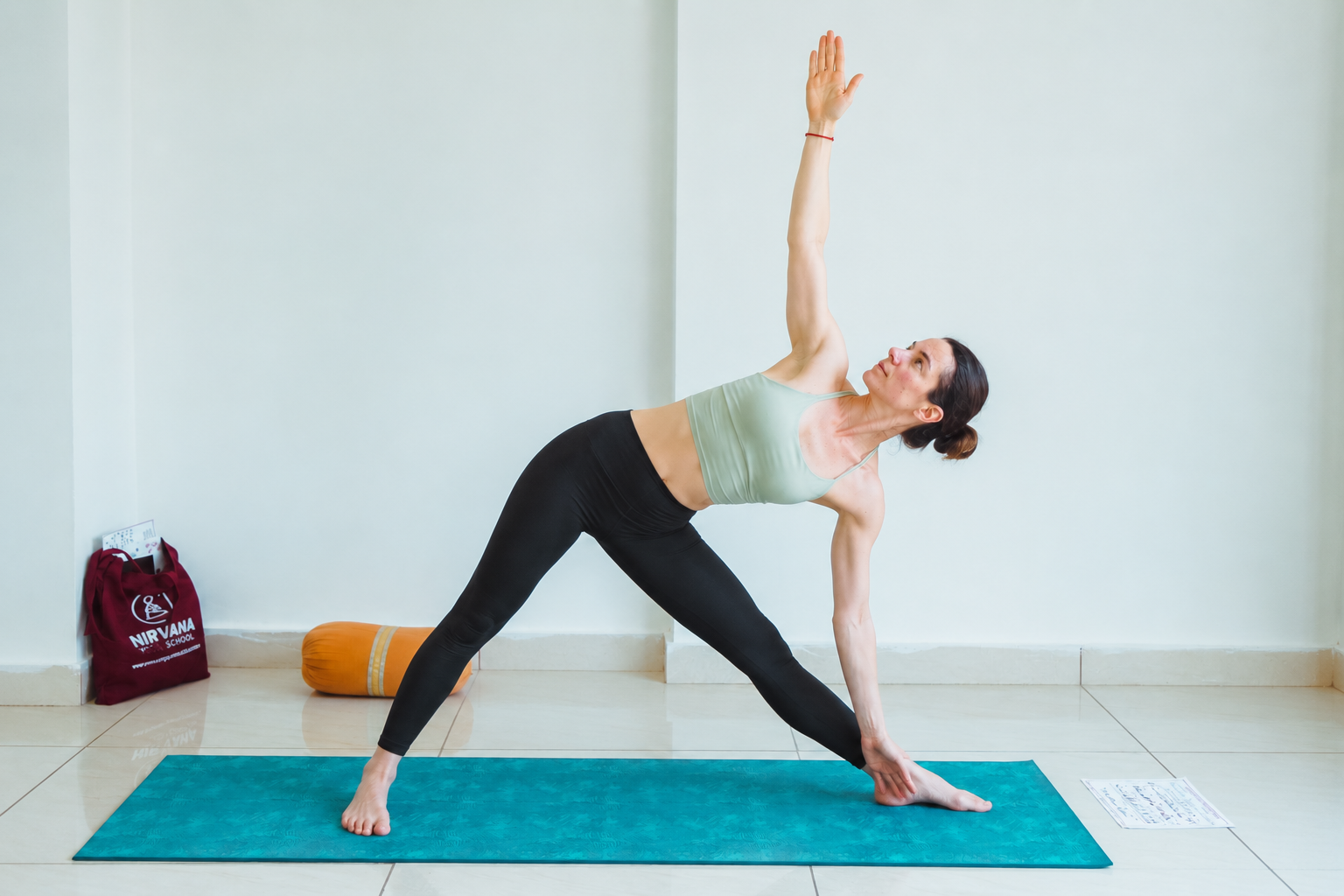
This is the classic version that most people think of when they hear "Triangle Pose." It features a wide stance, an open chest, and both arms reaching in opposite directions to create a long, stable line through the body.
Revolved Triangle Pose (Parivrtta Trikonasana)
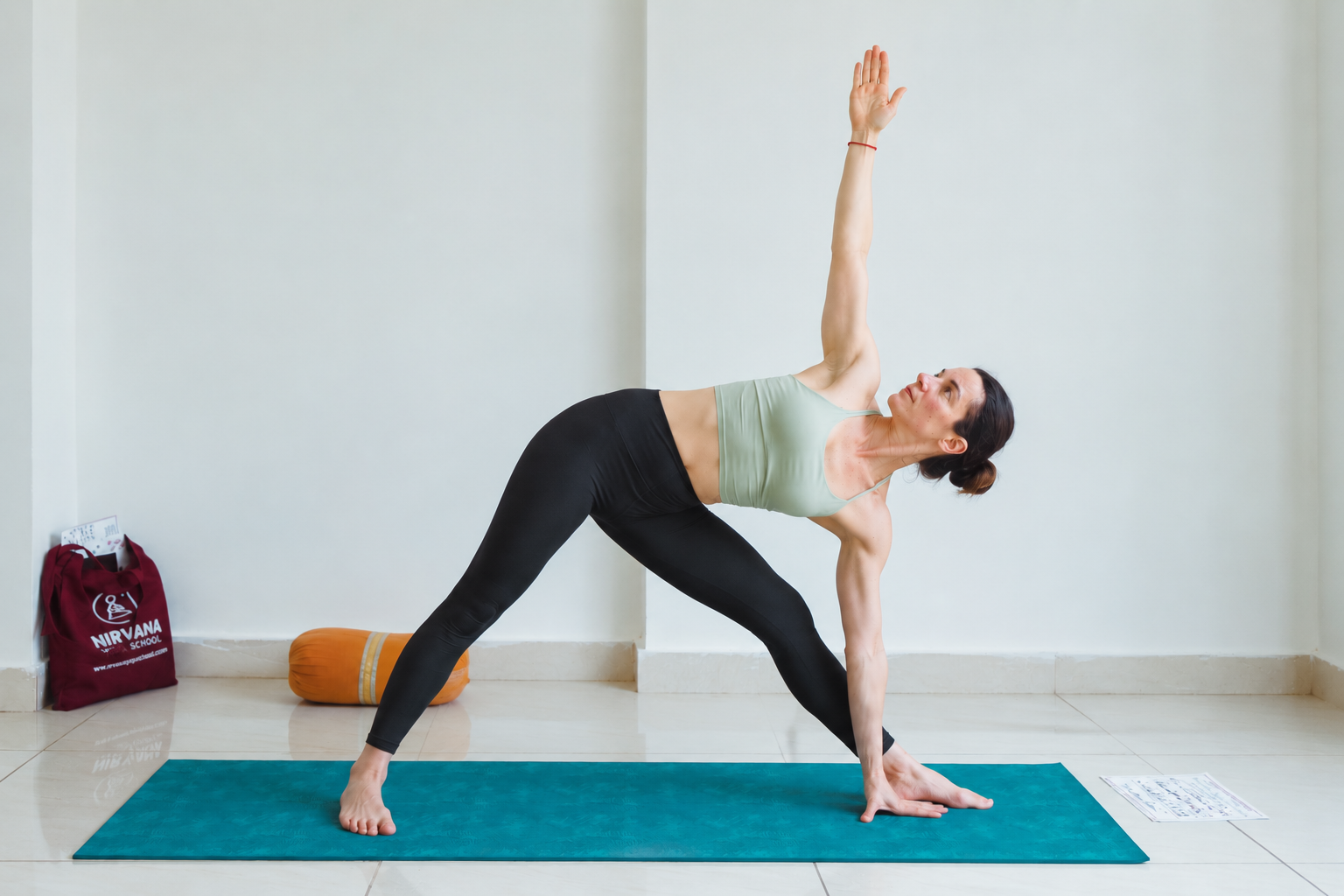
This more advanced variation adds a deep spinal twist, with the opposite hand reaching toward the front foot. It requires greater balance, flexibility, and core strength, making it ideal for practitioners who are comfortable with the basic pose.
Supported Triangle Pose (Using a Yoga Block)
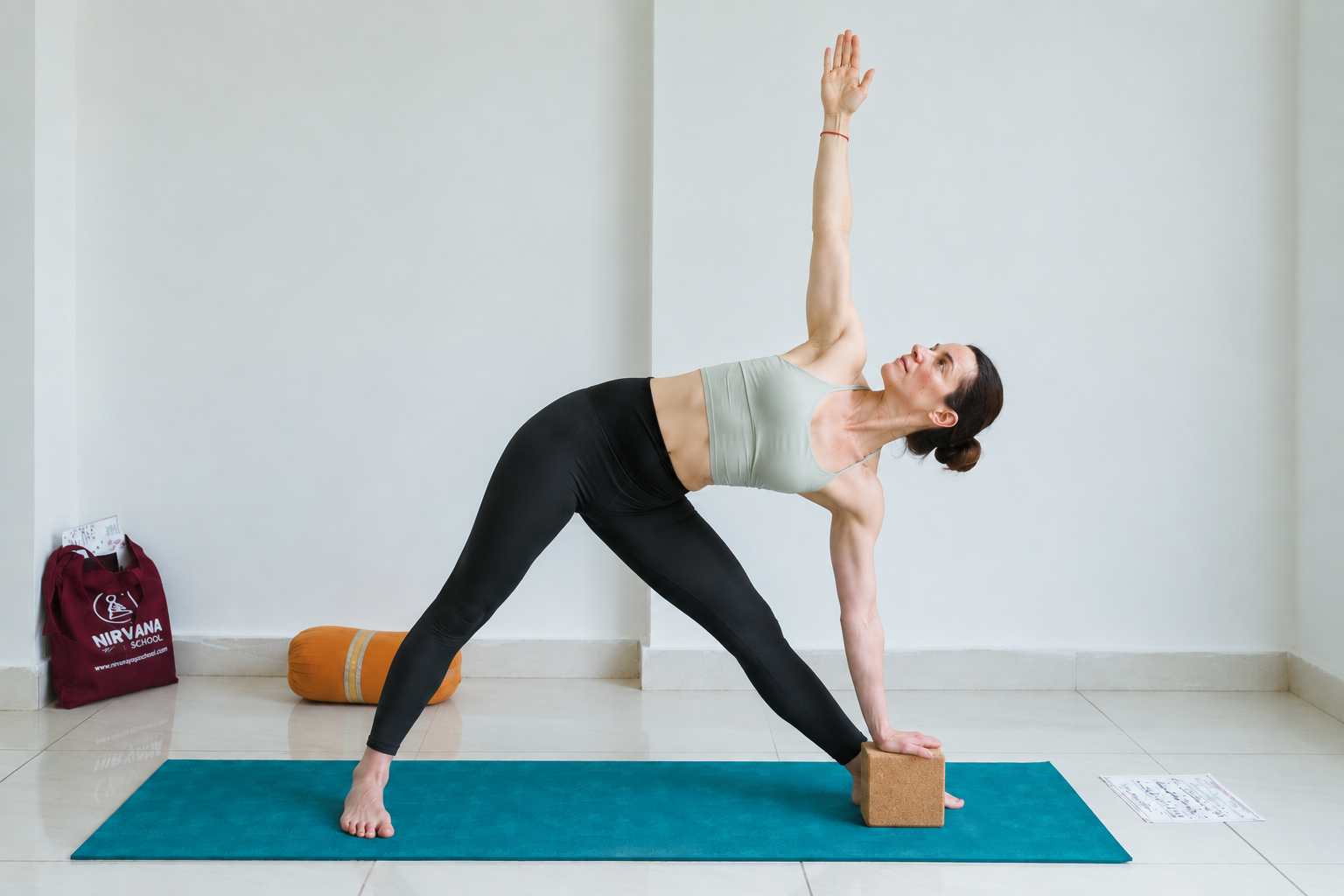
If reaching the floor feels uncomfortable, placing a yoga block under your lower hand provides extra support. This variation helps you maintain proper alignment while making the pose more comfortable, especially if your hamstrings or hips feel tight.
Triangle Pose vs. Revolving Triangle Pose
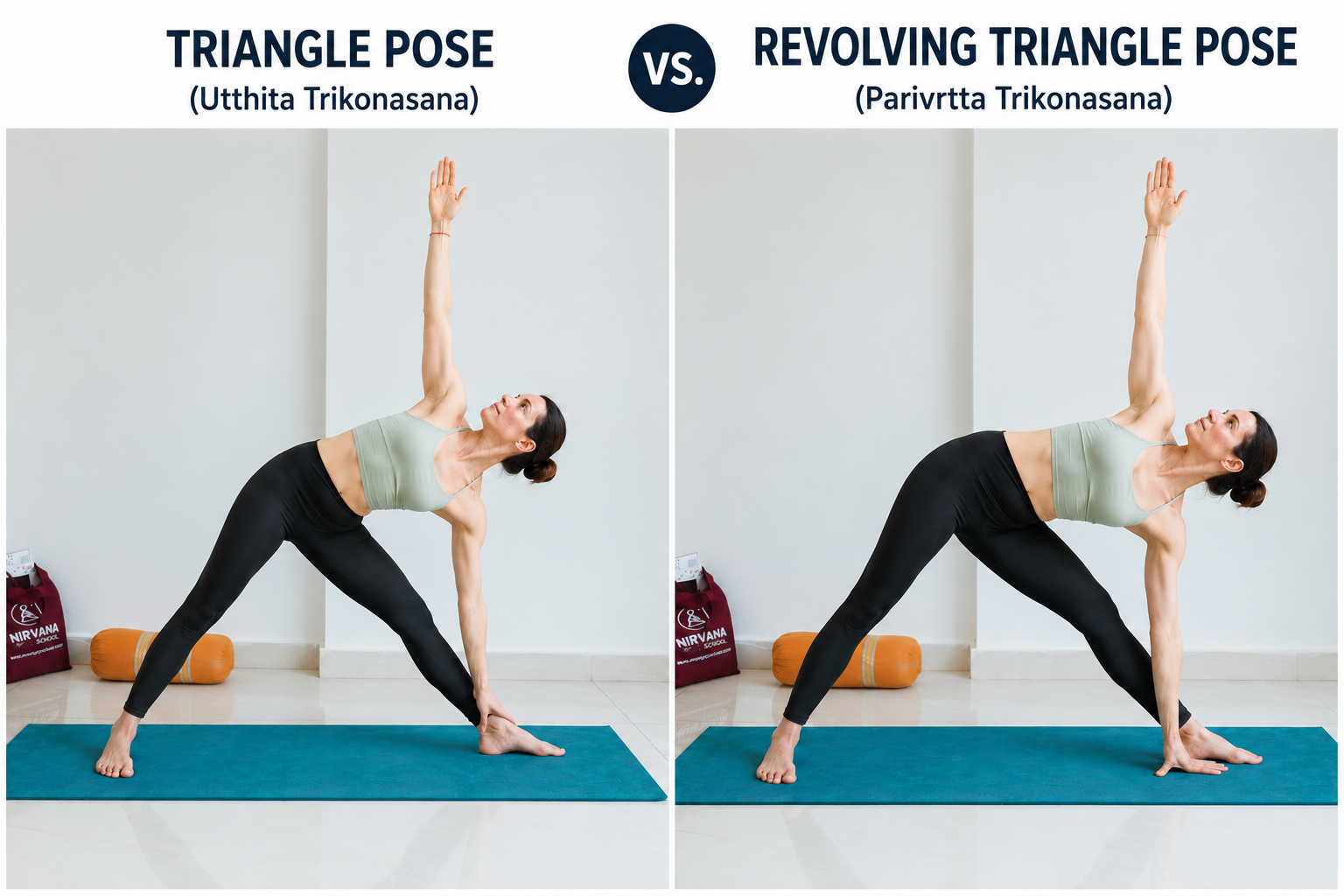
| Feature | Triangle Pose | Revolving Triangle Pose |
| Difficulty | Beginner–Intermediate | Intermediate–Advanced |
| Movement Type | Lateral fold | Twisting fold |
| Balance Demand | Moderate | High |
| Best For | Building flexibility and strength | Deepening spinal rotation |
| Prop Use | Common (block) | Common (block), more caution needed |
Triangle Pose Muscles Worked
Triangle Pose engages a wide range of muscles in one hold:
- Hamstrings — deeply stretched in the front leg
- Hip Flexors and Groin — opened through the wide stance
- Obliques and Core — engaged to support the lateral fold
- Quadriceps and Calves — stabilize both legs throughout
- Spinal Muscles — lengthened through the sideways stretch
- Shoulders and Chest — opened as the top arm extends upward
Common Mistakes in Triangle Pose
Even though Triangle Pose looks simple, small alignment mistakes can make the pose less effective or put unnecessary stress on your body. Here are some common things to watch for:
Collapsing the Chest Forward
Many people tend to lean forward instead of bending sideways. This reduces the stretch and can create tension in the lower back. Keep your chest open and your shoulders stacked to maintain proper alignment.
Locking the Front Knee
Pushing the front knee too far back can place extra pressure on the joint. Keep the leg strong with the thigh muscles engaged while maintaining a slight softness in the knee.
Straining the Neck
Trying to force your gaze toward the top hand can create neck discomfort. If looking upward feels uncomfortable, simply look forward or down until your flexibility improves.
Forcing the Hand Toward the Floor
Your hand doesn't need to touch the floor to get the benefits of Triangle Pose. Reaching too far can cause your body to lose alignment. A yoga block can help you stay stable while keeping the pose comfortable.
Letting the Hips Twist Forward
Allowing the back hip to roll forward can reduce the stretch and put more pressure on the lower back. Try to keep your hips open and stacked as much as possible for a safer, deeper stretch.
Who Should Avoid Triangle Pose?
Triangle Pose is suitable for many practitioners, but it may not be the right choice for everyone. If you have certain injuries or any kind of health concerns, it's better to modify the pose or practice it with guidance.
You should take extra care with Triangle Pose if you have:
- Blood pressure concerns – People with low or high blood pressure should practice carefully and avoid turning the head upward if it causes discomfort.
- Neck injuries – Avoid straining the neck or forcing the gaze upward.
- Diarrhea or migraines – Especially avoid deeper twisting variations like Revolved Triangle Pose during these conditions.
- Serious back issues or recent spinal surgery – Get medical advice before practicing deep side bends or twists.
- Balance difficulties – Use a wall or yoga block for extra support and stability.
Precautions and Tips for Triangle Pose
A few simple adjustments can help you practice Triangle Pose more comfortably and get the most benefits from it:
Use a Yoga Block
If your hand doesn't naturally reach the floor, place a block underneath it. This helps you maintain proper alignment without putting extra pressure on your hamstrings or back.
Keep Your Chest Open
Instead of leaning forward, focus on gently opening your chest and keeping your shoulders stacked. This allows you to experience the full stretch through the sides of the body.
Keep Your Legs Active
Engage your leg muscles and avoid locking your knees. Active legs provide better support and help protect your joints during the pose.
Move Slowly and Mindfully
Avoid rushing into or out of the posture. Enter the pose with control, breathe steadily, and take your time when returning to a standing position.
Adjust Your Gaze
Looking up at the top hand is optional. If it creates tension in your neck, keep your gaze forward or down until it feels comfortable.When practiced with awareness and proper alignment, Triangle Pose becomes much more than a simple stretch. It helps build flexibility, strength, balance, and a calm, focused mind.
At Nirvana Yoga School, Trikonasana is taught as part of a deeper yoga practice that combines alignment, breath, and body awareness. Through our yoga courses in Rishikesh, students learn not only how to perform a posture but also how to understand the deeper principles behind the practice.